
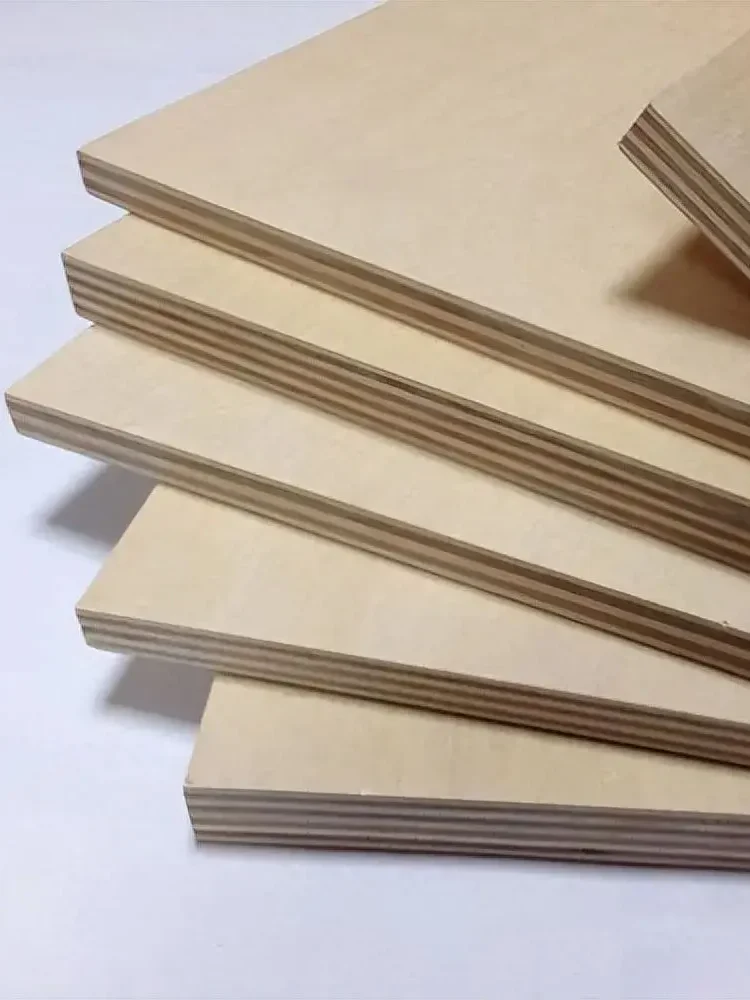
Layered veneer panels
Plywood
Choose the veneer construction, face and back, bonding requirement and finished panel specification for the intended application.
- Layered veneer construction
- Raw and melamine-faced supply
- Face and back to confirm
- Bonding requirement by application
01
Confirm construction
Core species, veneer arrangement and visible edge construction.
02
Confirm bonding and faces
Glue requirement, face and back appearance, grade or reference.
03
Confirm finished order
Size, thickness, surface, tolerance, packing and application.
Supply options
Raw panels and melamine-faced panels
Start with the substrate construction, then confirm whether the order requires a raw board or a finished decorative surface.
How plywood behaves
Start with veneer construction and bond requirement
Plywood is built from cross-laminated veneers. Species names alone do not define performance: veneer thickness, layer count, lay-up, core repairs, moisture and bond quality all affect the finished sheet.
Construction
Confirm face and core species, veneer build-up, number of plies and the acceptable level of core gaps, overlaps and repairs.
Application
Furniture, packaging, formwork and structural uses need different face, bond and evidence requirements. State the end use before selecting a grade.
Inspection focus
Check actual thickness, flatness, moisture, edge build-up, visible core defects and the agreed bond or test evidence for the order.
Where it fits
A useful choice when strength-to-weight ratio, cross-panel stability or face and edge fastening matter.
Before substituting
Do not substitute MDF, particle board or OSB solely by thickness. Compare load direction, machining, moisture exposure, face quality and required certification.
Specification guide
Information to confirm before quotation
These fields organize the first technical discussion. Actual ranges and commercial terms will be added only after the relevant supply route is confirmed.
You can start with:
- Product and application
- Required size or reference
- Approximate quantity
- Destination port
| Core construction | State the required species, veneer build-up or approved reference |
|---|---|
| Face and back | Confirm appearance, veneer or grade expectation |
| Glue / bonding | Confirm the application and required bonding or test basis |
| Panel size | Specify length and width |
| Thickness and tolerance | State the finished requirement and tolerance |
| Surface | Raw plywood or melamine-faced option |
| Application | Furniture, interiors or another confirmed use |
| MOQ and lead time | Based on construction, surface and order combination |
Selection points
Make the requirement measurable
Replace broad terms such as “high quality” with construction details, approved references, named standards and agreed acceptance points.
01
Core construction
Use a section photo or approved sample to define the expected build-up.
02
Face and back
Clarify which appearance or grade matters on each side.
03
Bonding requirement
Relate the glue or test requirement to the actual application and destination.
04
Finished thickness
Confirm whether the order refers to raw or faced panel thickness.
05
Machining and use
Share the component, cutting or edge treatment expected.
06
Packing and marks
Confirm bundle protection and identification for the shipment.
Order follow-up
Keep the finished panel tied to the specification
The applicable checks depend on the product, order and documents agreed before production.
01
Record the requirement
Confirm the construction, surface, dimensions, application, packing and document scope.
02
Follow the order
Connect relevant production details and approved changes to the written specification.
03
Review and prepare
Check the agreed finished-panel points before packing and export preparation.
Start with the details you have
Discuss your plywood requirement
A product name, application or reference image is enough to begin. The remaining specification can be confirmed during the enquiry.