

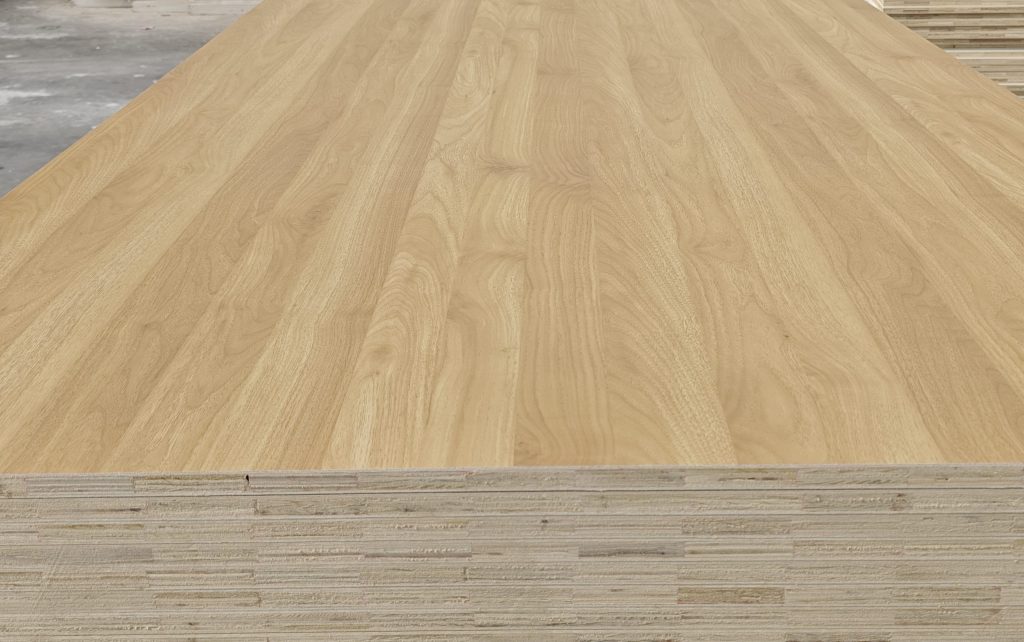
Introduction: Why Melamine Board is Essential for Your Inventory
The global demand for cost-effective, durable, and aesthetically versatile furniture materials makes the melamine board a powerhouse product in the wood panel industry. For distributors, understanding this product is not just about inventory; it is about mastering the supply of the core material driving modern interior design.
Melamine boards—often known as Melamine Faced Chipboard (MFC) or melamine particle board—are the foundation of mass-produced, high-quality furniture, from residential kitchens to commercial office systems. Their stable structure and durable surface finish offer a superior alternative to basic plywood in many non-structural applications.
This definitive guide provides B2B distributors with the detailed specifications, quality standards, and procurement insights needed to select and market the best melamine board products efficiently.
What is Melamine Board? Structure and Composition
The melamine board is an engineered wood product defined by its construction: a core substrate overlaid with a resin-impregnated paper surface. The key component is the melamine-formaldehyde resin, which, when cured under heat and pressure, forms an extremely hard, scratch-resistant, and chemically-resistant surface.
This manufacturing process ensures that the finished melamine boards are not merely decorative but highly functional, offering significant advantages over raw wood panels.
The Core Material: Chipboard vs. MDF
The type of core material dictates the strength, weight, and screw-holding capacity of the melamine board:
- Melamine Particle Board (Chipboard Core): This is the most common and cost-effective option. It is made from wood chips bonded with resin. Its primary advantages are lightness and price.
- Melamine Faced MDF (Medium Density Fiberboard Core): Provides a superior finish, tighter edges, and much better routing capabilities. MDF core melamine boards are denser, heavier, and generally offer better screw withdrawal resistance than particle board.
- Melamine Faced Plywood: Used for applications requiring higher strength and better moisture resistance. This is less common but highly valued in premium or high-stress projects.
The Decorative Surface: Resin, Paper, and Texture
The melamine paper determines the final aesthetic. This paper is available in thousands of patterns, including solid colors (melamine colour board), wood grain reproductions, and abstract designs. The final pressing process applies texture (e.g., smooth, wood-like, or high-gloss) to the surface, creating highly realistic decorative finishes.
Key Features and Distributor Advantages
For any distributor, the value proposition of stocking high-quality melamine boards rests on three pillars: durability, versatility, and cost efficiency.
Durability, Scratch, and Heat Resistance
The resin-cured surface is highly durable, making melamine boards ideal for high-traffic environments.
- Abrasion Resistance: The surface meets strict industry standards (e.g., EN 14322) for resistance to scratching and wear.
- Heat Resistance: They can withstand moderate heat exposure (e.g., from cups or small appliances) without blistering or discoloration.
- Stain Resistance: The non-porous surface is impervious to most common household chemicals and stains, ensuring easy cleaning—a major selling point for end-users.
Aesthetic Versatility: Color and Finish Options
The versatility of the melamine board is key to market penetration. From the sleek look of black melamine board used in modern office furniture to the crisp, clean finish of white melamine board, the possibilities are limitless.
This versatility allows distributors to serve multiple market segments simultaneously with minimal inventory variation on the core product.

Cost-Effectiveness and Processing Efficiency
Compared to solid wood or high-pressure laminate (HPL), melamine boards offer substantial cost savings. Furthermore, they are simpler for manufacturers to process:
| Feature | Melamine Faced Chipboard | HPL Faced Plywood |
| Material Cost | Low | High |
| Labor Cost | Low (Single-step pressing) | High (Requires HPL bonding and secondary edge treatment) |
| Edge Finish | Requires simple edge banding | Requires advanced routing and edging |
| Ideal For | Mass-market furniture, cabinet boxes | High-wear surfaces, commercial worktops |
Standard Melamine Board Specifications
Successful B2B distribution relies on precise product specifications. Understanding the standard panel sizes, thicknesses, and performance grades is critical for inventory planning and logistics.
Common Dimensions and Thicknesses
Standard production size is typically 2440mm x 1220mm (8ft x 4ft), but larger sizes like 2800mm x 2070mm are common in European markets.
For high-volume distribution, the most demanded specifications include:
- 18mm Thickness: The standard for cabinet construction. (e.g., white melamine board 2440 x 1220 x 18mm)
- 12mm Thickness: Often used for cabinet backs, drawers, and decorative panels.
- 25mm/30mm Thickness: Used for heavy-duty shelving, countertops, and desk surfaces.
Fire and Moisture Resistance Grades (MR, FR)
To address niche market requirements, distributors should stock graded boards melamine:
- Moisture Resistant (MR) Grade: Incorporates a specialized core resin (often recognizable by a green dye) to slow down water absorption. Essential for bathroom vanities and kitchen sink areas.
- Fire Retardant (FR) Grade: Treated with chemical additives to meet specific fire safety standards (e.g., Class A/Class 1 flame spread rating). Crucial for commercial and public projects.
Melamine Board Applications for Furniture and Interiors
The high-volume applications for melamine boards are primarily in the furniture manufacturing sector.
Kitchen Cabinets and Wardrobes
Melamine faced chipboard is the industry standard for cabinet boxes and interior shelving.
- Cabinet Boxes: 18mm melamine particle board offers a strong, stable, and easily assembled structure. The durable surface resists the abrasion and moisture typical of kitchen interiors.
- Wardrobes: Used extensively for wardrobe shelving, dividers, and sliding doors due to its light weight and smooth finish. Distributors should stock diverse melamine colour board options to meet varying style demands.
Office Systems and Commercial Fittings
In commercial interiors, the product’s standardization and uniform appearance are highly valued.
For executive desks, conference tables, and specialized retail fixtures, the elegant appearance of black melamine board combined with its resistance to scuffs is unmatched. Commercial applications often require the thicker 25mm or 30mm panels for enhanced rigidity.
B2B Procurement: Quality Check and Certifications
A successful B2B partnership demands stringent quality control and verified compliance. Distributors must be able to guarantee the quality of the melamine board they supply.
Understanding Formaldehyde Emission Standards (CARB, E0, E1)
Environmental and health standards are non-negotiable. Distributors must ensure their melamine boards comply with major international certifications:
| Standard/Grade | Description | Target Market | Formaldehyde Emission Level |
| E1 | Standard requirement for interiors in Europe and China. | General Export | 0.1 ppm |
| E0 / Super E0 | Very low emission standard. | High-end/Eco-conscious market | Lower than E1, often 0.05 ppm |
| CARB P2 | Mandatory compliance for exports to the United States (for particle board and MDF). | USA/North America | 0.11 ppm |
We offer CARB P2 and Super E0 grade melamine particle board to ensure compliance in all major global markets.
Inspection Tips: Edge Sealing and Core Voids
Before finalizing a container order of boards melamine, distributors should look for the following quality indicators:
- Surface Integrity: Ensure the melamine layer is fully bonded, with no bubbles, wrinkles, or surface defects.
- Edge Cleanliness: The edge must be cleanly cut, as this is where edge banding will adhere. Rough edges indicate poor manufacturing.
- Core Homogeneity: Inspect the core cross-section for uniformity. Large gaps or voids within the melamine faced chipboard core can lead to poor screw-holding and panel failure.
Melamine Board vs. HPL Laminate vs. Wood Veneer: A Comparison for Distributors
Choosing the right panel for a project involves a trade-off between durability, cost, and finish quality.
| Feature | Melamine Board | High-Pressure Laminate (HPL) | Natural Wood Veneer |
| Durability / Abrasion | Good | Excellent | Fair (Requires Varnish) |
| Moisture Resistance | Fair (Relies on proper edge banding) | Excellent | Fair |
| Realistic Look | Good (Printed pattern) | Excellent (Printed pattern) | Authentic (Real wood) |
| Cost | Lowest | Medium-High | High |
| Processing | Ready-to-use; requires simple edge treatment. | Requires adhesive application onto a substrate. | Requires professional finishing and sanding. |
Conclusion: Partnering for Premium Melamine Boards
The melamine board remains an indispensable product for any distributor focused on the furniture and fit-out sectors. Its blend of high performance and competitive pricing guarantees consistent market demand.
To maintain your competitive edge, partner with a manufacturer capable of delivering:
- Consistent quality across all specifications, including white melamine board 2440 x 1220 x 18mm.
- Full compliance with CARB P2 and E0 standards.
- A diverse inventory of melamine colour board options to meet market trends.
recent Posts
Sanded OSB for Furniture Still Needs a Finish Plan
OSB material reference only; sanding quality and the final finish need separate approval. Sanded OSB…
Plywood vs OSB for Crates Is More Than a Price Choice
Protected panel bundles are a supply-stage reference, not an approved design for a shipping crate….
Blockboard vs Finger Joint Board for Furniture Buyers
A visible timber-strip core does not make the finished panel the same as an exposed…
Synchronized Melamine Board Goes Beyond the Print
Woodgrain design reference only. A flat image cannot demonstrate EIR texture or alignment. Synchronized melamine…