

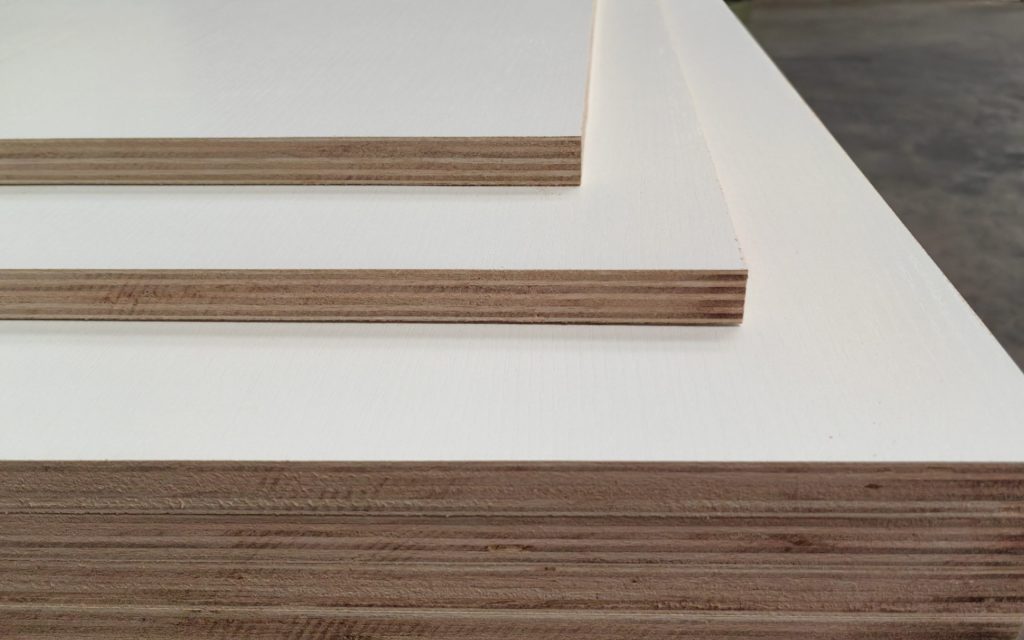
Distributors and manufacturers often face the headache of inconsistent panel strength and rising material costs that disrupt production. This blog explains the main differences between different types of plywood. It also shows their specific uses in industry. This will help you create a more reliable and cost-effective supply chain.
What is Plywood? The Engineering Behind the Panel
To make informed purchasing decisions, one must first understand what is plyboard in a technical context. Plywood is an engineered wood product created by layering thin sheets of wood veneer—known as plies—on top of one another. These layers are bonded with high-strength adhesives under intense heat and pressure.
The defining characteristic of a plywood board is cross-lamination. This means the grain of each layer is rotated 90 degrees relative to the one below it. This structural design eliminates the natural tendency of wood to split along the grain and provides excellent dimensional stability.
For a furniture maker or construction company, this creates a panel. This panel is stronger and more resistant to impact than solid wood of the same thickness.
Categorizing Plywood by Core Material and Species
The internal composition of plywood determines its weight, screw-holding capacity, and price point. Buyers must distinguish between different core types to match the panel to the environment.
Softwood and Hardwood Variants
Softwood panels are generally made from species like pine, spruce, or cedar. They are lightweight and economical, making them the standard choice for temporary construction and hidden structural elements.
In contrast, manufacturers produce hardwood ply using denser species such as eucalyptus, oak, or maple. These panels are significantly heavier and offer superior durability. Because of their hardness, builders prefer them for load-bearing applications and high-traffic flooring.
In the export market, eucalyptus-core hardwood plywood is extremely popular. Strong and sourced sustainably.
Premium Birch and Specialized Cores
Birch plywood stands in a category of its own. People value it for its multi-ply design. Many thin layers of birch veneer make a dense, stable, and attractive edge. The go-to material for high-end cabinetry and CNC-machined furniture is plywood.
Other specialized cores include poplar. It is valued for being lightweight and easy to cut. Manufacturers often use poplar as a core for decorative panels.
Classification by Surface Finish and Application
The exterior of the panel defines its utility and its interaction with water, chemicals, or decorative finishes.
Construction and Formwork Solutions
For the building sector, durability and water resistance are paramount.
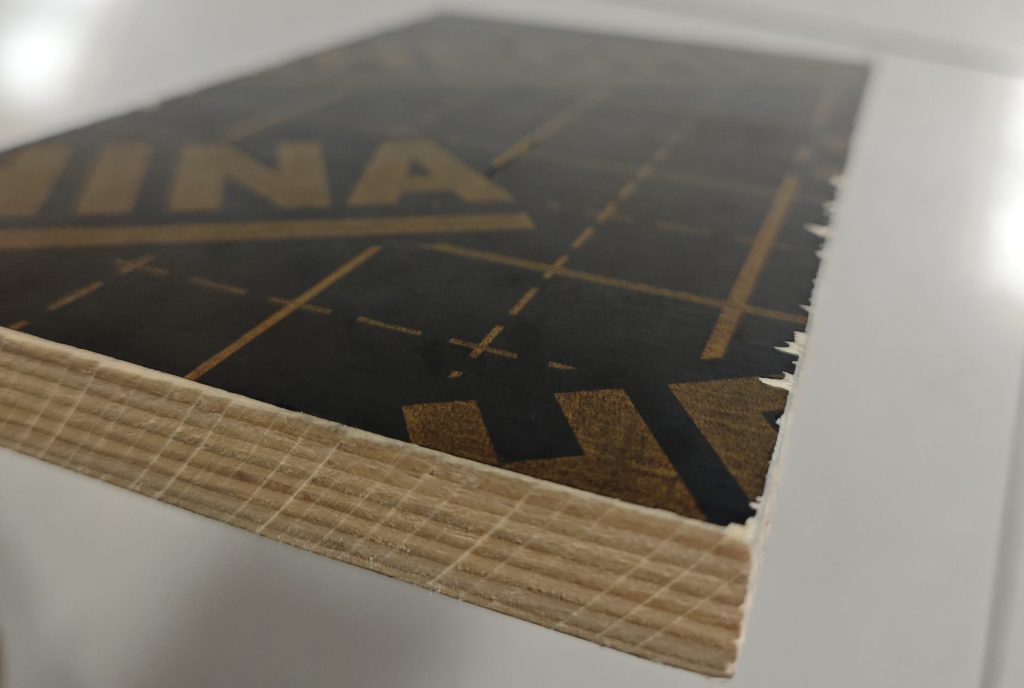
- Form plywood (also known as film-faced plywood) is a specialized product used in concrete formwork. It has a phenolic film coating. This coating stops the wood from sticking to the concrete. It also protects the wood from water damage. This allows the boards to be reused many times.
- Structural plywood is engineered for permanent building applications. People know these boards for their stiffness and ability to carry loads. They are often used in wall bracing, roof decking, and sub-floors. Safety and following building codes are very important in these areas.
Decorative and Finished Panels
When the wood will be visible, the surface finish becomes the primary concern.
- Melamine plywood offers a versatile option by surfacing a plyboard with decorative melamine-impregnated paper. This provides a hard, scratch-resistant, and waterproof exterior that requires no further painting or staining.
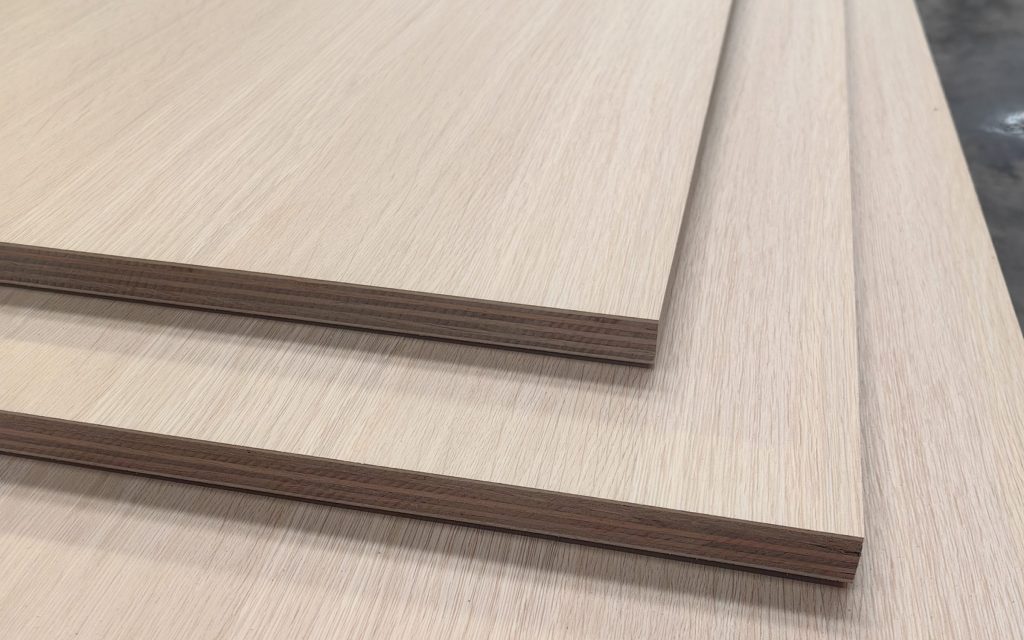
- Veneer-faced panels have a thin layer of high-quality wood, like walnut or ash, on a plywood base. This design looks like solid wood but offers the stability of an engineered product.
Understanding Thickness Standards in Global Trade
In the B2B sector, thickness is a critical specification that dictates the structural integrity of the final product. While global standards exist, different markets have specific preferences.
Thin and Medium Boards
Thin panels, which are 3mm to 9mm thick, are often used for drawer bottoms, wall skins, and decorative ceilings.
As we move into the medium range:
- 15mm plywood is a high-demand specification for internal shelving and lighter furniture carcasses.
- 16mm plywood is often chosen in some areas for modular kitchen units. It is lighter but still thick enough for standard fasteners.
Structural and Heavy-Duty Thicknesses
For floorings and heavy furniture, thicker panels are necessary to prevent sagging.
- 17mm plywood is a common requirement for sub-flooring in the Australian and North American construction sectors.
- Heavier boards, such as 18mm or 25mm, are the standard for plywood wood floors and heavy-duty workbenches. Choosing the right thickness ensures that the ply wood floors do not flex or creak over time.

Conclusion
Choosing the right ply is a strategic decision that affects every stage of your production. Understanding ply is important. You can choose birch plywood for looks or form plywood for building.
The details are important. Select the appropriate plywood thickness, like 15mm or 17mm.
Use the right glue as well. This will help reduce waste. Also, it will improve the quality of your finished products.
Are you looking for a reliable manufacturer to provide consistent, high-quality plywood board for your distribution network? We offer a wide range of structural plywood and decorative options tailored to your local market requirements.
recent posts
Sanded OSB for Furniture Still Needs a Finish Plan
OSB material reference only; sanding quality and the final finish need separate approval. Sanded OSB…
Plywood vs OSB for Crates Is More Than a Price Choice
Protected panel bundles are a supply-stage reference, not an approved design for a shipping crate….
Blockboard vs Finger Joint Board for Furniture Buyers
A visible timber-strip core does not make the finished panel the same as an exposed…
Synchronized Melamine Board Goes Beyond the Print
Woodgrain design reference only. A flat image cannot demonstrate EIR texture or alignment. Synchronized melamine…