

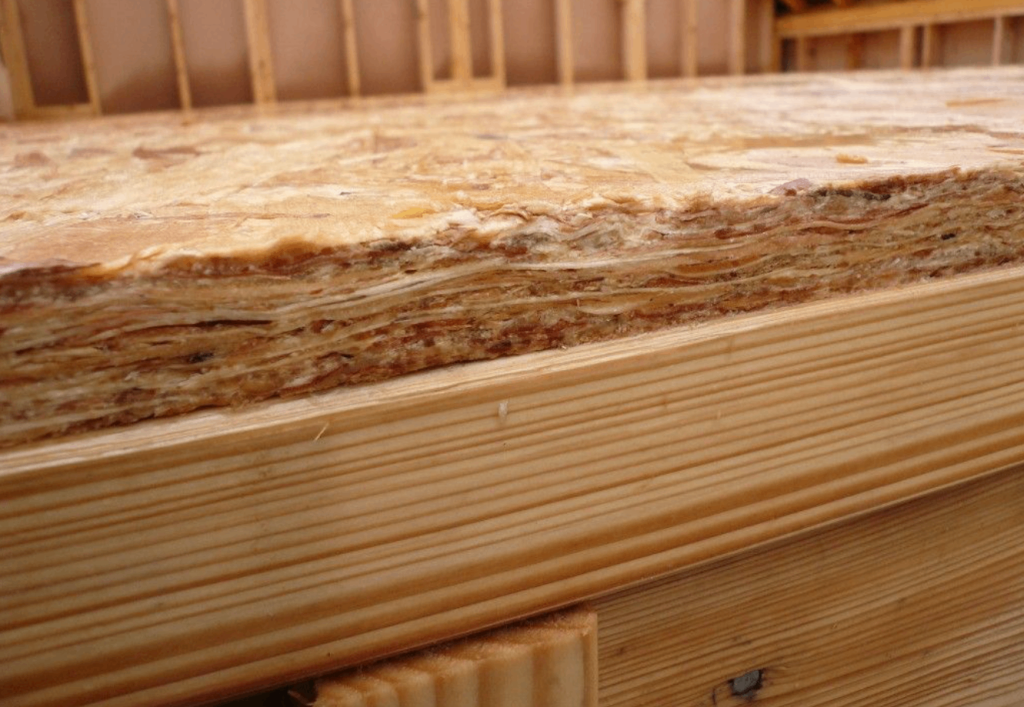
OSB board purchasing risk is not only about price and thickness. Edge swell, moisture resistance, exposure rating, storage conditions, and export packing all affect whether the panels arrive in saleable condition. For importers and distributors, visible edge swelling, warped panels, moisture stains, or damaged pallets can quickly become customer complaints.
This article explains OSB board edge swell and moisture resistance from a B2B purchasing point of view. The purpose is not to describe OSB as a waterproof material. Instead, it helps buyers understand which indicators, production factors, packing methods, and logistics conditions affect panel stability.
For the industry definition and common applications, APA OSB overview is a useful authority for understanding OSB structure, applications, and performance categories.
What Is OSB Edge Swell?
Edge swell means the increase in thickness or swelling at the edge of an OSB panel after moisture exposure. OSB is made from oriented wood strands bonded under heat and pressure. Because the panel edge exposes more strand ends and glue-line structure, it is usually more sensitive to moisture than the panel face.
Edge swelling does not always mean the entire panel has failed. However, excessive swelling can affect installation flatness, joint lines, lamination, customer cutting, and later performance. For distributors, edge condition also affects warehouse presentation and customer inspection.
Why OSB Board Absorbs Moisture
OSB is still a wood-based product. Wood fibers absorb and release moisture as the surrounding environment changes. Resin and wax systems improve moisture resistance, but they do not make OSB a material for long-term water immersion or unprotected outdoor exposure.
- Strand orientation affects strength direction and dimensional stability.
- Resin and wax systems affect moisture resistance, bonding stability, and edge absorption rate.
- Hot pressing affects internal bond, thickness stability, and panel flatness.
- Edge condition affects how quickly moisture can enter the panel.
- Storage conditions during sea shipment, port handling, and local warehousing affect final panel condition.
For a more systematic product background, APA Product Guide: Oriented Strand Board explains OSB composition, performance, and applications in more detail.
Exposure Rating: Short-Term Exposure Is Not Waterproofing
Many buyers misunderstand OSB exposure ratings. A term such as Exposure 1 generally means the panel is designed to tolerate certain moisture exposure during construction or transport. It does not mean the panel can be left outdoors permanently or exposed to rain without protection.
If the target market has a long rainy season, high port humidity, or limited warehouse protection, buyers should include exposure conditions in the specification discussion. For example, is the OSB used for roof or wall sheathing? Will it face short-term jobsite exposure? Does it need edge protection? Does the buyer need stronger export packing or faster warehouse transfer after arrival?
How to Understand OSB Thickness Swell Testing
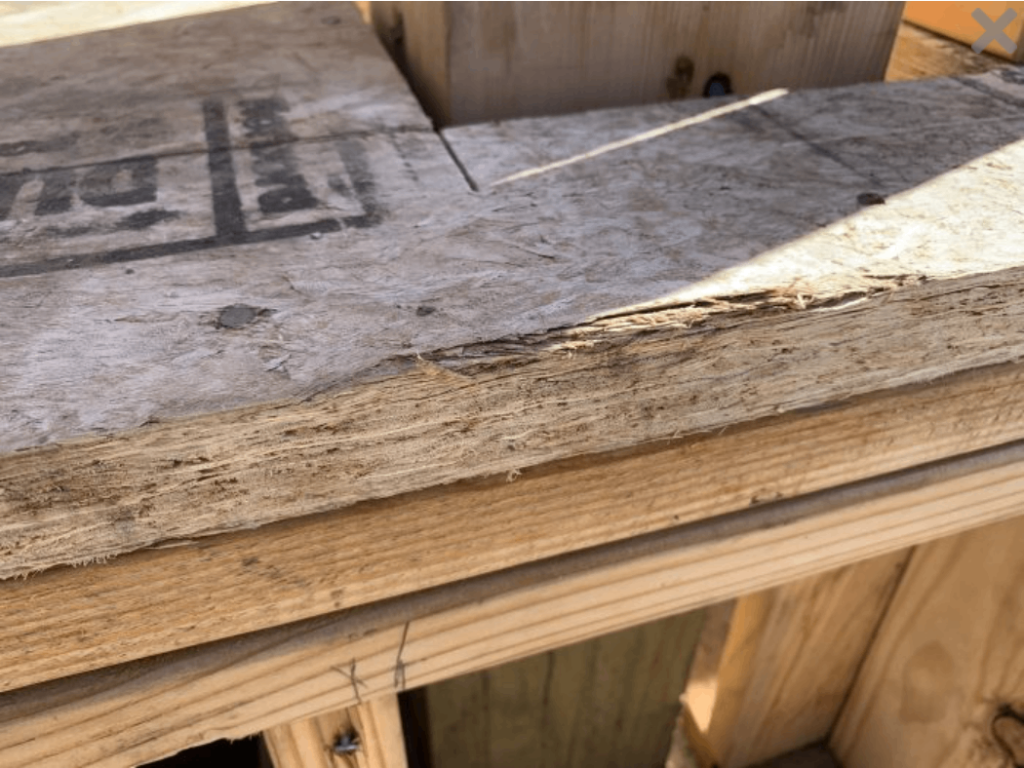
Thickness swell is often evaluated by measuring thickness change after moisture exposure. However, test results depend on the standard, exposure time, sample condition, and measurement position. Buyers should not ask only “What is the edge swell?” without understanding the test condition behind the number.
- Measurement position: edge and center thickness may change differently.
- Sample condition: fresh panels, stored panels, and panels exposed to moisture may perform differently.
- Test condition: soaking, spraying, high humidity, and jobsite exposure are not the same.
- Application match: packaging, furniture, and sheathing applications do not always have the same tolerance for swelling.
For importers, test data is useful only when it helps confirm whether the order is suitable for the target application. A single number should not replace the full quality judgment.
Moisture ResMoisture Resistance Is Not the Same as Waterproof
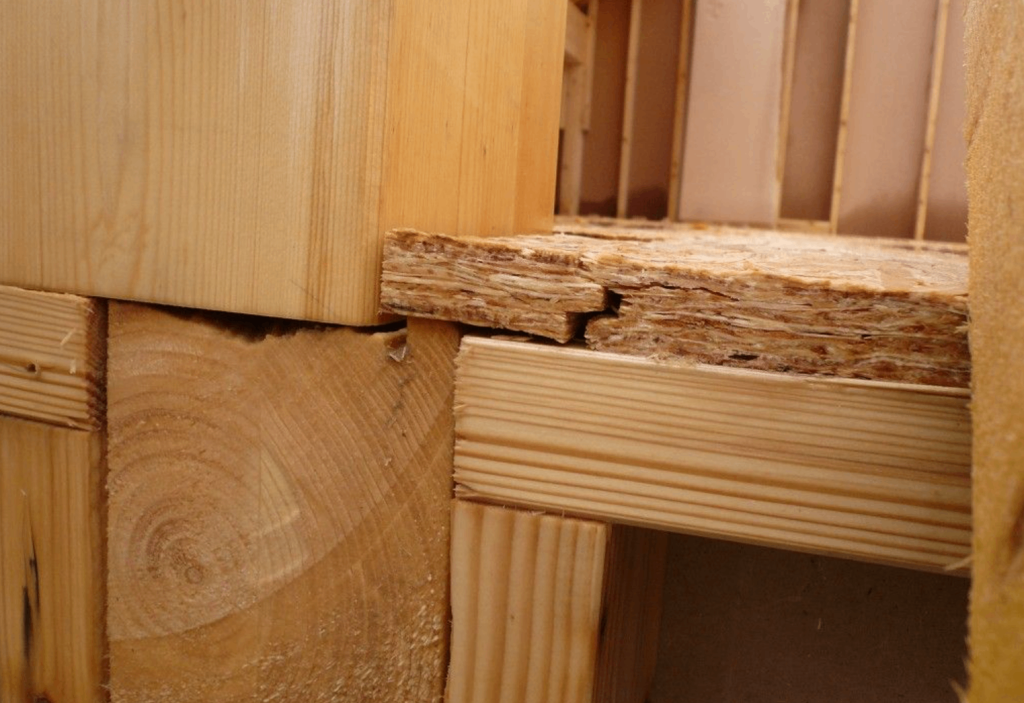
In purchasing conversations, buyers sometimes hear moisture resistant or waterproof adhesive and assume OSB can stay in contact with rainwater or wet ground for a long time. In reality, moisture resistance means the panel is more stable under certain humidity or short-term exposure conditions. It does not mean unlimited waterproof performance.
If the target market is humid, or if the customer uses OSB for sheathing, packaging, temporary structures, or industrial applications, buyers should confirm the application environment, storage method, thickness, grade, edge protection, and packing method before ordering.
Key Indicators Importers Should Check
- Thickness: common OSB thicknesses include 7/16, 15/32, 18mm, and other market-specific options.
- Panel grade: different grades are used for sheathing, subfloor, packaging, or industrial applications.
- Edge condition: check whether edges already show swelling, breakage, cracking, or moisture marks.
- Flatness: panel warping affects stacking, selling, and customer installation.
- Internal bond: bonding strength affects stability after humidity changes.
- Moisture content: both pre-shipment condition and arrival condition matter.
- Packing: plastic film, cover boards, steel straps, pallets, and loading method affect shipping risk.
- Storage instruction: panels should avoid direct ground contact, rain exposure, and long-term high humidity.
Packing and Container Loading Often Decide Moisture Risk
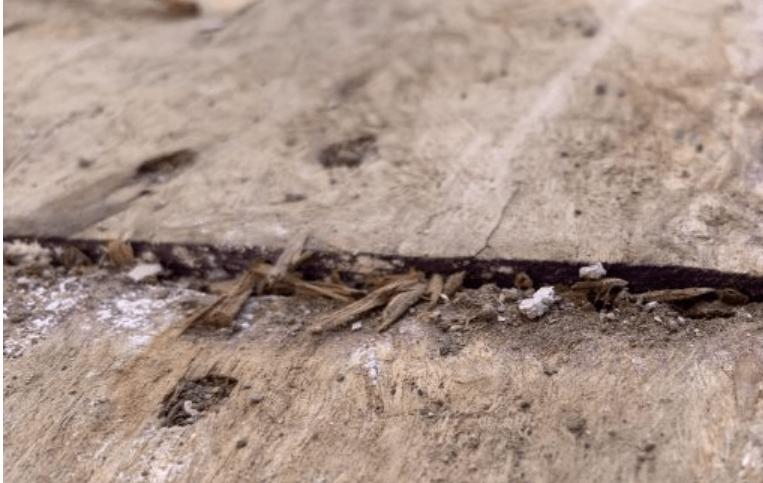
Not every OSB problem comes from production. Many edge swelling and damage issues happen during packing, container loading, port storage, or local warehousing. For export orders, packing should be designed according to destination port, shipping time, rainy season, warehouse condition, and unloading method.
- Outer plastic film reduces short-term moisture risk during transport but cannot replace dry storage.
- Top and bottom cover boards protect the panel surface and reduce strap marks or forklift damage.
- Corner and edge protection reduce impact damage and local moisture entry.
- Pallet height and weight affect loading stability and warehouse handling.
- Container placement should reduce pallet movement and edge rubbing during long-distance transport.
Momentimber OSB sourcing and quality control support can help buyers confirm OSB grade, thickness, packing, container loading, and pre-shipment inspection requirements before ordering, reducing the risk of edge swelling and transport damage after arrival.
Different Applications Need Different Moisture Expectations
OSB sheathing, packaging panels, furniture substrates, and industrial panels do not require the same moisture performance. Buyers should confirm the real customer application before deciding thickness, grade, and packing.
- Roof or wall sheathing: focus on grade, thickness, structural performance, and jobsite protection.
- Packaging or pallet use: focus on cost, strength, edge damage, and loading efficiency.
- Furniture or interior use: focus on surface, cutting, edge sealing, and possible lamination.
- Humid markets: focus on packing, dry storage, and warehouse instructions after arrival.
Common OSB Buying Mistakes
- Asking only for OSB board price without confirming grade, thickness, and application.
- Treating moisture resistance as long-term waterproof performance.
- Ignoring edge protection, which may lead to edge swelling after shipment or storage.
- Using weak packing for long-distance sea shipment.
- Comparing unit prices from suppliers who quoted different grades or packing methods.
Arrival Inspection: Production, Transport, or Storage Problem?
If OSB arrives with edge swelling, warping, or mold, buyers need to identify the likely source. Production quality, sea shipment moisture, port rain exposure, and local warehouse storage can create similar visible problems. Photos, loading records, pallet condition, and warehouse conditions should be kept as early as possible.
- Check outer packing: look for broken film, water entry, torn wrap, or deformed pallets.
- Check distribution: top, bottom, or container-door positions may show more damage.
- Check edge and face condition: determine whether the issue is mainly edge swelling or full-panel moisture deformation.
- Record storage conditions: note whether panels touched the ground or were exposed to rain or high humidity.
- Compare samples: inspect different pallets, positions, and batches separately.
FAQ
Conclusion
OSB board edge swell and moisture resistance are not small technical details. They affect installation, warehousing, resale quality, and after-sales experience. For importers, the goal is not only to find the lowest OSB price, but to confirm whether grade, thickness, resin system, packing, storage, and inspection standards match the target market.
If you already know the application, target market, thickness, and packing requirement, the next step is to prepare a clear specification sheet and ask suppliers to quote and load according to the same standard.
recent posts
Sanded OSB for Furniture Still Needs a Finish Plan
OSB material reference only; sanding quality and the final finish need separate approval. Sanded OSB…
Plywood vs OSB for Crates Is More Than a Price Choice
Protected panel bundles are a supply-stage reference, not an approved design for a shipping crate….
Blockboard vs Finger Joint Board for Furniture Buyers
A visible timber-strip core does not make the finished panel the same as an exposed…

Synchronized Melamine Board Goes Beyond the Print
Woodgrain design reference only. A flat image cannot demonstrate EIR texture or alignment. Synchronized melamine…