

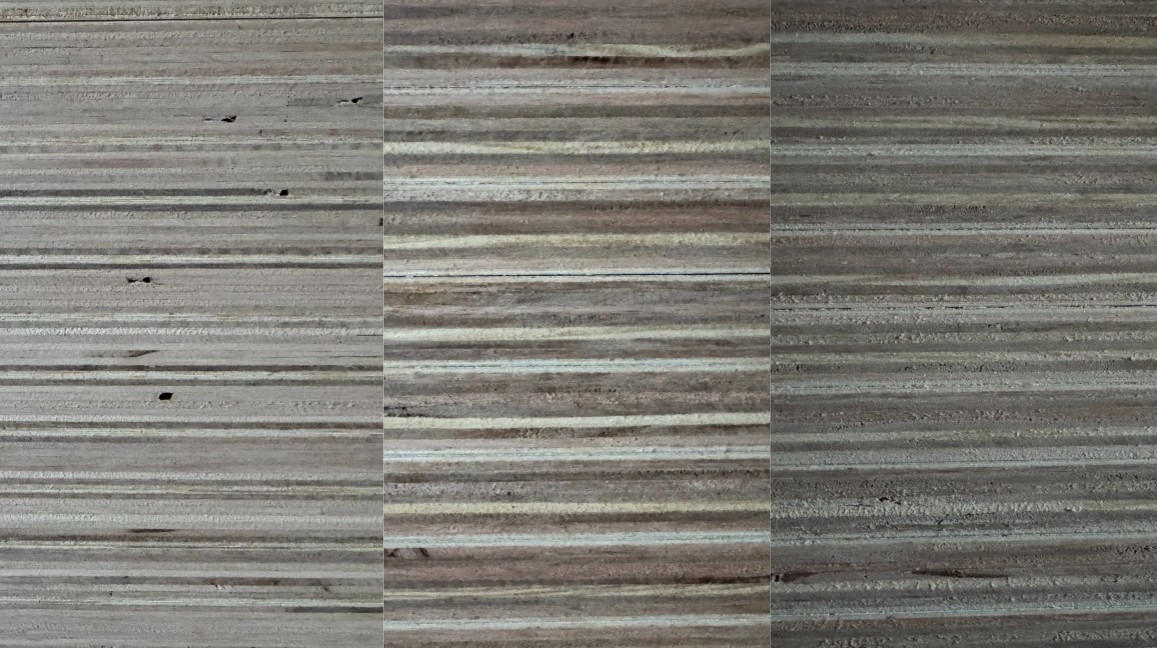
To be honest, whenever we talk with furniture makers and building material distributors, everyone faces a tricky choice: should you buy poplar core plywood, eucalyptus core plywood, or the popular combi-core panels made with poplar and eucalyptus mixed together?
Some people think a core is just wood inside a panel, so it does not matter much. But if you choose the wrong core type, it can lead to warped cabinet doors, loose screws, and unhappy clients. Today, let us look past the boring theory and break down the real trade-offs in weight, strength, processing, and price for these three core options.
1. The Basics: Understanding the “Personality” of Each Core
To pick the right board, you first need to understand the physical traits of these woods.
Combi-Core: The Balanced Hybrid To fix the problem of poplar being too soft and eucalyptus being too heavy, factories use a poplar and eucalyptus combi-core where layers alternate. The eucalyptus layers act like a skeleton for strength, while the poplar layers provide flexibility and keep the weight down. This mix balances the pros and cons of both woods.
Poplar Core: The All-Around Softwood Poplar grows fast and is a softwood with a low density. Its fibers are long, giving it great elasticity and flexibility, though its surface hardness is average. If you need a light board that is easy to cut, poplar is usually the first choice.
Eucalyptus Core: The Heavy-Duty Hardwood Eucalyptus is a true hardwood with a tight structure, heavier weight, and high impact resistance. Because it is so dense, it can build up internal stress if the drying process is not done right.
2. Weight Comparison: Do You Need Light or Heavy?
In the real world, the weight of a panel affects shipping costs and how easy it is to install.
Combi-Core Plywood: The Perfect Middle Ground Its weight sits right in the middle. For standard kitchen and wardrobe cabinets, combi-core will not make your delivery workers complain like pure eucalyptus, and it feels more solid than pure poplar.
Poplar Core Plywood: Light and Flexible Standard poplar boards are very light. For RV interiors, large wall panels, or high-altitude jobs where workers carry boards all day, poplar core significantly reduces physical fatigue and shipping fees.
Eucalyptus Core Plywood: Dense and Solid Eucalyptus boards feel heavy in your hands. If you are building heavy-duty shipping crates or industrial sub-floors, this heavy weight gives you total peace of mind.
3. Strength and Screw-Holding: Which One Lasts Longer?
For furniture makers, the biggest fear is when screws slip or hinges fall out after a few months. This is why looking closely at plywood core types matters so much.
Screw-Holding Power: Eucalyptus is hard, so screws bite into it tightly; poplar offers average screw-holding. The alternating design of combi-core creates a mechanical locking effect as screws pass through different wood densities, giving it amazing grip strength.
Bending and Load: Because of its high density, eucalyptus core offers the best bending strength (MOR) and rarely sags. Pure poplar can bend under wide spans. With combi-core, the added eucalyptus layers boost the bending strength so it can easily handle over 90% of regular furniture loads.
4. Machining: Are They Friendly to Workers and Tools?
How a board behaves in the factory floor matters to your machines and operators.
The Advantage of Combi-Core: Combi-core offers moderate resistance during cutting. It does not burn through saw blades like pure eucalyptus, and its cut edges stay smooth and clean without chipping, making combi-core a favorite for modern CNC workshops.
Tool Life and Speed: Because poplar is soft, cutting it causes very little wear on saw blades and CNC bits, making production fast. Eucalyptus is hard, which requires more machine power and dulls cutting tools faster.
5. Cost and ROI: Finding the Best Value
When buying materials, you must look at the Total Landed Cost, not just the sticker price.
The High ROI of Combi-Core: Although combi-core costs slightly more than pure poplar, its high strength and stability save you money on warranty claims and costly returns. For timber distributors, keeping combi-core in stock is the safest bet because it fits almost any customer need.
Price Levels: Pure poplar core has the lowest cost, making it great for tight budgets. Pure eucalyptus costs more due to raw material and drying expenses.
6. Quick Comparison Summary
To make your plywood core comparison easier, use this quick guide:
| Feature | Poplar Core Plywood | Combi-Core | Eucalyptus Core Plywood |
| Average Density | Low (Lightweight) | Medium (Balanced) | High (Heavy & Solid) |
| Strength & Grip | Average, for standard builds | Excellent, for custom furniture | Very High, for heavy loads |
| Machining | Most friendly, saves tools | Friendly, clean edge cuts | Hard, causes tool wear |
| Stability | Good, resists warping | Great, alternating stress balance | High strength, watch for tension |
| Typical Uses | RV interiors, light partitions | Kitchen cabinets, wardrobes | Construction forms, heavy flooring |
Conclusion: Matching the Core to Your Project
In the end, choosing the right core comes down to matching the material to the job:
Choose combi-core when you are building high-quality commercial furniture or custom cabinets where you need strong screw grip without adding too much weight or risking warp.
Choose poplar core if you want light weight and low cost for non-structural projects.
Choose eucalyptus core when you need extreme strength and heavy-duty load capacity.