

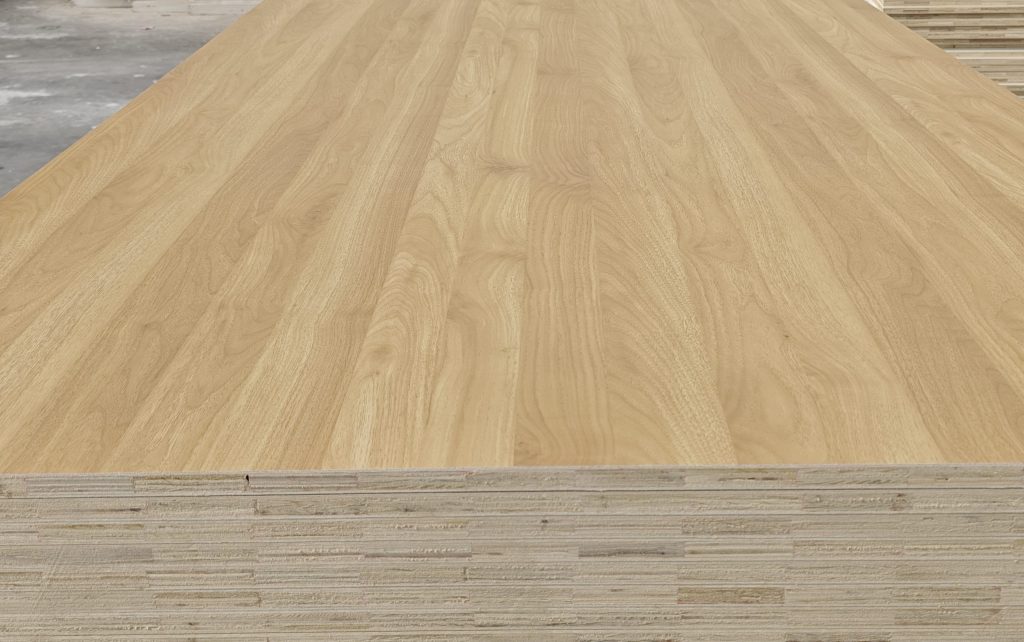
Melamine paper is often reduced to “decorative color paper” in purchasing discussions. In practice, the quality of a melamine-faced board depends on a complete surface system: base paper, resin impregnation, drying condition, volatile content, press plate, substrate, and short-cycle pressing. When buyers approve only a color code and texture, they may have no reliable explanation when a shipment develops white spots, dry areas, blisters, weak bonding, uneven gloss, or repeat-order color variation.
This guide helps importers, distributors, and furniture-panel buyers translate the most important melamine paper variables into sample, specification, inspection, and delivery requirements. Paper and resin should never be assessed separately from the substrate and the press process validated for that substrate.
For a basic explanation of the resin chemistry, see melamine resin. Exact formulations and pressing parameters remain the responsibility of the producer and should be verified against the approved board sample.
Melamine Paper Is a Surface System, Not One Material
| System element | Main influence on the board | What B2B buyers should confirm |
|---|---|---|
| Decor paper | Color, woodgrain, opacity, and visual lot consistency | Color code, design, paper lot, grain direction, and full-board sample |
| Impregnation resin | Curing, stain resistance, bonding, and surface stability | Intended application, approved press result, and reference sample |
| Volatile condition | Gas release and resin flow during pressing | Material within the producer’s validated process window |
| Overlay and texture | Wear, gloss, touch, and embossed pattern | Gloss level, texture code, durability requirement, and face grade |
| Substrate | Flatness, surface support, edge performance, and machining | Particleboard, MDF, plywood, or blockboard with complete specifications |
The visible decorative layer and the internal substrate perform different jobs. The paper system supplies color, design, texture, and surface behavior. The substrate supplies flatness, thickness, edge strength, screw-holding behavior, and most of the structural performance. Treating “melamine board” as one fixed material hides the variables that most often create claims.
Why Paper Weight Alone Does Not Define Lamination Quality
Paper basis weight can influence opacity, resin uptake, and visual coverage, but it cannot guarantee a good finished board by itself. The same basis weight can produce different gloss, coverage, and bonding results when the substrate, color, texture, or press conditions change. Light solid colors, dark woodgrains, and high-gloss finishes also have different sensitivity to surface sanding and density variation.
A professional quotation should therefore go beyond “xx gsm melamine paper.” It should identify the color code, texture, substrate type, substrate thickness, two-sided construction, final application, and visual acceptance standard. For a highly visible furniture panel, a full-board Golden Sample usually controls more risk than one isolated paper-weight figure.
How Resin Impregnation and Drying Affect the Pressing Window
During impregnation, the decorative paper receives a resin system and is dried to a controlled intermediate condition before lamination. The paper must remain handleable in storage, yet the resin still needs to flow and cure correctly during pressing. If resin distribution or drying is inconsistent, the press may not create an even surface across the sheet.
| Process variable | If it is poorly controlled | Possible finished-board symptom |
|---|---|---|
| Resin distribution | Different areas carry different resin levels | Dry spots, uneven gloss, or inconsistent bonding |
| Pre-curing / drying condition | The resin reacts too far or remains too mobile | Weak flow, sticking, brittle areas, or surface variation |
| Paper storage | Heat, humidity, or time changes paper condition | Reduced process stability and lot inconsistency |
| Press temperature and time | The paper is under-cured or over-processed | Weak bond, dull surface, brittleness, or visual change |
| Pressure and substrate contact | The surface does not contact uniformly | Local white areas, texture variation, or blisters |
These variables interact. Buyers should avoid imposing a generic resin or volatile number copied from another factory unless the test method and press system are comparable. The more useful request is evidence that the selected paper, target substrate, and press recipe repeatedly produce the approved result.
Volatiles, Moisture, and Pressing: Where Blisters and Dry Areas Start
During hot pressing, impregnated paper releases volatiles while resin flows and cures. If paper condition, substrate moisture, temperature, pressure, time, and gas release are not balanced, the result may be a blister, white spot, dry area, weak bond, or uneven surface. There is no single universal value that proves quality because each resin system, substrate, press, and panel thickness creates a different operating window.
| Observed issue | Variables to investigate | Evidence a buyer should request |
|---|---|---|
| Blister | Paper or substrate moisture, volatiles, pressure, dwell time, and venting | Full-size trial on the target substrate, first-off checks, and lot mapping |
| White spot or dry area | Uneven impregnation, contamination, resin flow, or pressure distribution | Raking-light inspection and defect-location records |
| Peeling or weak bond | Substrate surface, resin cure, contact pressure, or moisture exposure | Bond check, cut-edge review, and packing-stage samples |
| Uneven gloss | Press plate, paper lot, pressing, or substrate flatness | Locked texture code and comparison under the same light |
| Later warping | Two-sided balance, substrate moisture, packing, and storage | Flatness checks, balanced back construction, and warehouse rules |
The Substrate Sets the Lower Limit of Melamine Board Quality
Melamine-faced boards should be specified as a surface system plus a substrate system. MFC uses particleboard; Melamine MDF uses MDF; melamine-faced plywood and melamine-faced blockboard are also available. A good decorative paper cannot compensate for poor substrate sanding, uneven surface density, unstable moisture content, weak edges, or an unbalanced panel construction.
For cabinet carcasses and shelves, buyers may prioritize density distribution, screw holding, edge banding, and load performance. Door panels and highly visible furniture components may need tighter flatness, surface uniformity, and machining requirements. Humid-market orders also need a realistic boundary between moisture-resistant substrate performance and the protection provided by sealing, packing, and storage.
Momentimber can help buyers coordinate the surface system with the correct particleboard, MDF, or plywood substrate instead of quoting every requirement under the generic name “melamine board.”
Golden Sample Approval for Melamine Paper and Board
- Paper swatch or color card: suitable for initial color and design direction, but not enough to release mass production.
- Small laminated sample: useful for checking texture and gloss, but it cannot fully represent full-board flatness, edge quality, or color distribution.
- Full-board Golden Sample: should include the target paper, substrate, thickness, two-sided construction, press texture, and acceptable surface condition.
- Pre-production confirmation: lock the color code, texture code, paper lot, substrate specification, and approved sample reference.
- Repeat-order control: retain the master sample, previous lot label, paper and texture reference, and the appearance range already accepted by the buyer.
A complete Golden Sample also helps separate surface-paper variation from substrate variation. If a repeat order uses the same color code but changes from particleboard to MDF, or changes substrate sanding and density, the finished appearance may still change. The approval record should therefore identify both systems.
How Importers Should Write the Purchase Specification
| Specification field | Recommended description | Vague wording to avoid |
|---|---|---|
| Surface | Melamine-impregnated decor paper with color and texture code | Same as sample |
| Substrate | Name particleboard, MDF, plywood, or blockboard and its key properties | Melamine board core |
| Two-sided construction | Same color, different color, balance paper, or defined reverse system | Double side |
| Visual acceptance | Compare with the Golden Sample under an agreed light and viewing distance | No defects |
| Flatness and edge | Target size, thickness tolerance, flatness, cut-edge, and edge-banding requirements | Good quality |
| Packing | Separators, cover boards, corner protection, pallet, straps, labels, and container securing | Export packing |
For technical background on moisture movement and the behavior of wood-based substrates, refer to the USDA Wood Handbook. The actual lamination acceptance standard should still be proven on the target substrate and press process.
Pre-Shipment Inspection: What to Check Beyond Color
- Confirm the paper color code, texture code, grain direction, substrate, thickness, and two-sided construction against the approved sample.
- Inspect full panels under a consistent light, including raking-light views for white spots, dry areas, gloss variation, contamination, and press marks.
- Check board flatness, thickness, cut edges, surface scratches, and corner damage; do not classify every visible problem as a paper defect.
- Record defect quantity, position, board reference, pallet reference, and paper lot where available so that a pattern can be investigated.
- Verify cover boards, separators, protective film, corner protection, straps, pallet labels, and container securing before shipment.
For B2B orders, inspection evidence should connect the panel to the lot and packing unit. A close-up photograph without a full-board view, pallet number, or sample count is weak evidence for both acceptance and claims.
FAQ
Conclusion: Specify Paper, Substrate, and Process Together
The value of melamine paper procurement is not obtaining a decorative color alone. It is creating a verified relationship among paper, resin, substrate, pressing, sample approval, inspection, and packing. When these factors are written into one specification, importers can compare suppliers more accurately and reduce surface-quality disputes across repeat orders.
Buyers preparing a new order can review Momentimber’s Melamine Board options and send the target market, application, substrate, thickness, color, texture, quantity, and packing requirements through the quotation form.
recent Posts
Sanded OSB for Furniture Still Needs a Finish Plan
OSB material reference only; sanding quality and the final finish need separate approval. Sanded OSB…
Plywood vs OSB for Crates Is More Than a Price Choice
Protected panel bundles are a supply-stage reference, not an approved design for a shipping crate….
Blockboard vs Finger Joint Board for Furniture Buyers
A visible timber-strip core does not make the finished panel the same as an exposed…
Synchronized Melamine Board Goes Beyond the Print
Woodgrain design reference only. A flat image cannot demonstrate EIR texture or alignment. Synchronized melamine…