

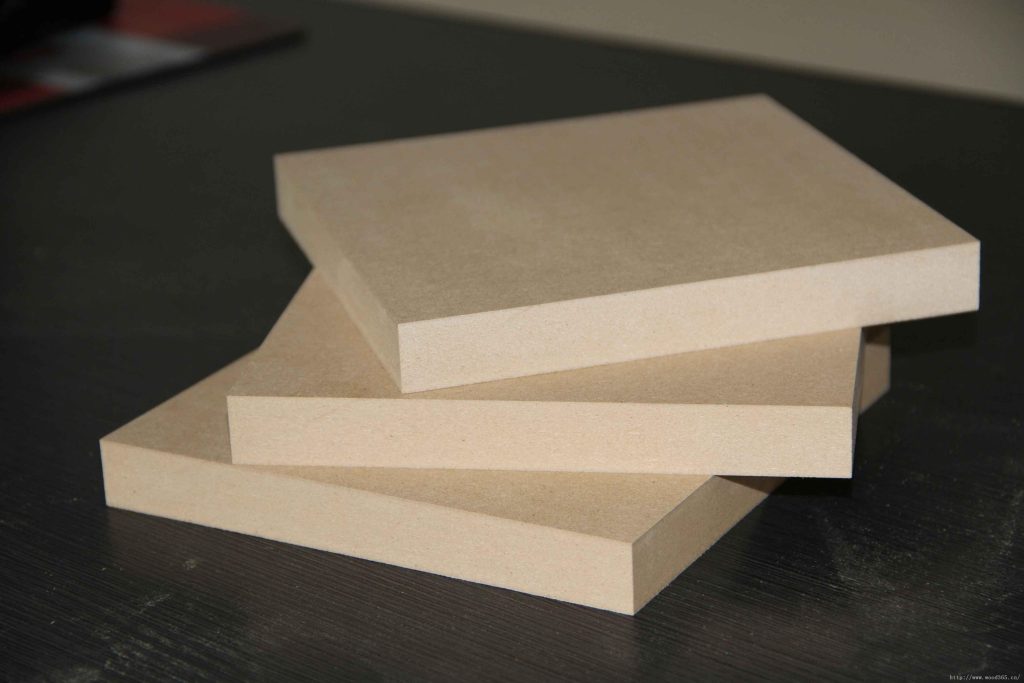
If a buyer searches for “mdf board”, they usually need more than a basic definition. Importers and distributors want to know whether MDF is suitable for furniture, cabinets, door panels, decorative boards, melamine faced panels, or painted components. Density, fiber structure, surface flatness, internal bond, moisture content, emissions, and packing all affect buying risk.
MDF board is short for medium density fiberboard. It is usually made by combining wood fibers with resin, forming a mat, hot pressing it, and sanding it into a smooth engineered wood panel. Unlike plywood, MDF does not have veneer layers or natural grain direction. Its main advantages are surface uniformity, machinability, and suitability for lamination or painting, but moisture resistance, screw holding, and edge strength must be judged by density, resin system, and application.
As a neutral basic definition, Wikipedia’s medium-density fibreboard explanation helps readers understand MDF composition and common uses before moving into purchasing details.
MDF Board Structure: A Fiber-Based Panel, Not a Veneer Panel
The key structure of MDF is fiber structure, not veneer layers. Wood is broken down into fine fibers, mixed with resin and wax systems, formed into a mat, and pressed into a uniform panel. This gives MDF two important characteristics: a very flat surface and a relatively uniform internal material.
That uniformity makes MDF suitable for painted panels, melamine faced boards, veneer faced panels, door components, and routed profiles. However, it also means buyers should not judge MDF only by surface color. Density distribution, surface strength, internal bond, and edge machining are often more important than a simple phrase like “smooth surface”.
- Flat surface: suitable for melamine paper, PVC, veneer, paint, and decorative overlays.
- Uniform core: suitable for routing, grooving, carving, cabinet doors, and detailed edge profiles.
- No natural grain direction: more uniform than solid wood, but without the cross-laminated strength of plywood.
- Sensitive edges: if density, resin, or edge sealing is poor, moisture absorption, chipping, and weak screw holding become more visible.
For deeper background on wood-based composites, fiberboard, and moisture behavior, USDA Wood Handbook is a more neutral technical source than a commercial product page.
Density Is Not Simply “The Higher, the Better”
Many buyers ask about MDF density, but average density alone is not enough. After hot pressing, MDF often has a density profile: the surface layers are denser, while the core layer is relatively lower in density. This profile affects surface hardness, sanding, internal bond, edge machining, and lamination quality.
- Higher surface density can improve sanding, painting, and lamination, but it may also increase tool wear if the panel is too hard.
- Stable core density supports panel flatness and overall strength.
- Low density may reduce screw holding, edge strength, and surface stability after lamination.
- Very high density increases panel weight, freight cost, and machining cost.
For B2B purchasing, “high density MDF” is not a complete specification. It is better to confirm the density range according to the application. Cabinet bodies, door skins, painted panels, routed panels, and melamine faced boards do not always need the same density profile.
Internal Bond and Edge Machining Quality
Internal bond describes how well the fibers inside the board hold together. It affects routing, grooving, screw fixing, handling, and machining. If internal bond is weak, the board may powder, chip, split, or break during processing.
Edge machining is one of the easiest ways to reveal MDF quality. A good MDF board should show a relatively dense and clean edge after cutting. It should not release excessive dust or show a loose internal layer. If the customer will use the board for edge banding, routed doors, or shaped profiles, edge quality becomes more important than it is for simple flat panels.
- Cabinet panels: focus on density, screw holding, edge banding, and dimensional stability.
- Door panels: focus on surface smoothness, routed edge quality, painting result, and resistance to deformation.
- Melamine faced panels: focus on surface density, sanding consistency, moisture content, and pressing stability.
- Low-cost packaging or temporary use: appearance requirements may be lower, but strength and damage risk still matter.
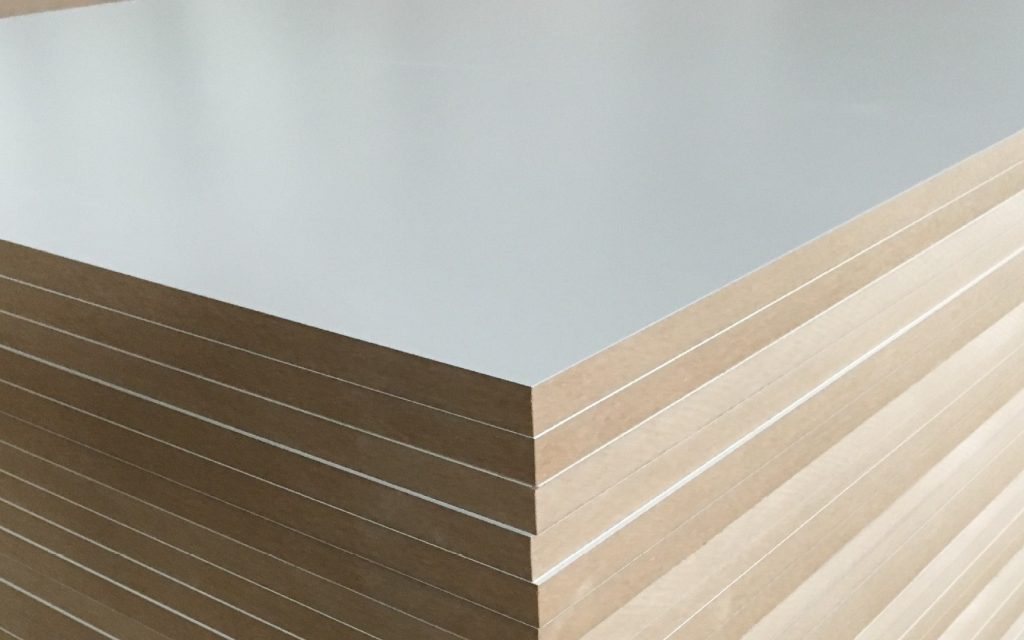
Surface Quality for Melamine, Veneer, and Paint
MDF is often used as the substrate for melamine faced board, veneer faced board, or painted panels because its surface is flat and has no obvious wood grain or knots. For laminated products, buyers should not only look at whether the surface appears smooth. Sanding consistency, surface density, glue absorption, moisture content, and panel contamination all matter.
If the MDF surface density is unstable, melamine pressing may produce local dents, bubbles, uneven bonding, or surface waviness. If moisture content is too high, sea shipment and local storage may increase the risk of warping, edge swelling, or mold.
Momentimber MDF board and melamine faced board sourcing support can help buyers align substrate density, sanding quality, surface material, thickness tolerance, packing, and pre-shipment inspection requirements in one specification instead of comparing vague “mdf board” quotations.
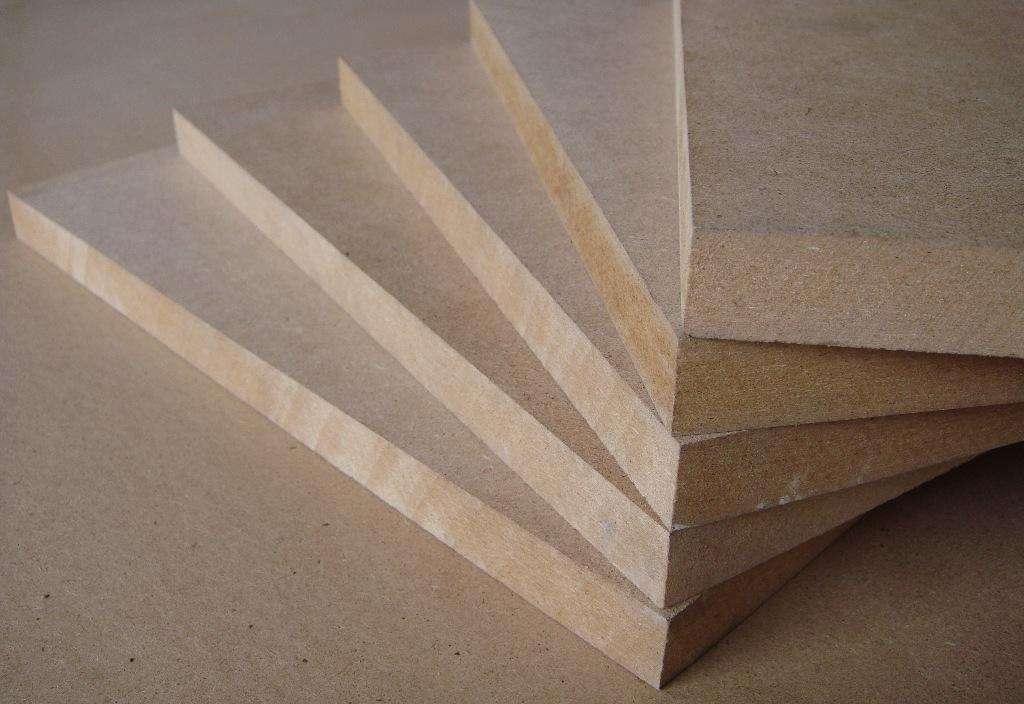
Moisture Resistant MDF Is Not Waterproof MDF
Moisture resistant MDF usually improves performance through resin systems, additives, or production control. However, it should not be treated as a board for long-term water immersion or unprotected outdoor exposure. In purchasing communication, the phrase “waterproof MDF” can easily create misunderstanding.
A better specification should describe the application environment, humidity conditions, edge sealing, surface facing, and test report requirements. For Southeast Asia, the Middle East, and parts of Africa, moisture risk may also come from sea shipment, port handling, pallet protection, and local warehouse conditions.
How to Compare MDF Board Quotations
A more useful question than “What specifications should I confirm?” is this: are two MDF quotations actually for the same board? If density, thickness tolerance, surface grade, sanding quality, emission class, and packing are different, unit prices are not directly comparable.
- Density: the same 18mm MDF may have different weight, strength, and cost if the density is different.
- Surface use: raw MDF, melamine faced MDF, and paint-grade MDF require different surface standards.
- Edge machining: simple cutting and routed door profiles require different substrate quality.
- Emission class: E1, CARB, EPA, or other requirements affect cost and documentation.
- Packing: export packing affects breakage rate and total landed cost.
If the order is related to the United States market or the buyer needs composite wood compliance documents, EPA composite wood products formaldehyde standards are an important source for understanding formaldehyde emission requirements.

MDF Board vs Particle Board vs Plywood
MDF, particle board, and plywood are all common engineered wood panels, but they are purchased for different reasons. MDF has a finer surface and is suitable for painting, lamination, and detailed machining. Particle board is often more cost-effective for melamine faced furniture panels. Plywood usually has better structural strength, screw holding, and impact resistance.
If the customer cares most about surface finish and precision machining, MDF may be the better choice. If the customer needs low-cost, high-volume cabinet panels, particle board may be more competitive. If the customer needs stronger structural support or lighter weight, plywood may be more suitable.o the target market. This reduces the risk of comparing quotations that look similar but are based on different specifications.
Common MDF Buying Mistakes
- Comparing only MDF board price without confirming density, thickness tolerance, and surface grade.
- Treating moisture resistant MDF as fully waterproof MDF.
- Ignoring edge machining and edge sealing, which may cause chipping or moisture absorption.
- Not confirming the final lamination or painting application before selecting the substrate.
- Using weak export packing, which increases corner and edge damage after sea shipment.
FAQ
Conclusion
Understanding MDF board is not only about knowing that it means medium density fiberboard. B2B buyers should understand how density profile, internal bond, surface quality, edge machining, moisture content, and compliance requirements affect purchasing decisions.
If you already know the target application, thickness, density, surface requirement, and packing method, the next step is to prepare an RFQ specification sheet and ask suppliers to quote against the same standard.
recent posts
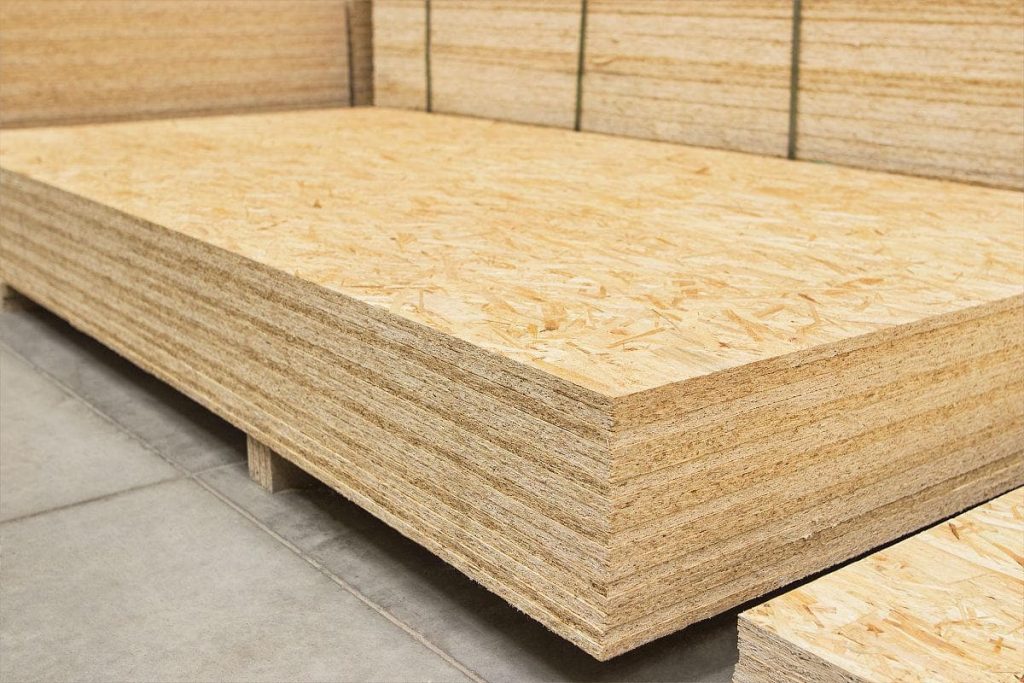
Sanded OSB for Furniture Still Needs a Finish Plan
OSB material reference only; sanding quality and the final finish need separate approval. Sanded OSB…
Plywood vs OSB for Crates Is More Than a Price Choice
Protected panel bundles are a supply-stage reference, not an approved design for a shipping crate….
Blockboard vs Finger Joint Board for Furniture Buyers
A visible timber-strip core does not make the finished panel the same as an exposed…

Synchronized Melamine Board Goes Beyond the Print
Woodgrain design reference only. A flat image cannot demonstrate EIR texture or alignment. Synchronized melamine…