

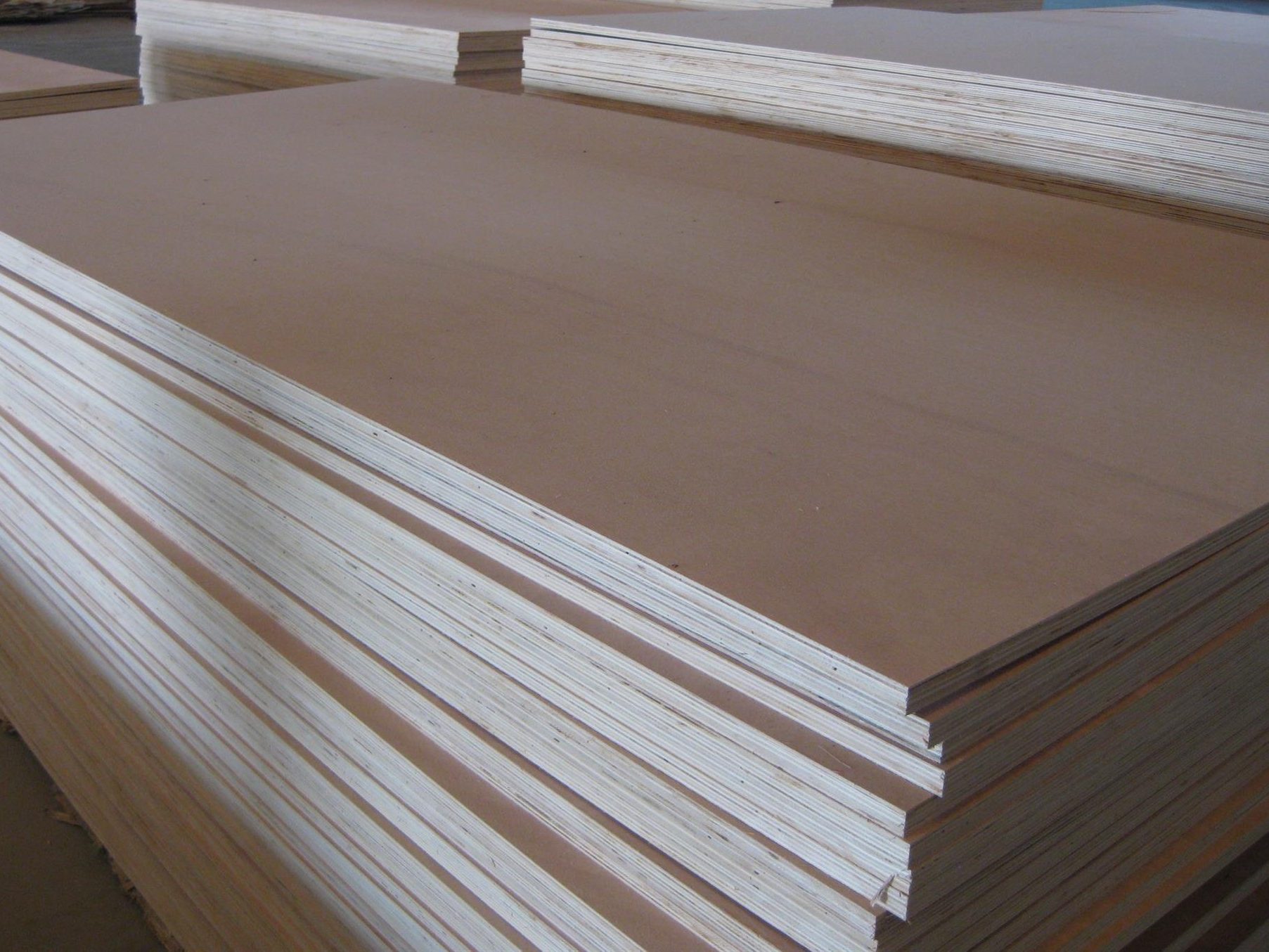
An 18mm plywood quotation may state 700 sheets per container, yet the shipment can still become overweight. Another supplier may load fewer sheets even though the board size is identical. The difference usually comes from panel density, actual thickness, core construction, moisture and packing mass. For importers, 18mm plywood weight is therefore part of the purchase specification, not a number to calculate after production.
A reliable loading plan uses three checks. First, calculate a realistic sheet-weight range. Next, reserve weight for pallets, face boards, straps and other packing. Finally, confirm that the bundle layout fits the actual container and remains within the permitted payload. This guide shows a practical way to do all three.
Buyer summary:
1. Calculate with measured thickness and an agreed finished-panel density.
2. Use a weight range, not one perfect number.
3. Deduct every packing component before dividing the available payload by sheet weight.
4. Check the door-facing width and stack height as well as container length.
5. Confirm the actual container plate, route limit and final Verified Gross Mass before shipment.
How to Calculate 18mm Plywood Weight
The basic formula is straightforward. Use metres for dimensions and kilograms per cubic metre for density.
Sheet weight (kg) = length (m) x width (m) x actual thickness (m) x finished-panel density (kg/m3)
A nominal 1220 x 2440 x 18mm sheet has a volume of about 0.05358m3. Multiply that figure by the finished-panel density. Do not use the density of raw timber alone, because the panel also contains glue, moisture, face veneers and possible repairs.
| Planning density | Calculated sheet weight | Approximate sheets per metric ton |
|---|---|---|
| 450 kg/m3 | 24.1 kg | 41 sheets |
| 500 kg/m3 | 26.8 kg | 37 sheets |
| 550 kg/m3 | 29.5 kg | 34 sheets |
| 600 kg/m3 | 32.1 kg | 31 sheets |
| 650 kg/m3 | 34.8 kg | 29 sheets |
| 700 kg/m3 | 37.5 kg | 27 sheets |
These figures are planning examples, not universal product grades. Poplar, eucalyptus and combi-core panels often occupy different parts of the range. However, moisture, veneer quality and actual lay-up can move a shipment away from the usual expectation. The commercial plywood product options should therefore be compared by construction and target use, not only by the core species printed on a quotation.
What Changes 18mm Plywood Weight
Nominal thickness is not finished thickness
A supplier may call a panel 18mm while the accepted finished range sits slightly above or below that number. A small difference affects every sheet. At 600 kg/m3, a 17.5mm sheet of the same length and width weighs about 31.3kg, while an 18.5mm sheet weighs about 33.0kg.
For a container with hundreds of sheets, that difference can exceed one metric ton. The purchase order should state the finished thickness tolerance, measurement points and whether the limit applies to individual sheets or a batch average.
Core construction changes the finished-panel density
Full poplar, full eucalyptus and mixed cores do not have the same typical mass. Even within one core description, veneer moisture, glue spread, gaps, overlaps and repairs cause variation. A heavier panel may offer a harder core, but excess weight can also come from moisture or glue. It is not automatic proof of better quality.
Our guide to poplar, eucalyptus and combi-core plywood explains the practical trade-offs in weight, machining and strength. For eucalyptus-heavy orders, the eucalyptus plywood density guide shows how to compare measured volume with scale weight. For a repeat order, approve a labelled cross-section and a shipment weight range instead of relying on a species name alone.
Moisture changes both mass and later stability
A wetter board weighs more when it leaves the factory. It may then lose mass in a dry warehouse, while the moisture change contributes to movement or warping. A handheld moisture meter is useful for screening a batch, although the buyer should use the same meter, settings and measurement pattern throughout the inspection.
How 18mm Plywood Weight Affects Container Quantity
The payload calculation should start with the lowest applicable cargo limit. That may come from the container plate, carrier, road regulations, rail restrictions, terminal rules or the buyer’s destination. A generic internet capacity is not enough for a booking.
Payload-based sheet quantity = (permitted cargo mass – total packing mass – safety margin) / expected average sheet weight
Maersk lists example maximum payloads of 28,870kg for a 40-foot standard container and 28,690kg for a 40-foot high-cube steel container. It also warns that limits can vary by country. Buyers should use the carrier’s current cargo-weight guidance only as a reference, then confirm the equipment assigned to the shipment.
The table below assumes that 25,000kg remains available for plywood after packing and the planned safety margin. It shows how density changes the payload result before geometric checks.
| Average sheet weight | Payload-based result | Commercial meaning |
|---|---|---|
| 26.8 kg | About 932 sheets | A lightweight construction may be limited by bundle layout first |
| 29.5 kg | About 847 sheets | Confirm the average with production samples |
| 32.1 kg | About 778 sheets | A moderate change in thickness can alter the result |
| 34.8 kg | About 718 sheets | Dense panels can reach the weight ceiling earlier |
| 37.5 kg | About 666 sheets | Allow for sheet-to-sheet and bundle-to-bundle variation |
Round down, then compare the result with the bundle plan. Never tell the customer that the calculated quantity is guaranteed before the actual sheet average, packing design and container details are available.
Why Cubic Metres Alone Give the Wrong Answer
A container can have enough nominal volume and still reject the planned load. Plywood is a dense, rigid product, so payload and bundle geometry often control the shipment before cubic capacity does. Empty pockets above or beside bundles do not necessarily mean that more sheets can be loaded safely.
Check the door-facing cross-section first
For 1220 x 2440mm boards loaded flat, look at the container from the doors. The 1220mm bundle width must pass through the door opening. The sheet count in each vertical stack determines bundle height: 50 sheets of 18mm material already create 900mm of board height before bearers and protective panels.
Next, check whether stacked bundles remain below the usable door height and can be handled by the selected forklift. Only then should the loading team place those bundle footprints along the container length. A top-view sketch by itself can miss a door-height or handling problem.
Container length controls bundle positions
The nominal 2440mm sheet length consumes a substantial part of the container floor. Bearers, pallet ends and clearance also take space. Rotating a final bundle may look possible on a drawing but can fail because workers cannot turn or position it inside the container. Ask for a dimensioned packing layout and compare it with a previous physical loading when the configuration is new.
Weight distribution still matters
A legal total weight does not justify poor distribution. Concentrating heavy bundles near one end can create handling and transport problems. The loading plan should keep weight balanced, support every bundle properly and use suitable blocking or restraint. The freight forwarder and loading team must approve the practical arrangement.
Do Not Forget Packing Weight
Export packing can add more mass than buyers expect. Timber pallets or bearers, thin MDF or plywood face boards, corner protectors, plastic film, steel straps and moisture protection all belong in the calculation. Fumigated timber frames may add further weight where they are required.
| Packing item | Why it is used | What to record |
|---|---|---|
| Bottom pallet or bearers | Forklift access and load support | Material, dimensions, quantity and average mass |
| Top and side protection | Reduces face and edge damage | Board type, thickness and number of pieces |
| Plastic or moisture barrier | Limits rain and splash exposure | Coverage, sealing method and condition |
| Steel or PET straps | Keeps the bundle stable | Number, position, protectors and tension |
| Timber frame | Adds handling or impact protection | Treatment status, dimensions and mass |
Instead of estimating packing as a vague percentage, weigh one finished bundle or add the measured mass of each component. Then multiply by the number of bundles. This approach also improves the packing list and makes repeat-order comparisons easier.
Verified Gross Mass Is the Final Shipment Check
The International Maritime Organization explains that the shipper must provide the verified gross mass of a packed container. It can be established by weighing the complete packed container or by weighing all cargo, packing and securing materials and adding the container tare, using an approved method. Without VGM, the container should not be loaded.
Read the IMO’s official VGM requirements when setting the shipment procedure. The sales estimate, supplier packing list and final VGM should be consistent, but the verified figure controls the shipment.
Practical margin: Do not plan exactly to the published payload. Moisture changes, scale tolerance, packing changes and sheet-weight variation can consume the final allowance. Agree on a conservative maximum before production and investigate any bundle that falls outside the expected pattern.
A Loading Estimate Buyers Can Audit
Ask the supplier to show the inputs instead of providing only a final sheet count. A useful loading worksheet should include the following items:
- Panel specification: finished size, thickness tolerance, core lay-up, face and back, glue and surface.
- Weight basis: approved density range, expected average sheet weight and sample source.
- Bundle design: sheets per bundle, number of bundles, bearers, face boards, straps and bundle dimensions.
- Container basis: type, plate payload, tare, door opening and usable internal dimensions.
- Route controls: carrier, inland road or rail limits and destination restrictions.
- Calculated result: board mass, packing mass, planned cargo mass and remaining margin.
- Loading evidence: bundle labels, photos before closing, seal number and final VGM document.
Before shipment, sample several bundles and compare the result with the approved range. The plywood warehouse inspection guide provides low-cost checks for dimensions, weight patterns, flatness and visible core consistency. Certified testing remains necessary when the contract or destination rules require it.
Common Loading Mistakes and Better Controls
| Mistake | What goes wrong | Better control |
|---|---|---|
| Using one catalogue sheet weight | Real production differs by construction and moisture | Approve a range and weigh samples across bundles |
| Dividing container CBM by sheet CBM | Ignores payload, pallets, clearances and handling | Run payload and door-facing geometry checks separately |
| Ignoring finished thickness | A small difference multiplies across the full shipment | Measure actual thickness and calculate with that value |
| Promising the maximum quantity | No room remains for variation or packing changes | Use a conservative loading target and margin |
| Checking only the total bundle weight | Local bundle variation remains hidden | Compare several bundle and individual-sheet samples |
| Treating VGM as paperwork | The booking can fail or become unsafe | Build VGM into the loading SOP and document responsibility |
The best loading number is not the largest one. It is the quantity that reaches the buyer without overweight charges, rushed unloading, broken edges or a disagreement about shortages. A slightly lower but repeatable loading plan is often more valuable than an optimistic maximum.
Frequently Asked Questions
Request a Plywood Weight and Loading Estimate
Send Momentimber the sheet size, finished thickness, core construction, surface, target quantity, packing requirement and destination. We can compare the specification, estimate a practical 18mm plywood weight range and prepare a loading worksheet for supplier confirmation.