

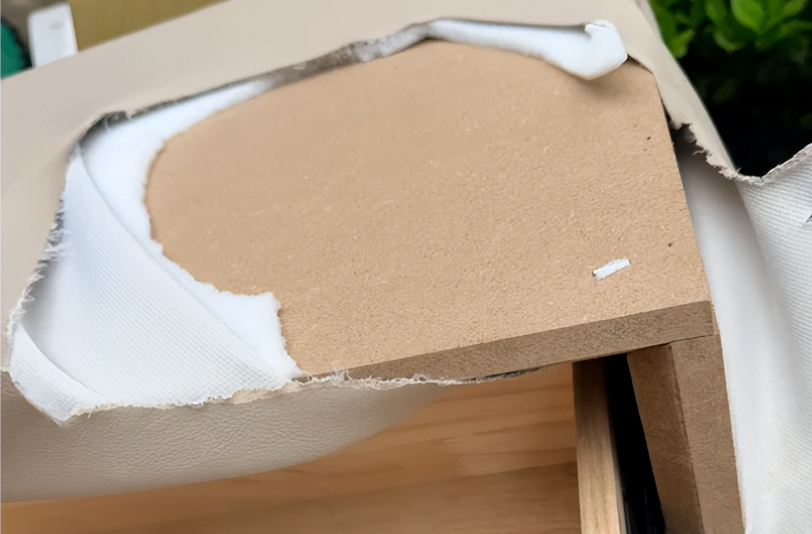
Two cabinet makers use what appears to be the same 18 mm MDF. One reports clean hinge installation. The other says the screws loosened after a few adjustments. Before changing the whole board supplier, ask a more useful question: where were the screws placed, what pilot hole was used, what load did the fitting carry, and was the board specified for that joint? MDF screw holding is a system result, not a single density number.
For a distributor or furniture-material buyer, this distinction matters. A preventable fitting failure can become a warranty argument, an expensive rework job or a claim against the wrong party. A simple trial with the intended screws and fittings is usually more valuable than a vague request for “high screw holding.”
Key takeaways:
1. Face fixing and edge fixing are different conditions and should not be treated as interchangeable.
2. Screw type, pilot-hole diameter, edge distance and driver torque can change a result even with the same MDF.
3. Density can support a specification, but it does not replace an application-specific fitting trial.
4. Avoid relying on expanding fittings in MDF edges when a face-fixed or differently designed joint is possible.
5. Keep the fitting, screw, drilling method and Golden Sample together when approving a furniture panel order.
The Short Answer: Start With the Joint, Not the Complaint
MDF is regularly selected for furniture components because a well-specified board gives a smooth, consistent machining surface and useful screw retention. The MDF product page is the starting point for thickness, density and surface options. But when a hinge or connector fails, the board alone cannot explain the result. The geometry of the joint and the way the screw entered the board matter just as much.
The European Panel Federation’s practical MDF screwing guidance recommends choosing screw positions in relation to board thickness and screw size, and explains why MDF generally needs larger pilot holes than solid wood or particleboard. This is useful B2B guidance because it turns an abstract property into an order and workshop control.
| Fixing situation | What changes | First buyer action |
|---|---|---|
| Hinge plate fixed to the MDF face | The screw works into the broad face; edge splitting risk is lower, but torque and pilot holes still matter. | Trial the exact hinge plate, screw and setting on the approved thickness. |
| Cabinet side screwed into the MDF edge | The edge has less room for the screw and is more sensitive to placement, drilling and joint design. | Confirm edge distance, pilot-hole method and whether a face-fixed alternative is available. |
| Cam, dowel or connector assembly | The fitting can put concentrated force into a drilled zone or expand in the board. | Use the intended fitting pattern in the sample trial, not a general screw test. |
| Door, shelf or moving component | Repeated load and adjustment can loosen a joint that looked sound at installation. | Define the real component load and number of adjustment cycles before approving the board. |
Why Two MDF Boards Can Give Different Hinge Results
A hinge complaint may begin with the MDF, but it should not end there. Board density, density distribution, internal bond, moisture condition, thickness and face quality can influence a fixing zone. Yet the same board may still perform well in one configuration and poorly in another when the screw is over-driven, the hole is undersized or the fitting is too close to an edge.
This is why density should be written as a specification range connected to an application, not as a magic quality label. A heavier sheet may not create a better hinge joint if the drilling and fitting design remain wrong. The article Why 18 mm MDF Sheets Weigh Differently explains why board weight needs to be read alongside thickness and actual construction, not in isolation.
Face fixing is usually the more forgiving choice
Where the furniture design allows it, face-fixed mechanical fittings distribute the fixing task through the wider panel face. The European Panel Federation’s assembly-fitting guidance specifically recommends face fixing where possible and cautions against fittings that rely on expanding a component inside an MDF edge. This does not mean all edge joints fail. It means an edge-based joint should receive more design attention before it becomes a volume SKU.
An over-tightened screw can strip a good board
A screw can feel firm as it goes in, then lose thread engagement during the final turn. This is easy to miss when a workshop is rushing. Record the screw type, screw diameter, pilot hole, insertion depth and driver setting in the trial. If the head needs to sit flush, prepare the surface correctly rather than using extra torque to force it down.
What to Trial Before You Approve an MDF Furniture Order
Do not ask a supplier for a universal screw-holding promise. Send the actual joint logic: board thickness, component drawing, hardware reference, screw, drilling pattern and intended load. A small pre-production trial can expose an unsuitable configuration before the order becomes a container of finished parts.
| Trial item | What to record | What a failure may reveal |
|---|---|---|
| MDF sample | Thickness, density range, face condition, lot or sample ID and conditioning state. | The material reference is missing, or the sample no longer represents the order. |
| Hardware and screw | Hinge or connector code, screw diameter, thread style and insertion depth. | A hardware change is being blamed on a board change. |
| Pilot hole | Drill diameter, depth, straightness and whether the hole was made in face or edge. | The screw is wedging or stripping instead of cutting a controlled thread. |
| Driver setting | Tool, torque setting and whether the head is flush without crushing the surface. | The joint is being over-driven during assembly. |
| Load condition | Door size, shelf load, adjustment cycle or pull direction. | A static sample pass does not represent the finished use. |
For a cabinet programme, take photos of the trial from the face and the edge, keep the failed and successful examples, and identify the exact hole locations. This is much stronger evidence than a loose screw shown without its fitting, hole or component context.
Pilot Holes and Edge Distance Are Part of the Specification
A pilot hole is not an optional workshop detail for every MDF fixing. It reduces the chance that the screw acts as a wedge and gives the thread a controlled path. The cited industry guidance gives a general pilot-hole range of 85 to 95 percent of the screw core diameter and advises drilling beyond the expected insertion depth. Use the hardware supplier’s recommendation where it is more specific, then verify it on the approved board.
Spacing also matters. Industry guidance gives general minimum positions for face and edge screws relative to corners and panel edges. These are not a substitute for the furniture drawing, because actual board thickness and screw diameter still control whether the design has enough material around the hole. Treat a hinge near a narrow end, a handle screw near a routed edge and a connector in a shelf end as separate cases.
- State whether each critical fixing is in the MDF face or edge on the component drawing.
- Name the hardware and screw reference; do not approve a trial with a substitute screw.
- Record the pilot-hole diameter and depth for every high-risk joint.
- Keep sufficient material around edge and corner fixings; do not move holes closer during last-minute machining changes without another trial.
- Set a driver torque or stop condition so heads are seated without stripping the thread or crushing a decorative surface.
- Retain a signed Golden Sample component, not only a loose raw board offcut.
How to Separate a Board Issue From a Process Issue
A fair claim process protects a buyer and a supplier. Start by preserving evidence before re-drilling, adding glue or replacing fittings. The pattern tells the story: are failures only in edge screws, only at one factory, only after the same driver setting, or repeated across face-fixed trials from traceable boards?
| Observed pattern | Likely first check | Evidence to keep |
|---|---|---|
| Threads strip during the final turn on several face-fixed samples | Check pilot hole, screw core size, driver torque and the traceable MDF sample. | Trial sheet ID, drilled holes, driver setting and photos before rework. |
| Only edge joints crack or loosen | Check edge distance, screw length, pilot-hole method and joint design. | Cross-section photo, drawing, hardware code and position from the corner. |
| One cabinet factory reports failures, another does not | Compare machines, drill bits, assembly sequence and hardware, not only the board. | Both process records and retained samples. |
| Failure begins after doors are adjusted or loaded | Review the repeated pull direction and door or component weight. | Finished-component dimensions, hinge quantity and service condition. |
MDF processing defects can also appear around surface and edge work. If the failure includes blistering or an opening edge band, review MDF Edge Banding Failure as a separate diagnostic path. An edge-band problem and a stripped screw can share a moisture or machining cause, but they are not automatically the same defect.
Turn the Trial Into an RFQ and Inspection Record
The order should connect the panel to the finished joint. This is especially useful when a distributor is sourcing MDF for several furniture factories, each with different hardware and machinery. Momentimber can help coordinate the sample record, production follow-up, selected checks and packing evidence through our sourcing and quality-control process. The commercial value comes from making the agreement visible before production.
RFQ wording to adapt:
MDF for [component and application], [size] x [thickness], agreed density range and moisture condition. Critical fittings: [hardware code] with [screw code]. Fixing position: [face/edge], pilot hole [diameter and depth], edge/corner clearance [drawing reference]. A Golden Sample component using the agreed board, hardware and assembly method must be approved before bulk production. Any change to MDF construction, thickness, fitting, screw, drilling method or intended load requires written approval.
When requesting a quotation, include the number of components per sheet, the intended product life and whether the customer will adjust hinges after installation. These practical details help identify when a board, fitting or joint design needs a different choice before the price is finalised.
A Better MDF Hinge Decision Is Usually a Better Process Decision
MDF screw holding is not decided by a brochure value alone. It is the outcome of a specified board, a realistic joint, the right fitting, a controlled pilot hole and an assembly method that avoids stripping. Buyers who approve those elements together prevent a large share of hinge complaints before the first container arrives.
Related Reading
Is High-Density Particleboard Always Better? Balancing Weight, Machining, and Furniture Performance
When sourcing and using engineered wood panels, many people fall into a common trap: “The…

Pressed Wood Board vs Particle Board vs Chipboard
Particleboard for Furniture Components: A B2B Selection Guide
Furniture particleboard should not be selected as one generic board for every furniture component. Cabinet…
Film Faced Plywood Edge Sealing After Cutting
Film faced plywood edge sealing needs to follow the cutting and drilling plan. Factory edge…

Plywood Glue Types: A Detailed Guide for Furniture Makers
There is no perfect glue, as we all know. No single glue can simultaneously be…

Synchronized Melamine Board Goes Beyond the Print
Woodgrain design reference only. A flat image cannot demonstrate EIR texture or alignment. Synchronized melamine…
Why 18 mm MDF Sheets Can Weigh So Differently
Read board weight and density as part of a complete MDF specification, rather than using weight alone as a quality verdict.
MDF Edge Banding Failure: Why Blisters and Open Joints Appear
Separate a screw or hardware problem from moisture, machining and edge-banding issues around the same component.
MDF Storage: Why Flat Boards Warp Before They Reach the CNC
Protect panel condition before machining so a good fixing trial is not undermined by poor storage or handling.
Planning MDF for furniture fittings or hinge-heavy components? Send the board thickness, component drawing, hardware code, screw reference, drilling method and intended load. We can help turn them into a practical sourcing and approval file.