

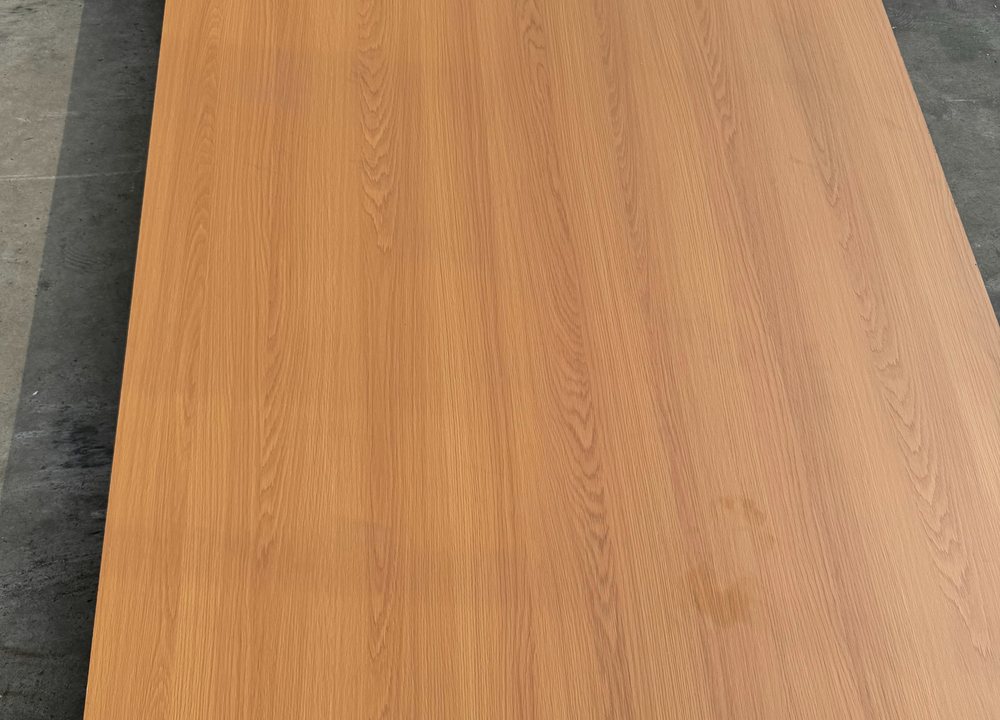
Melamine vs HPL is a construction question, not just a choice of woodgrain. HPL means high-pressure laminate: a separate resin-and-paper sheet bonded to a supporting board. Melamine-faced board uses a decorative resin-paper surface system. Two samples can look similar while representing different products. Ask which surface the quote includes before comparing prices.
Melamine vs HPL Starts Below the Printed Pattern
Our melamine-faced boards use the decorative face and substrate as separate specification items. A decor name describes appearance. It does not identify every layer underneath or the finished construction.
The proHPL composite-panel reference describes HPL bonded onto wood-based substrates. In an HPL-faced panel, the laminate is therefore distinct from the supporting board. This is different from assuming that every product called laminated board has the same face.
Melamine-facing routes vary with the substrate. Ask how the decorative paper, any supporting carrier and the core are assembled.
TFL means thermally fused laminate, commonly used for melamine resin-paper facing. Trade terms vary, so ask for the actual construction.
Ask What Is Included in the Board Quote
| Question | Why it matters | Useful answer |
|---|---|---|
| Which facing? | Similar decor can hide different systems. | Melamine paper facing or a specified HPL laminate. |
| Which substrate? | The face does not identify the core. | Named MDF or particleboard product and grade. |
| Which thickness? | A substrate figure may not describe the finished panel. | Finished thickness and agreed tolerance. |
| Which reverse face? | The back is part of the supplied construction. | Both faces and their arrangement identified. |
For example, MDF and particleboard are different substrates. Either name still leaves the surface question open. Keep the substrate reference and facing reference together so a cheaper offer does not quietly change one of them.
Also establish whether the offer covers a loose laminate sheet or a completed faced panel. Those are not the same buying unit. If bonding is excluded, the quoted sheet price does not include the work of producing the finished board.
Do Not Turn the Material Name Into a Performance Promise
A customer may need a surface for a worktop, cabinet side or display unit. Describe that use first. Then compare the relevant surface grade and the whole construction. Avoid saying one material is always better, waterproof or suitable for every horizontal application.
The Estonian standards centre description of EN 14322 covers decorative melamine-faced interior boards and excludes laminates covered by EN 438. These are different product scopes. A reference to one does not automatically establish compliance with the other.
Ask which document covers the supplied product. A labelled sample and written construction are practical first steps. Obtain any required performance evidence for that product.
Approve the Surface and Substrate Together
The raw particleboard and MFC guide explains why the same substrate can sit in different product lines. Keep the face, back, substrate and finished thickness in one approval record. A decorative chip alone is not a complete board specification.
Before a repeat order, ask for confirmation if the facing system changes. Keeping the same colour name does not make a substitution equivalent. It may change the assembly route, finished dimensions or the information your own customer expects.
Momentimber focuses on raw substrates and melamine-faced boards. An HPL comparison is educational, not a claim of current HPL availability. If a drawing requires HPL, state that requirement clearly instead of accepting a melamine offer under the general word laminate.
Frequently Asked Questions
Send the project drawing or existing surface specification, intended use, substrate and finished thickness. Momentimber can help clarify the raw-board or melamine-faced requirement before quoting.