

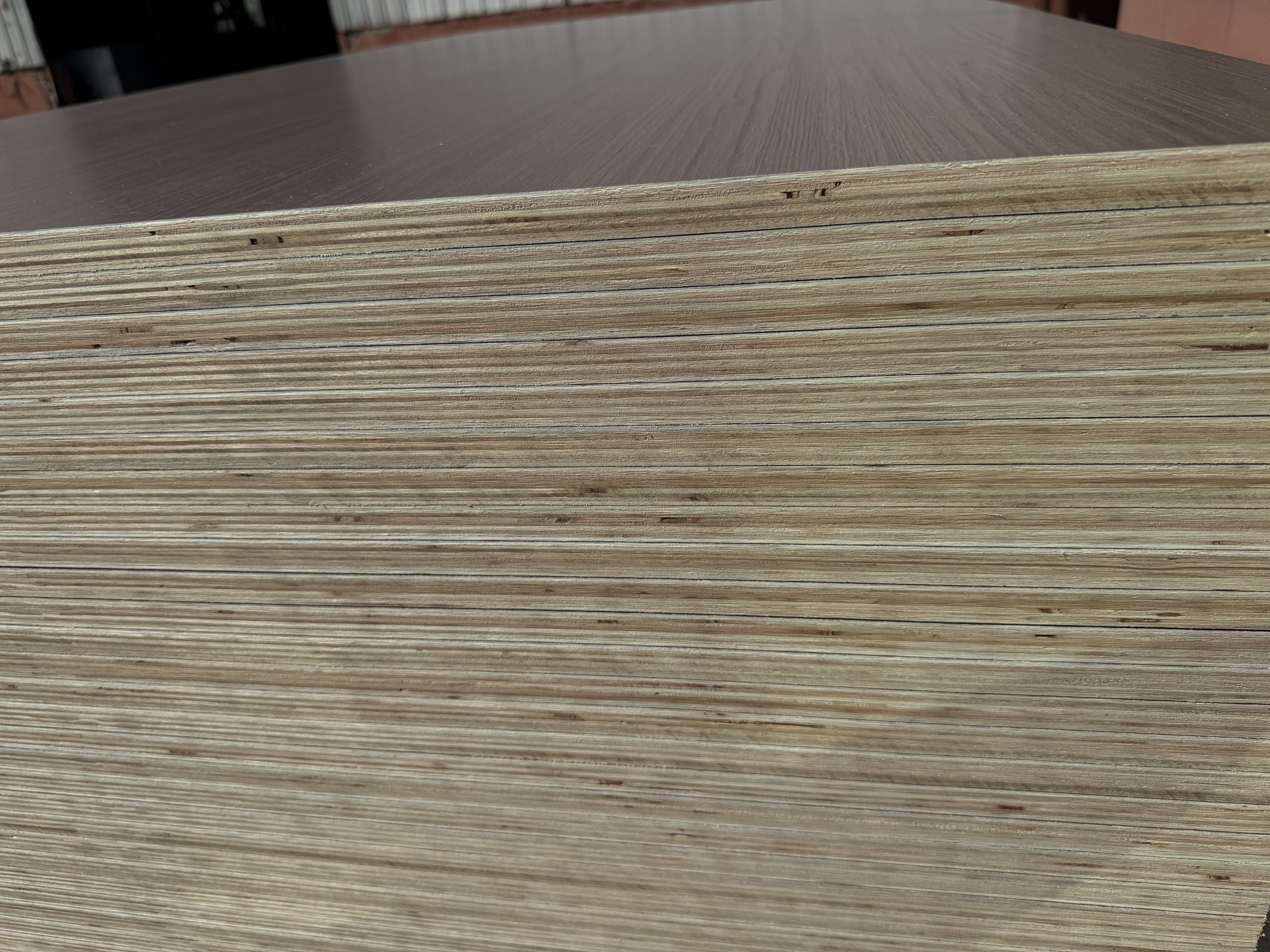
A polished factory video can make almost any supplier look convincing. The harder question is whether the approved plywood will still have the same core, thickness, bond, face and packing when the container is loaded. When evaluating a plywood supplier China buyers should verify the business, the offered construction and the shipment-control process separately. Missing one of these checks can turn a low quotation into delayed production, rejected stock or a claim with no usable evidence.
The practical answer is not to search for a supplier with the most certificates. Build a short evidence chain around your exact product: legal identity, labelled sample, written specification, production records, inspection method and loading documents. Each item should answer one commercial risk.
Key takeaways:
1. Verify the company receiving payment as well as the factory producing the goods.
2. Audit the exact plywood construction, not the number of machines in a workshop.
3. Keep two signed Golden Samples and connect them to a written specification.
4. Treat certificates as supporting evidence, not proof that every sheet in the shipment complies.
5. Start with a controlled trial order before increasing volume or SKU complexity.
Plywood Supplier China Audit: The Short Answer
A useful supplier audit has three layers. First, confirm who you are contracting with and who will receive payment. Second, confirm that the production route can make the exact panel you need. Third, confirm how the supplier will prevent an approved sample from drifting during production, packing and loading.
For example, a supplier may produce raw poplar-core plywood at one site and coordinate melamine pressing at another specialist line. That arrangement is not automatically a problem. It becomes a problem when the buyer cannot see which producer, substrate, decorative paper and controls apply to the order. Momentimber’s melamine-faced board supply options are therefore discussed as a surface-and-substrate system, not by one vague factory label.
| Evidence to request | What it helps prove | What it does not prove |
|---|---|---|
| Business licence and bank details | Legal identity and payment consistency | Product quality or delivery performance |
| Factory video or visit | Site, equipment and current activity | That your order will use the same materials |
| Labelled sample | A physical target for appearance and structure | Consistency across mass production |
| Test report | A tested sample met named conditions | Every current batch is identical |
| Inspection records | Checks were completed on an identified lot | The acceptance limits were commercially suitable |
| Loading photos and seal record | Packed goods entered the named container | Hidden defects inside uninspected sheets |
1. Verify the Contracting Company Before the Product
Match the company name on the quotation, proforma invoice, business licence, bank account and export documents. If a trading company contracts with you while another factory produces the panels, ask for that structure to be stated clearly. You need to know who accepts the purchase specification, who controls production and who carries responsibility when a claim occurs.
The U.S. International Trade Administration recommends performing due diligence on potential foreign partners and checking information through independent sources. Its foreign partner due-diligence guidance is useful even for buyers outside the United States because the basic principle is universal: verify identity, capability and reputation before committing funds.
Simple checks that small importers can actually perform
- Confirm the registered name: compare licences, invoices, contracts and beneficiary details character by character.
- Ask who produces the order: record the factory name and location for each major product category.
- Use a live video call: request the warehouse, production line, current materials, packing area and your labelled sample in one continuous call.
- Check document dates: old certificates and test reports may describe another product or an expired scope.
- Agree the claim channel: name the person who receives inspection reports and has authority to approve corrective action.
2. Audit the Exact Plywood Construction
A plywood factory audit should begin with the order specification. A workshop can own presses, sanders and saws yet still be unsuitable for a tight furniture-core requirement. Ask the supplier to walk through the material path for your panel: veneer species, veneer thickness, drying, core repair, lay-up, adhesive, pressing, conditioning, sanding, face preparation, trimming and packing.
Then compare the proposed construction with your use. Drawer sides need clean machining and stable thickness. Cabinet panels may need a smooth face for lamination. Packaging plywood may prioritize strength, nail holding and cost. Our guide to plywood structure and core types explains why two sheets with the same nominal thickness can behave differently.
Buyer rule: Do not ask whether a supplier can make “18 mm plywood.” Ask whether it can repeatedly make your named core, veneer sequence, face grade, glue system, finished thickness range, moisture condition and packing method.
3. Connect the Golden Sample to a Written Specification
A Golden Sample is a retained, labelled panel section approved by both sides. Keep one copy with the buyer and one with the supplier. Mark the order reference, construction, face, thickness, approval date and signatures. Photos help communication, but they cannot preserve colour, surface feel, core gaps or edge structure as reliably as a physical sample.
The written specification should define what the sample cannot show. Record the permitted thickness range, measuring method, dimensions, squareness, core gap limits, sanding, moisture range, bond requirement, emissions claim, bundle quantity and packaging. For melamine-faced plywood, also record the decor code, texture, gloss, grain direction and reverse-side system. Our guide to melamine woodgrain direction and cutting yield explains why the same decor can create different usable output after nesting and cutting.
Prevent sample-to-production drift
Before mass production, ask for photographs of the labelled veneer, adhesive or resin record, first pressed panels and cut edges. Approve the first production pieces before the full run continues. During production, record any substitution in writing. A supplier should never change the core species, face veneer, glue or backing simply because the replacement looks similar.
4. Check the Quality System Through Records
A quality system is useful when it turns a specification into repeatable checks. ISO explains that ISO 9001 provides a framework for consistent processes, responsibilities, records and continual improvement. The official ISO 9001 overview helps buyers understand what a quality-management certificate is intended to cover.
However, certification does not inspect every shipment for you. Ask to see the documents that apply to your order: incoming veneer checks, moisture records, pressing parameters, thickness sheets, appearance grading, packing counts and corrective-action notes. A simple completed record tied to your batch can be more useful than a framed certificate with no product scope.
| Control point | Low-cost evidence | Buyer decision |
|---|---|---|
| Incoming veneer | Species label, moisture readings and defect photos | Accept, segregate or re-dry |
| Core assembly | Edge and centre-cut photos from first panels | Continue or correct gaps and overlaps |
| Pressing | Batch time, temperature and pressure record | Trace bond problems to a production lot |
| Sanding and sizing | Nine-point thickness sheet and dimension check | Adjust before decorative finishing or packing |
| Final grading | Defect count against the signed sample | Release, rework or downgrade |
| Packing and loading | Bundle labels, counts, container condition and seal | Confirm shipment identity and protection |
5. Verify Environmental and Chain-of-Custody Claims
If the buyer requires an FSC claim, emission class or market-specific label, write the exact claim into the order. Do not accept a general statement such as “FSC available.” The certificate holder, scope, product group, code and validity should match the proposed supply chain. The official FSC certificate search allows buyers to check current certificate and licence information.
For emissions, request the applicable standard, test method, issuing laboratory, product description and date. Confirm whether the report covers the same core, adhesive and thickness family. If a destination market requires importer or labelling duties, verify those obligations with the relevant regulator or customs adviser before ordering.
How to Evaluate a Supplier Remotely
A remote review can screen most commercial risks before travel. Start with a structured video call and request evidence in a fixed order. The goal is not to catch the supplier off guard. It is to see whether the people, documents and product description tell the same story.
- Before the call: send the RFQ, product drawing and evidence list so the supplier can prepare relevant records.
- During the call: follow one labelled sample from raw veneer or stock panel through production, grading and packing.
- Ask operators simple questions: what thickness is being produced, which glue is used and how failed sheets are separated.
- Inspect ordinary stock: do not view only the cleanest showroom pieces; look at edges from several bundles.
- After the call: write a short gap list with owner, deadline and required evidence.
- Before payment: make sure the final PI includes the specification and agreed inspection rights.
Momentimber’s supplier coordination and production-follow-up approach is designed for this evidence-based process. When several panel types come from different specialist producers, the shared specification, sample and inspection record become even more important.
Use a Trial Order to Test the Working Relationship
A trial order should test more than product quality. It should show how the supplier handles specification questions, change control, deadlines, inspection findings, packing details and shipping documents. Keep the first order narrow enough that you can examine the result, but large enough to represent normal production and packing.
Set three review gates: first-piece approval, pre-packing inspection and container-loading evidence. Use a written defect list with photos, bundle numbers and agreed actions. The plywood warehouse test checklist gives small importers practical checks for thickness, flatness, edges, cutting and simple bond screening.
Red flags that deserve a pause
- The beneficiary changes without a clear contractual explanation.
- The supplier refuses to identify the actual producer or batch.
- The sample is unlabelled, or the supplier will not retain a matching copy.
- Every question is answered with “best quality” instead of a measurable limit.
- Reports do not identify the product, thickness, producer or test date.
- Inspection is allowed only after the goods are fully packed and the balance is paid.
- Substitutions are treated as normal and communicated only after production.
What to Put in the RFQ and Purchase Contract
The RFQ should make supplier quotations comparable. The purchase contract should make acceptance enforceable. Use the same specification table from enquiry through inspection so that product meaning does not change between sales, production and quality teams.
| Contract field | Minimum detail |
|---|---|
| Application | Component, machining, finish, load and service environment |
| Construction | Core species, veneer sequence, face and back, glue and emissions claim |
| Dimensions | Finished size, thickness tolerance, squareness and measurement method |
| Appearance | Approved Golden Sample, repair limits, sanding and colour expectation |
| Inspection | Sampling stage, acceptance limits, buyer access and failed-lot action |
| Packing | Sheets per bundle, protection, runners, straps, labels and shipping marks |
| Documents | Invoice, packing list, origin, test or certification evidence and loading photos |
| Claims | Notice period, evidence required and remedy process |
A reliable plywood supplier China search ends with a contract that is easy for production and inspection teams to use. Use this plywood supplier China audit to compare the evidence behind each quotation. The best supplier is not simply the one with the lowest sheet price or the largest workshop. It is the one that can explain the product, control agreed variables and leave a clear record when something changes.
Frequently Asked Questions
Evaluate the Order, Not Just the Factory
Send the intended application, plywood construction, target market, quantity and the evidence you already have. We can help turn those requirements into a supplier comparison, sample checklist and inspection plan.