

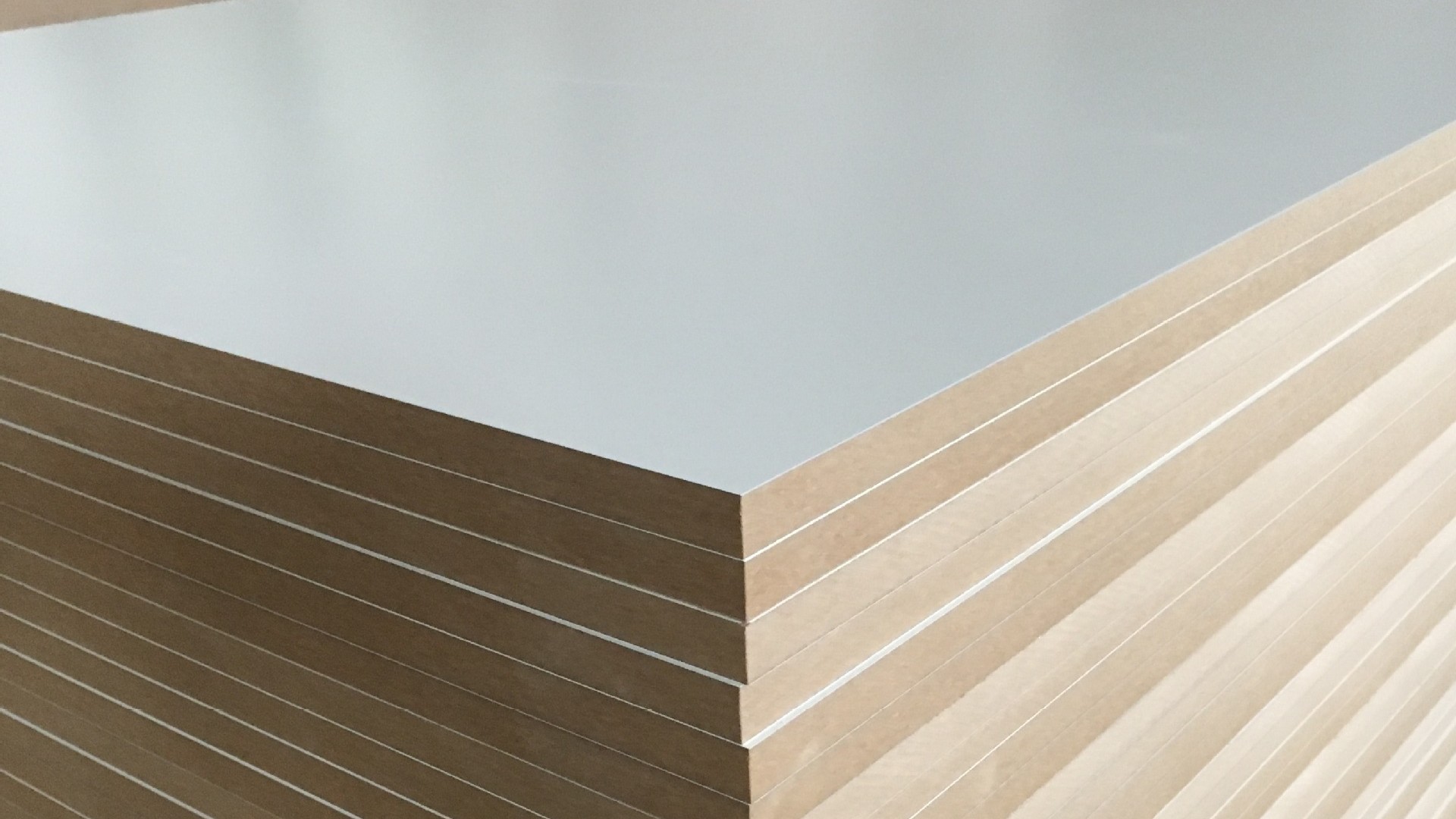
Many distributors find sourcing MDF board confusing due to inconsistent density standards and hidden quality differences that impact durability. So us simplifies the complexities of mdf sheets, from technical specs to pricing, giving you the clarity needed to choose the right panels for your inventory and ensure long-term client satisfaction.
What is MDF Board? Understanding the Composition
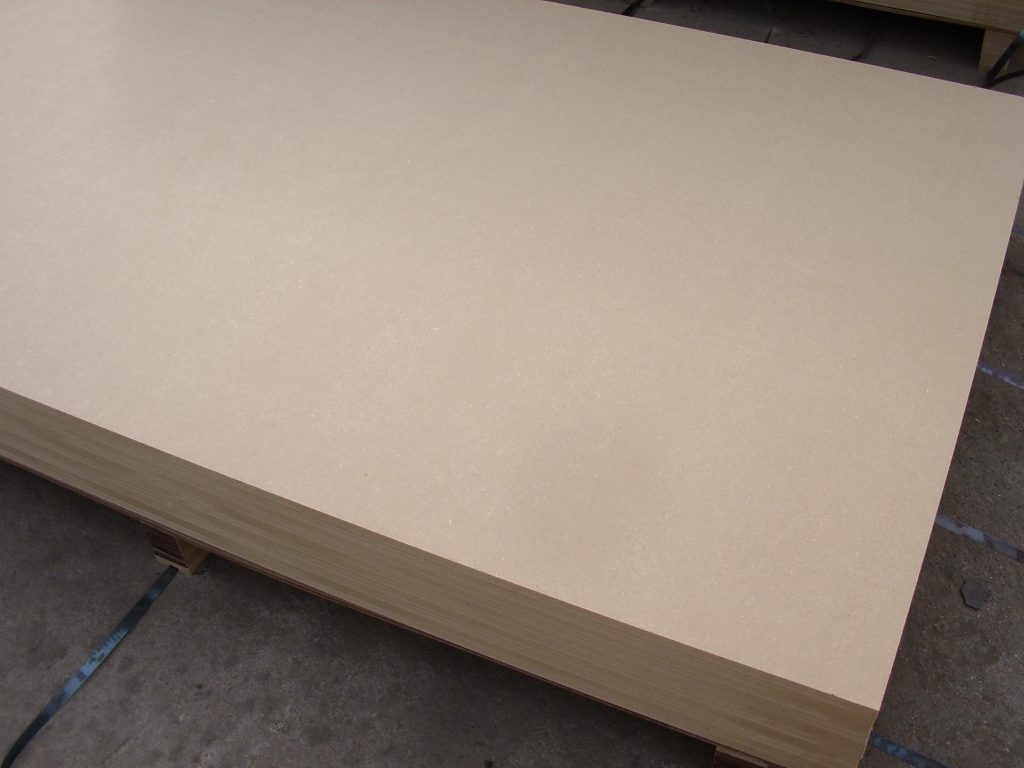
MDF wood is an engineered wood product made by breaking down hardwood or softwood residuals into wood fibers, combining them with wax and a resin binder, and forming panels by applying high temperature and pressure.
Unlike plywood or solid timber, mdf sheets are isotropic, meaning they have uniform properties in all directions because they lack a natural grain. For a distributor, this translates to a product that is exceptionally easy to machine, rout, and paint, with no risk of knots or splitting.
Core Technical Specifications
| Feature | Standard Specification | B2B Importance |
| Density | 680 kg/m³ – 800 kg/m³ | Determines screw-holding strength and edge finish. |
| Formaldehyde Emission | E1, E0, CARB P2, F4 Star | Critical for compliance in EU and US markets. |
| Moisture Content | 4% – 13% | Prevents warping during shipping and storage. |
| Surface Finish | Sanded (G2S – Good 2 Sides) | Ready for lamination or painting. |
Key Categories of MDF Boards for Global Markets
Not all mdf panels are created equal. Depending on the end-use environment, you must choose the specific variant that balances performance and price.
Standard MDF Sheets
The workhorse of the furniture industry. Available in various thicknesses, with 15mm mdf and 18mm mdf being the most sought-after sizes for cabinet carcasses and shelving. Standard MDF is ideal for dry, indoor environments.
Moisture Resistant MDF (Green Core)
Commonly referred to as MR MDF, moisture resistant mdf is treated with a specialized moisture-repellent resin (often MUF – Melamine Urea Formaldehyde). It is easily identified by its green-tinted core.
- Best For: Kitchen furniture, bathroom vanities, and baseboards where humidity levels fluctuate.

Melamine MDF
Melamine mdf is a standard board with a thermally fused melamine paper on both surfaces. As a distributor, stocking these is essential because they eliminate the need for secondary painting or veneering by the end-user. We offer hundreds of decors, from solid whites to realistic wood grains and stone textures.
Dimensional Standards: Focusing on 15mm and 18mm MDF
Thickness consistency is the hallmark of a high-quality factory. In the international market, the 4×8 sheet (1220x2440mm) is the standard, but the thickness is where the structural integrity lies.
- 15mm MDF: Frequently used for backing panels, drawer bottoms, and lightweight furniture components. It offers a balance between weight reduction and structural rigidity.
- 18mm MDF: The industry gold standard for cabinetry, wardrobes, and mdf panels for walls. It provides the necessary depth for European-style hinges and heavy-duty fasteners.

When sourcing, ensure your supplier maintains a thickness tolerance of ±0.2mm. Any more, and your clients will face alignment issues during CNC machining.
Advanced Applications: From Furniture to MDF Panels for Walls
The versatility of mdf wood has pushed it beyond simple box-making. We are seeing a massive surge in the use of mdf panels for walls (often referred to as Slatwall or 3D Wall Panels).
- Acoustic Treatment: Slotted or perforated MDF sheets are used in auditoriums for sound diffusion.
- Architectural Mouldings: Because MDF doesn’t have a grain, it can be milled into complex profiles for crown moulding and architraves without chipping.
- Retail Displays: The high density of the board allows it to hold heavy metal inserts for shelving hooks in retail environments.
Pricing Guide: What Drives the Cost of MDF?
For a B2B buyer, understanding the “why” behind price fluctuations is key to timing your bulk orders. Several factors influence the quote you receive:
- Resin Prices: The cost of Urea-Formaldehyde (UF) or MDI glue fluctuates with global chemical markets.
- Fiber Source: Is the board made from recycled wood, eucalyptus, or pine? Pine-based boards generally command a premium due to their lighter color and better sanding properties.
- Certification Costs: Boards certified by the FSC (Forest Stewardship Council) or meeting CARB P2 standards for the North American market often carry a 5-10% price premium due to stricter raw material tracking and testing.
- Energy and Logistics: Wood processing is energy-intensive. Furthermore, ocean freight rates significantly impact the landed cost per sheet.
Pro Tip for Distributors: To optimize your ROI, consider “mixed loading.” Combining standard sheets with melamine mdf or moisture resistant mdf in a single 40HC container can help you meet diverse customer needs without overstocking a single SKU.
Quality Control: How to Inspect Your MDF Shipment
Before a container leaves the port, a professional inspection is vital. Here is what we recommend focusing on:
- The Edge Test: Rub the edge of the board. If it crumbles easily, the density is too low or the resin distribution is uneven.
- Surface Smoothness: Look for “telegraphing” or tiny bumps. A high-quality mdf board should be smooth enough to be powder-coated or high-gloss lacquered.
- Screw Holding Strength: Test how the board handles a pilot hole and a screw. This is critical for 18mm mdf used in load-bearing furniture.
- Emission Testing: Request a mill test certificate (MTC) to ensure the formaldehyde levels match your local regulations (E1 for Europe, EPA/CARB for the US).
Packaging and Export Logistics
For international trade, the packaging must be “Sea-Worthy.” We utilize heavy-duty plywood pallets, reinforced with steel strapping and edge protectors. Each bundle is typically wrapped in plastic film to prevent moisture absorption during the weeks-long transit across the ocean.
Standard Loading: A 40ft High Cube container typically holds 8-10 pallets of 18mm mdf, depending on weight restrictions at the destination port.

Conclusion: Why Partner With an Expert Supplier?
Sourcing mdf boards is not just about finding the lowest price; it’s about finding a partner who understands the nuances of density, glue chemistry, and international compliance. Whether you need high-volume mdf sheets for construction or specialized moisture resistant mdf for high-end cabinetry, quality consistency is what will keep your customers coming back.
Are you looking to optimize your wood panel supply chain? We provide a full range of MDF solutions, including customized thicknesses and FSC-certified products.
Would you like me to send you a current price list or a physical sample pack of our 15mm and 18mm MDF grades? Contact our export team today to discuss your specific requirements
Recent Posts
Sanded OSB for Furniture Still Needs a Finish Plan
OSB material reference only; sanding quality and the final finish need separate approval. Sanded OSB…
Plywood vs OSB for Crates Is More Than a Price Choice
Protected panel bundles are a supply-stage reference, not an approved design for a shipping crate….
Blockboard vs Finger Joint Board for Furniture Buyers
A visible timber-strip core does not make the finished panel the same as an exposed…
Synchronized Melamine Board Goes Beyond the Print
Woodgrain design reference only. A flat image cannot demonstrate EIR texture or alignment. Synchronized melamine…
Lightweight MDF vs Standard MDF for Furniture Parts
Panel appearance alone does not identify a lightweight MDF grade. Lightweight MDF can make a…
Film Faced Plywood Edge Sealing After Cutting
Film faced plywood edge sealing needs to follow the cutting and drilling plan. Factory edge…