

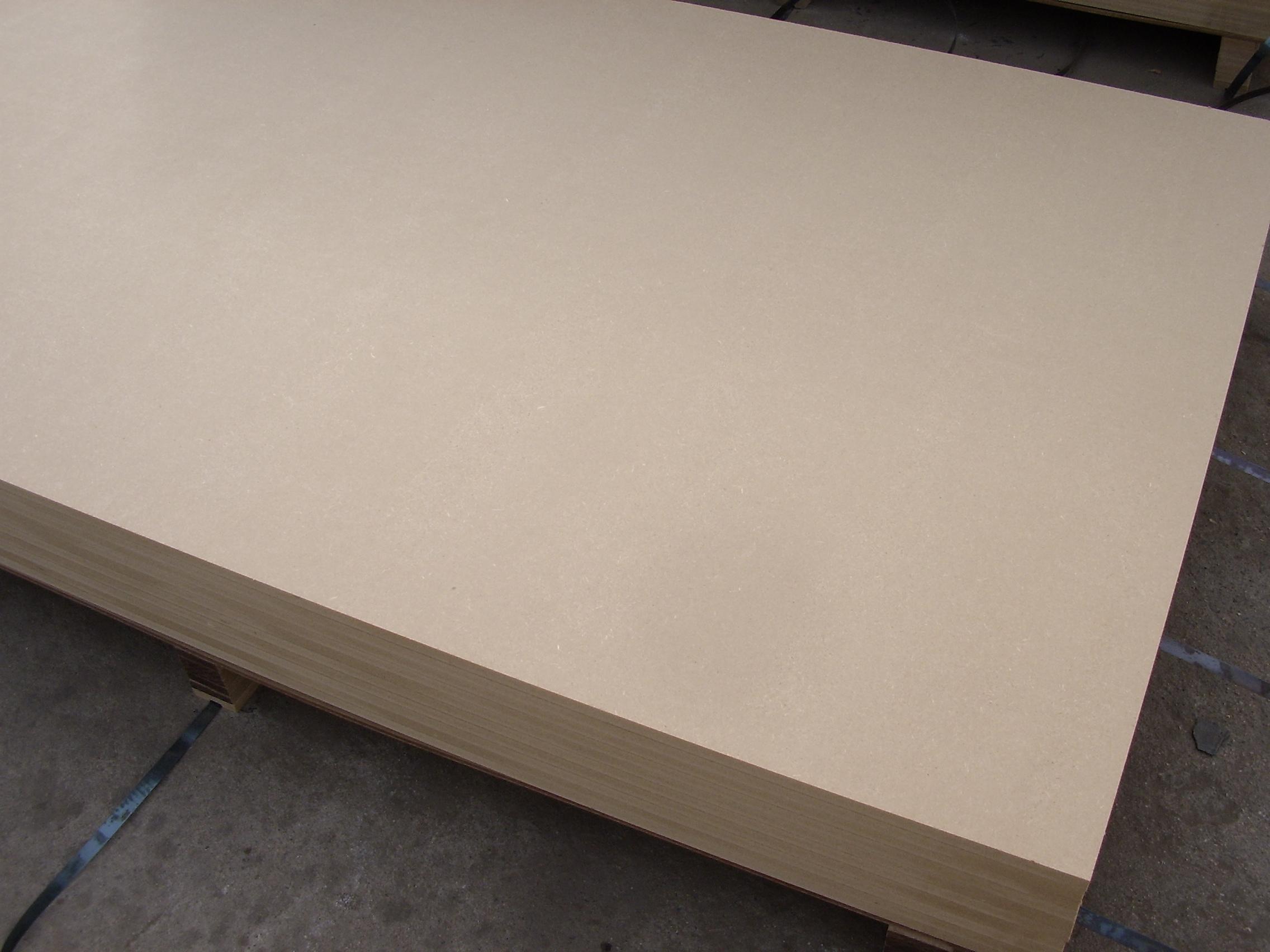
Lightweight MDF can make a large furniture part easier to handle. It does not automatically make it a direct replacement for standard MDF. Keep the same component requirements, then compare the lighter product against them. A useful saving removes unnecessary mass without creating a new problem at a fixing, groove or finished edge.
This choice often starts with a practical question: can the workshop reduce the weight of a display, door component or removable panel? The answer depends on the part. A broad surface with many supports asks something different from a long loaded shelf or a small edge carrying a hinge.
Key takeaways
Lightweight describes the proposed material, not a complete performance grade.
Keep raw-board mass separate from the weight of the finished assembly.
Approve the component and finish again when the substrate changes.
What Lightweight MDF Actually Changes
Like other MDF panels, the material uses prepared wood fibres and a bonding system consolidated under heat and pressure. It is not a timber-strip core, a hollow honeycomb panel or a sheet with a hidden air cavity. Those are different constructions, even when a supplier also calls them lightweight.
The European Panel Federation description of MDF places low-density variants within the wider dry-process fibreboard family. The important distinction here is a deliberately lower-density product, not an unexplained weight variation in a standard order. Identify the actual product range rather than relying on the word light alone.
Standard MDF is also not one identical product from every mill. A range can have its own intended applications and property requirements. Compare the offered products at the required thickness and supplied condition. This avoids treating two sales labels as if they were complete engineering descriptions.
The Composite Panel Association MDF guidance describes panels with different physical properties for different end products. That supports an application-based comparison. It does not establish that every lower-density board has one fixed strength penalty, or that a familiar MDF name approves every component.
Where the Lower Mass Helps
At the same raw-board volume, lower average density means lower raw-board mass. The reduction may make handling less demanding or reduce the mass of a component that must move. It can also matter where several panels contribute to the weight of an assembled fixture. Count the actual parts, not only one attractive sample.
A removable access panel is a useful example. If it has short unsupported distances and suitable supports, reducing its mass may be valuable. That same material choice does not approve a long storage shelf. The shelf has a different loading problem even when both parts start from sheets of the same thickness.
Keep the finished assembly in view. Facing, edge treatment, fittings and other components still contribute mass. A reduction in the raw substrate does not produce the same percentage reduction in the whole cabinet. Likewise, a lighter door still needs suitable geometry, hinges and attachment details.
For an importer, the business case should identify the problem being solved. Is the goal easier component handling, a lighter finished unit or a shipment with more weight allowance? These are separate benefits. A change can help one without delivering all three.
Compare the Requirements That Stay with the Part
| Part or operation | What remains important | Buying implication |
|---|---|---|
| Supported decorative panel | Surface finish, flatness and support positions | Compare the finished visible part, not mass alone |
| Shelf or spanning component | Required load, stiffness and support detail | Do not transfer the existing span approval |
| Hinged component | Fixing location, hardware and remaining material | Review the actual joint with the lighter product |
| Routed or shaped part | Exposed material, profile and finishing route | Approve machining and finish together |
| Melamine-faced component | Validated substrate and surface combination | Keep the facing approval tied to the named board |
Bending stiffness describes resistance to deflection under a load. Internal bond describes resistance to separation within the panel under a defined test. Screw holding concerns a particular fixing arrangement. These are different properties; none is another name for sheet weight.
The MDF screw-holding guide develops the joint question. For a substitution, retain the same component detail while comparing materials first. If the workshop changes the screw and board at once, it becomes harder to see which change produced the result.
A representative part trial is useful for a small business. Use the intended profile, fixings and finish, rather than a bare square handled at the sales desk. Product documents can support that review where a stated property is required. A workshop trial does not replace certification or engineering where those apply.
Machining and Facing Need Their Own Review
A smooth face says little about the material exposed by a deep profile. The cutting depth and shape determine which part of the panel the tool reaches. When replacing a standard board, compare the routed surface after the normal finishing steps. Do not judge the change only before sanding or coating.
A product optimized for lower mass may need a different preparation or finishing approach. That is a reason to compare the actual offered board, not a claim that all lightweight MDF machines badly. Equally, a clean shallow cut cannot approve a much deeper recess or a narrow fixing edge.
The MDF density-profile article explains the background without turning the buyer into a laboratory operator. Here the decision is whether the named lighter range can produce the intended part consistently. A density number alone does not answer that question.
For melamine-faced MDF, keep the substrate and decorative surface separate in the order record. A finished faced panel may use an approved lightweight substrate, but a raw lightweight board is not automatically ready for every pressing route. Confirm the combination and assess the finished piece. This is not a universal process recipe.
Choose Where to Use It Before Replacing the Whole Range
Consider a distributor supplying both display-panel makers and cabinet workshops. A lighter MDF line may solve a useful handling problem for the first group. It should not silently replace the existing material supplied for loaded shelves or established hinge details. Similar colour and thickness do not make those applications identical.
Start with a defined component family where weight has a clear cost or handling consequence. Keep the accepted standard product available while reviewing the alternative. Compare the cost of a usable finished part, including any changed preparation, rather than assuming a lighter raw sheet must be cheaper to buy or process.
Importers should compare the declared product properties and quotation basis. Distributors need separate stock identities and clear application descriptions. The downstream workshop should approve its part and process on the proposed material. Each business has a distinct decision; one generic sample approval cannot cover them all.
The About Momentimber page explains the supplier-service role. Start with the component requirement and a reason for reducing mass. Material matching and sample coordination can then establish whether a lighter option deserves a place in the product line.
Frequently Asked Questions
Related Reading
Sanded OSB for Furniture Still Needs a Finish Plan
OSB material reference only; sanding quality and the final finish need separate approval. Sanded OSB…
Plywood vs OSB for Crates Is More Than a Price Choice
Protected panel bundles are a supply-stage reference, not an approved design for a shipping crate….
Blockboard vs Finger Joint Board for Furniture Buyers
A visible timber-strip core does not make the finished panel the same as an exposed…
Synchronized Melamine Board Goes Beyond the Print
Woodgrain design reference only. A flat image cannot demonstrate EIR texture or alignment. Synchronized melamine…
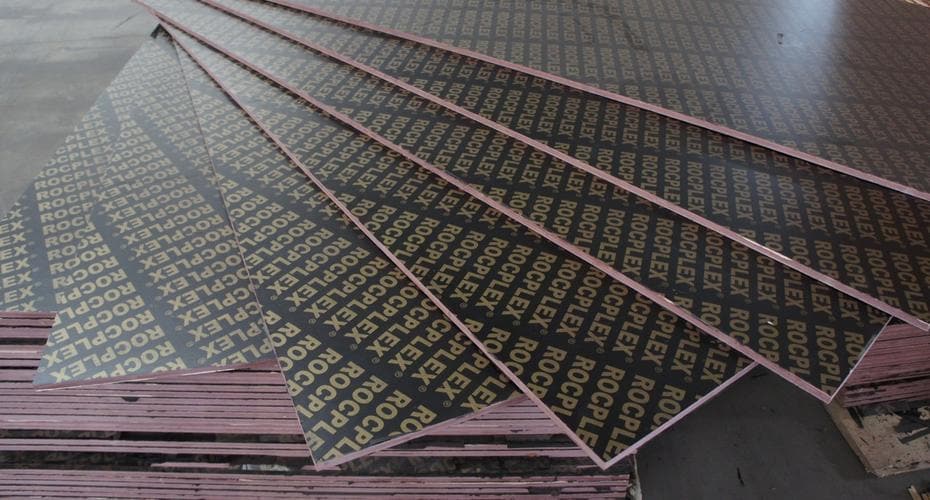
Film Faced Plywood Edge Sealing After Cutting
Film faced plywood edge sealing needs to follow the cutting and drilling plan. Factory edge…
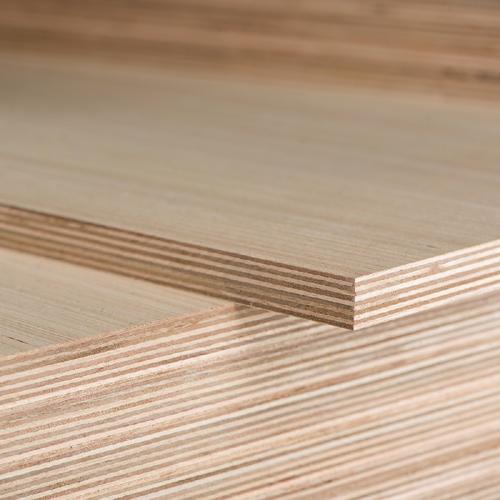
Plywood for Melamine Facing Needs More Than Sanding
Plywood for melamine facing needs more than a smooth touch. Sanding can prepare a face,…
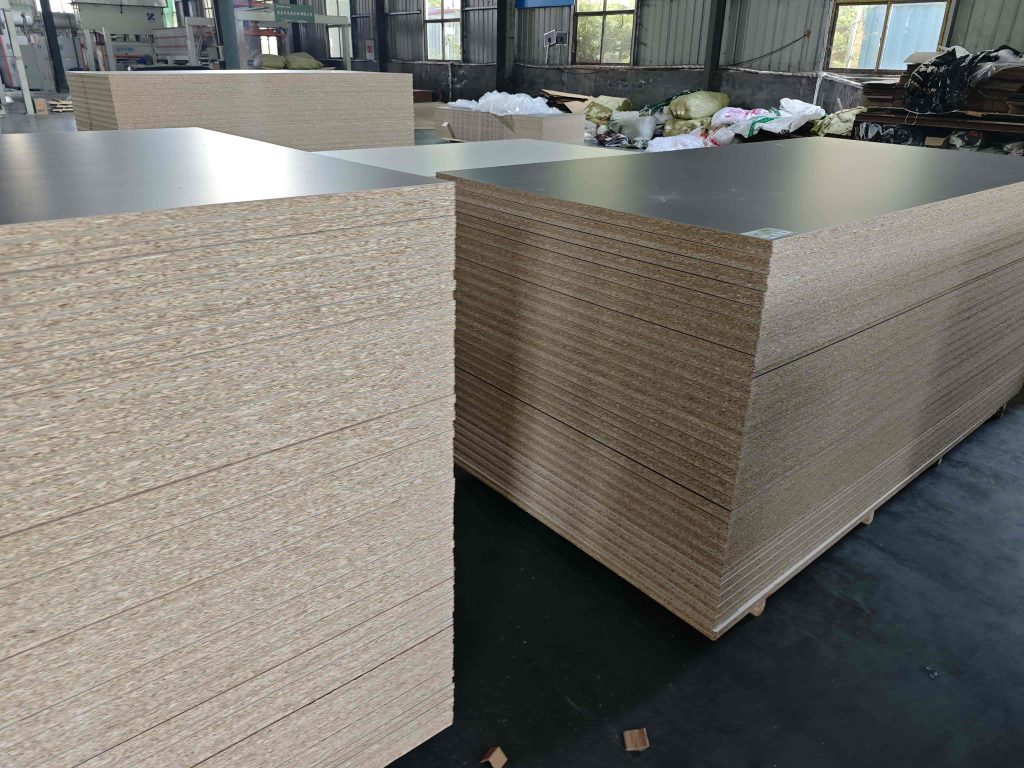
Cleaning Melamine Board Without Damaging the Finish
Cleaning melamine board should start with the supplied care instructions and a gentle method, not…
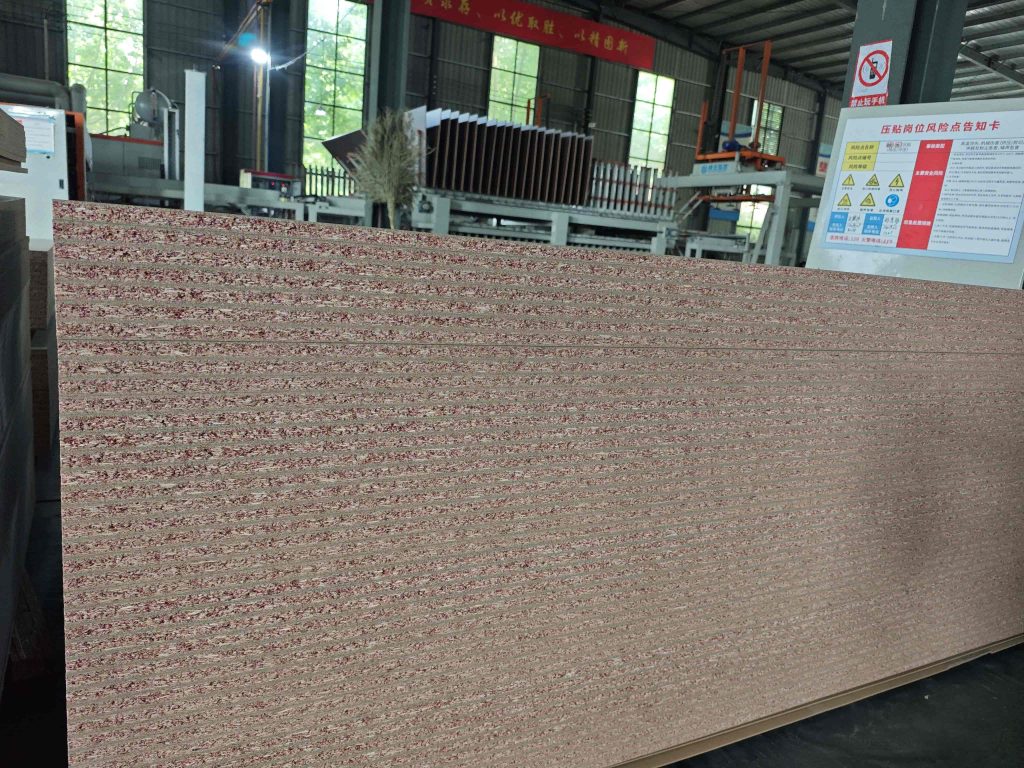
Particleboard Worktops vs Ordinary Cabinet Board
Particleboard worktops can have a chipboard core without being the same product as an ordinary…
Why Two 18 mm MDF Sheets Can Weigh Differently
Separate a deliberate lightweight product from other reasons for a sheet-weight change.
MDF Density Profile
Understand why average density does not describe every depth inside the panel.
MDF Screw Holding
Connect a material change with the fixing detail used in the furniture part.
Considering a lightweight MDF range or a lighter melamine-faced component? Send the part drawing, thickness, finish, fixing detail and reason for reducing mass. Momentimber can discuss material matching and sample coordination before the proposed substitute enters a repeat order.