

The MDF manufacturing process is not merely a factory story. For an importer, distributor, or furniture-material buyer, it affects whether a board laminates cleanly, machines consistently, survives humid logistics, and can be reordered without a quality surprise. Comparable-looking MDF boards can still differ in density profile, surface integrity, moisture condition, emission documentation, and process stability.
This guide follows MDF from fibre preparation through sanding, then turns factory controls into purchasing and inspection checkpoints. It does not prescribe one universal mill recipe. Instead, it helps B2B buyers define a repeatable specification and collect useful evidence before a container becomes an inventory or claims problem.
MDF is a system, not one single specification
MDF is made by refining wood material into fibres, blending those fibres with resin and additives, forming a loose mat, and consolidating the mat under heat and pressure. The finished panel has face zones, a core zone, and a density profile through its thickness. Buyers should evaluate the system rather than relying on one headline density number.
The USDA Wood Handbook is a useful technical reference for wood-based composites, moisture relations, and the material behavior behind dimensional stability and machining performance.
| Process area | What the mill controls | Why the buyer should care |
|---|---|---|
| Fibre preparation | Fibre size, cleanliness, and refining consistency | Affects internal bond, edge machining, and weak-spot risk. |
| Resin and additives | Distribution, resin selection, wax and additives | Affects bond performance, moisture response, emissions, and later lamination. |
| Mat forming | Mass distribution and face/core structure | Affects density profile, thickness consistency, and surface quality. |
| Hot pressing | Temperature, pressure, time, and cycle control | Affects consolidation, cure, springback, and internal defects. |
| Conditioning and sanding | Moisture equalization, calibration, and finish | Affects flatness, tolerance, coating yield, and overlay adhesion. |
Fibre preparation and resin control set the starting quality
MDF starts with a fibre furnish, not veneer layers. Chips are screened and cleaned before refining. The mill needs a consistent furnish stream and must avoid avoidable contamination. Buyers may not see the fibre directly at the loading port, but fibre quality influences internal cohesion and the consistency of machined edges.
Resin binds the fibre network. Wax and other additives can influence water response and later processing. A purchase order should connect end use, target emission requirement, surface process, and destination-market documentation. A generic certificate is not a substitute for order-specific labeling, traceability, or test evidence where the market requires it.
For the United States, medium-density fiberboard and particleboard are covered by the EPA Composite Wood Products Formaldehyde Standards, which address emissions, labeling, recordkeeping, testing, and import certification. For another destination, confirm the applicable local requirement rather than assuming one market’s label covers all markets.
- State the required emission class and destination market in the purchase order.
- Confirm which documents accompany the order, who issues them, and whether the production lot is traceable.
- Use a Golden Sample and written product sheet for every new specification.
Mat forming creates the density profile buyers actually use
During mat forming, treated fibres are distributed into a continuous mat before pressing. A controlled density profile supports smooth faces and a core designed for the required thickness, internal bond, and machining behavior. The target profile varies with end use. A cabinet-door substrate, a melamine-faced board, and a low-cost packaging component do not need the same balance.
This is why average density alone is incomplete. Two boards can share the same nominal density and still behave differently in routing, edge banding, surface finishing, or screw installation. For repeat business, record the agreed density range, thickness tolerance, moisture condition, surface grade, and end-use process with the approved sample.
Hot pressing is where small variation becomes a commercial defect
The hot press consolidates the mat and cures the binder. Temperature, pressure, time, and press-cycle control interact with thickness, furnish condition, resin system, and production speed. Buyers do not need to dictate a press recipe, but the supplier should maintain a stable process window for the agreed grade.
Poor press control can show up later as thickness variation, weak internal bond, blistering after lamination, springback, or inconsistent edge performance. These symptoms do not always appear on one opened bundle. They require a sampling plan with measurements, cut checks, visual inspection, and records by production lot.
Conditioning and sanding decide downstream yield
After pressing, boards need controlled conditioning before final sanding and sizing. Conditioning helps stabilize moisture and internal stresses. Sanding then sets the surface quality and thickness calibration that downstream users rely on for coating, lamination, veneer pressing, or bonding.
For a distributor, the commercial question is simple: can the customer run the board through the intended process with predictable yield? Check thickness at several points, inspect for sanding marks and pinholes, assess flatness, and examine freshly cut edges. A smooth face is helpful, but it is not the whole acceptance standard.
Turn factory controls into an order-control plan
A practical inspection plan gives both buyer and supplier a clear target. It also creates evidence if a claim needs to be resolved. For a first order or a new MDF grade, the checkpoints below are more useful than a last-minute visual inspection alone.
| Stage | Buyer action | Evidence to retain |
|---|---|---|
| Golden Sample | Approve a reference board before production. | Signed sample, dimensions, surface description, and inspection record. |
| PPI | Confirm specification, pack, labels, and critical materials. | Photos, approved order sheet, packing sample, and tolerances. |
| DPI | Check consistency during manufacturing. | Lot identity, thickness, density, moisture records, and defect photos. |
| PSI | Inspect finished goods and loading before shipment. | Count, appearance, dimensions, packaging, container, and seal photos. |
Defect tracing: specify the symptom and evidence
A complaint is difficult to resolve when it only says “bad quality.” Define the observed symptom, acceptance threshold, sampling method, and evidence required. This keeps the discussion technical and helps distinguish handling damage from a production issue.
| Observed issue | Possible control area | Useful evidence |
|---|---|---|
| Sanding marks or uneven face | Fibre distribution, face density, sanding | Photos in raking light, sheet position, and sample count. |
| Edge break-out or weak machining | Fibre/refining, internal bond, density profile | Cutter condition, tool setting, cut-edge photos, retained sample. |
| Thickness variation or poor flatness | Mat forming, pressing, conditioning, calibration | Measurement map, moisture reading, and storage condition. |
| Blistering after lamination | Surface preparation, moisture, process compatibility | Overlay or adhesive details, press settings, and before/after samples. |
Packaging and logistics are part of MDF quality
MDF can be damaged by poor warehouse practice or moisture exposure after it leaves the mill. Specify packaging for the route and handling method: protective film or board, edge protection where appropriate, straps, pallet or skid arrangement, fumigation requirements, and container loading evidence. For humid or rainy routes, agree on the moisture-protection scope and container-condition check before loading.
Momentimber can help match MDF board options to the intended surface treatment and build an order-control plan covering Golden Sample approval, production follow-up, pre-shipment inspection, and loading evidence. Share your end use, dimensions, thickness, surface route, emission need, destination, and expected order mix through our contact form for a specification-based quotation.
FAQ
Build a specification that can be repeated
A reliable MDF supply program begins with the downstream job, then works backward through the MDF manufacturing process. Define end use, thickness, size, density range, surface expectation, moisture condition, emission requirement, packing, inspection plan, and evidence package. That is a stronger basis for price comparison than asking only for a price per sheet.
Recent Posts
Sanded OSB for Furniture Still Needs a Finish Plan
OSB material reference only; sanding quality and the final finish need separate approval. Sanded OSB…
Plywood vs OSB for Crates Is More Than a Price Choice
Protected panel bundles are a supply-stage reference, not an approved design for a shipping crate….
Blockboard vs Finger Joint Board for Furniture Buyers
A visible timber-strip core does not make the finished panel the same as an exposed…

Synchronized Melamine Board Goes Beyond the Print
Woodgrain design reference only. A flat image cannot demonstrate EIR texture or alignment. Synchronized melamine…
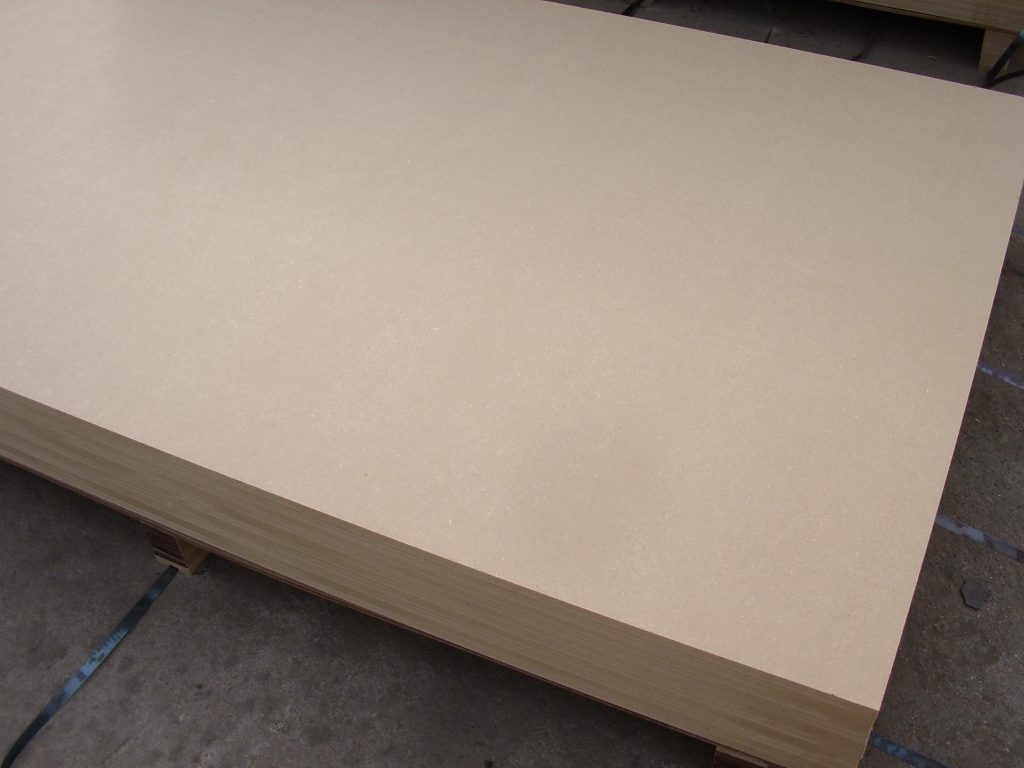
Lightweight MDF vs Standard MDF for Furniture Parts
Panel appearance alone does not identify a lightweight MDF grade. Lightweight MDF can make a…
Film Faced Plywood Edge Sealing After Cutting
Film faced plywood edge sealing needs to follow the cutting and drilling plan. Factory edge…