

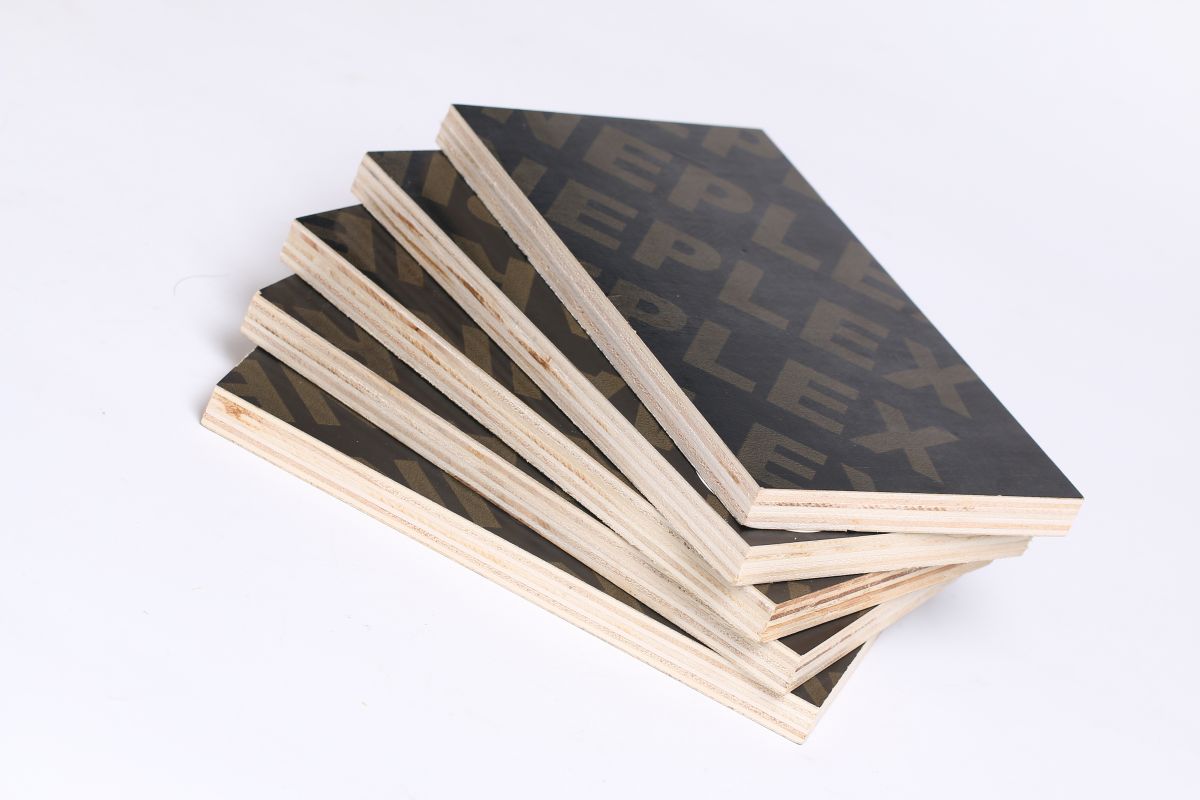
One quotation promises 15 reuses. Another promises 25. The second panel costs more, so it appears to offer better value. But neither number is useful until the buyer knows what counts as a reuse, what concrete finish is required, and how the panels will be cut, stripped, cleaned and stored. Film faced plywood grades cannot be judged by a reuse claim alone.
The practical answer is to specify the panel construction first, then track acceptable pours under the buyer’s actual site conditions. A panel may remain physically usable after its film can no longer produce an exposed architectural finish. That distinction changes both the grade decision and the real cost per pour.
Key takeaways:
1. “A grade,” “full core” and “20 reuses” are supplier descriptions unless a measurable specification supports them.
2. Core lay-up, bond quality, film, edge sealing and handling work as one system.
3. Count acceptable pours for the required concrete finish, not every time a panel touches concrete.
4. Compare cost per acceptable pour instead of price per sheet.
5. Approve a Golden Sample and a simple reuse log before buying on a lifetime promise.
What Film Faced Plywood Grades Actually Describe
In international quotations, the word “grade” can describe several different things. It may refer to a recognized product standard, the visible face quality, the inner veneer quality, or a supplier’s own commercial level. These meanings are not interchangeable.
APA, for example, describes Plyform Class I and Structural I for APA-rated concrete-form panels. Its concrete forming guidance links those grades to defined construction and performance requirements. An imported panel without that certification should not borrow the grade name as if it had the same verification.
| Quotation term | What it may mean | What the buyer should request |
|---|---|---|
| A grade or premium | A supplier’s internal quality level | Written core, bond, film, tolerance and acceptance criteria |
| Full core | Few visible gaps or a claimed continuous lay-up | Approved cut cross-section and permitted defect limits |
| Hardwood core | One hardwood species or a mixed hardwood construction | Permitted species and lay-up, not only the family name |
| WBP glue | A water-resistant bond claim | Applicable test method, result and sampling requirement |
| 20 reuses | A sales estimate under unspecified site conditions | Definition of an acceptable pour and the assumptions behind the estimate |
For routine sourcing, start with the actual film faced plywood specification: size, finished thickness, core construction, bond requirement, film type, surface, sealed edges, tolerances and intended formwork system. The commercial grade should summarize those controls, not replace them.
Four Layers That Control Formwork Performance
1. Core lay-up and panel stiffness
The veneer species affects weight and stiffness, but lay-up quality often decides how the panel behaves after repeated wetting and drying. Core gaps can create weak points. Overlaps can produce local thickness changes. Thin or poorly joined inner veneers can also print through the face under pressure.
For walls and slabs, the support spacing and concrete pressure matter as much as the species name. A stronger-looking panel can still deflect if the formwork design is wrong. Therefore, the engineer or formwork contractor must define spans, loads and support conditions separately from the plywood purchase.
2. Glue line and bond durability
Formwork plywood meets moisture, alkaline cement water and repeated cleaning. A weak glue line may begin opening at cut edges or damaged corners. However, a boiling test result from one sample does not prove that every sheet has consistent glue spread, veneer moisture and press control.
Specify the required bond test and sampling method when the project requires one. For ordinary commercial checks, compare several cut samples from different bundles and keep the accepted pieces. The guide to plywood glue types and bond selection explains why glue name and actual bond performance should be treated separately.
3. Film surface and concrete finish
The phenolic film forms the working face. Its paper, resin treatment, pressing and bond to the plywood affect abrasion resistance and surface release. A heavier film may offer more wear material, but film weight alone cannot correct an uneven substrate or poor lamination.
Buyers should agree on colour, surface texture, film condition and permitted pinholes, folds, scratches and local delamination. They should also state whether the concrete will remain exposed. A panel acceptable for hidden foundations may no longer be acceptable for fair-faced walls even if it can complete another pour.
4. Sealed edges and drilled holes
Factory edge paint slows water entry, but every site cut and tie hole creates a new exposed path. If workers leave those areas unsealed, moisture can enter the veneer edges. Swelling, film lifting and glue-line damage may follow.
This is why reuse performance belongs partly to the panel and partly to site control. The purchase specification should describe factory edge sealing. The method statement should cover resealing after cutting or drilling.
Why a Fixed Reuse Number Is Usually Misleading
Reuse estimates change with the concrete mix, pour pressure, stripping time, release agent, cleaning tools, weather, storage and finish requirement. APA notes that some concrete admixtures can increase abrasion and alkalinity, which may reduce panel life. A supplier cannot control all of those variables after delivery.
| Site variable | How it shortens useful life | Practical control |
|---|---|---|
| Concrete finish requirement | Minor film marks can reject a panel for exposed work | Define the acceptable finish before counting reuses |
| Cutting and drilling | Exposed veneer absorbs water | Seal fresh edges and holes before the pour |
| Release agent | Poor coverage increases sticking and stripping damage | Use a compatible product in a thin, even coat |
| Stripping method | Prying and dropping damage corners and film | Release carefully and support panels during removal |
| Cleaning | Metal tools or harsh pressure scratch the film | Clean promptly with non-damaging tools |
| Storage | Sun, rain and uneven stacking cause movement and edge damage | Dry, stack flat and protect with ventilation |
Sika’s formwork release oil guidance calls for a clean, dry form and a thin, uniform application, with excess removed. Buyers should follow the selected release-agent manufacturer’s instructions because compatibility and application conditions vary.
How to Define a Reuse Cycle for Purchasing
Use a definition that an inspector and site supervisor can both apply. One practical unit is an “acceptable pour”: the panel completes one pour and, after stripping and cleaning, still meets the agreed finish and safety requirements for its next assigned use.
This definition prevents two common arguments. First, a supplier cannot count badly damaged uses as successful cycles. Second, the buyer cannot reject a panel only because it no longer looks new when it still meets the agreed finish category.
Suggested acceptance wording: Reuse estimates are planning figures only. The project will record each panel by ID and count acceptable pours against the agreed concrete-finish category. Panels with open glue lines, unsafe loss of section, severe edge swelling, broken corners or film damage beyond the finish limit will leave the active set.
A Simple Reuse Log for Small Contractors
A useful log does not require special software. Mark each panel or small panel set with a durable ID. After every pour, record the condition before repair. Photos should show the ID, full face and close-up defect in the same sequence.
| Field | What to record | Why it matters |
|---|---|---|
| Panel ID and batch | Bundle, sheet or cut-panel number | Connects a failure to the supplied lot |
| Pour number | First, second, third and later use | Creates a comparable service history |
| Application | Wall, slab, beam, column or foundation | Separates different pressure and finish demands |
| Condition after stripping | Film, edges, holes, corners, flatness and glue lines | Shows the actual failure sequence |
| Repair made | Edge reseal, filler, patch or none | Prevents repaired and unrepaired panels being compared |
| Next decision | Same finish class, downgraded use or retired | Counts commercially useful cycles |
After a trial set has completed several real pours, the buyer can replace a marketing promise with site data. That information is also useful for the next RFQ because it identifies the failure mode that needs improvement.
Compare Cost per Acceptable Pour
Price per sheet hides the cost of early failure, site labour and rejected concrete finish. A simple comparison starts with landed panel cost and divides it by acceptable pours. Then add repairs, extra release agent, cleaning labour and the cost of downgraded or rejected work.
Basic comparison:
Panel cost per acceptable pour = landed panel cost / recorded acceptable pours.
Use the same finish category and site method for both panel options. Otherwise, the comparison is not fair.
Suppose Panel A costs less but loses its fair-faced finish early. Panel B costs more but stays in the exposed-wall set longer. Panel A may still be economical for foundations or hidden surfaces, while Panel B makes more sense where appearance has a high rejection cost. Grade selection should follow the job, not a single universal ranking.
What to Inspect Before Shipment
Pre-shipment checks cannot predict every site event, but they can identify obvious inconsistency before the container moves. Draw samples from several bundles and compare them with the Golden Sample.
- Dimensions: measure length, width, thickness, squareness and flatness using the agreed method.
- Film: check colour, texture, press marks, pinholes, folds, scratches and local lifting.
- Edges: check sealing coverage, damage and exposed veneer.
- Cross-section: review ply count, veneer thickness, gaps, overlaps and visible glue-line openings.
- Bond screening: apply the agreed test to samples from more than one bundle.
- Weight pattern: investigate unusual sheet-to-sheet changes that may indicate construction or moisture variation.
- Packing: protect faces and corners, keep bundles supported and prevent rain entry during loading.
- Evidence: retain sample labels, measurements, photos and failed pieces together.
The plywood warehouse test guide provides simple checks that importers can repeat without expensive equipment. Certified testing is still required when a contract, standard or project specification calls for it.
What to Put in the RFQ and Purchase Order
A useful RFQ asks each supplier to quote the same construction and the same acceptance method. Include the following points:
- Use: formwork element, support system, expected concrete pressure and finish category.
- Panel: finished size, thickness tolerance, core species and permitted lay-up.
- Bond: required test or standard, sampling and documents.
- Surface: film type, colour, texture, film weight if relevant, and defect limits.
- Edges: factory sealing and the site method for cuts and holes.
- Approval: Golden Sample, labeled cross-section and trial quantity where practical.
- Inspection: sample plan, measurement method and response to a failed lot.
- Packing: face boards, corner protection, waterproof barrier, pallets, straps and loading evidence.
- Reuse statement: planning estimate plus the exact site assumptions, never a warranty without defined conditions.
If the formwork specification is still unclear, compare it with the broader commercial plywood construction options. This helps separate a concrete-form requirement from a general plywood request before suppliers quote different products under the same name.
Frequently Asked Questions
Compare the Specification, Not the Reuse Promise
Send Momentimber the formwork application, panel size, support method, concrete-finish requirement, expected site handling and destination. We can help compare film faced plywood grades, prepare a clear specification and define practical inspection evidence before shipment.
Contact Momentimber with your film faced plywood requirement.