

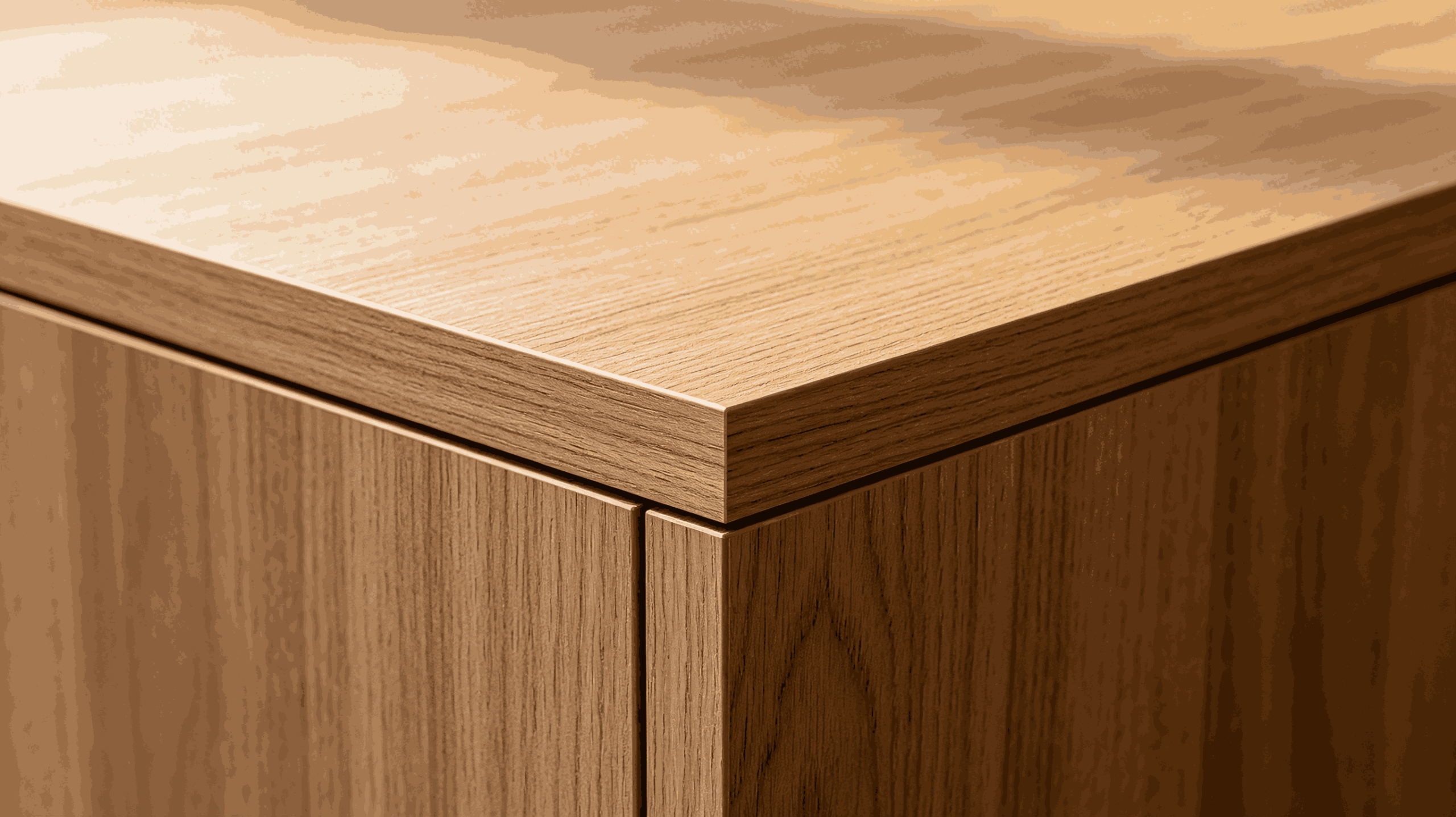
An MDF edge banding line can look clean at the machine and still produce blisters, open joints or loose corners after the furniture reaches a warehouse. For an importer, that delay matters. It can turn a small processing issue into a claim against the board, adhesive, edge-band supplier or furniture factory.
The useful question is not simply, “Was the glue good?” MDF edge banding is a system: the board edge, moisture condition, machining, adhesive, edge band, roller pressure, line speed and storage temperature all affect the final joint. A practical investigation separates these variables before the next shipment repeats the same failure.
Key takeaways:
1. A blister or opening joint is a failure pattern, not immediate proof that the MDF is defective.
2. Check the panel edge and its moisture condition before changing adhesive settings.
3. The same board may perform differently when the workshop changes feed speed, adhesive type, edge-band thickness or conditioning.
4. Use an approved sample and a small documented trial to identify the variable that changed.
5. Put the substrate, edge treatment and expected use conditions in the order record, especially for melamine-faced MDF.
Start With the Failure Pattern, Not the Supplier Name
A loose edge on one corner is different from a repeating bubble along a long side. A joint that opens immediately after trimming is different from one that looks acceptable for a week, then lifts in a hot warehouse. These patterns give the buyer a more useful starting point than a general complaint that the edge banding “does not stick.”
| What the factory sees | Likely variables to check first | Evidence worth keeping |
|---|---|---|
| A joint opens as the panel leaves the edge bander | Cold board or edge band, adhesive temperature, feed speed, roller contact and open time. | Machine setting sheet, ambient temperature, board temperature and a short video of the line. |
| Bubbles or blisters appear under the band later | Board moisture, contaminated or torn edge fibres, uneven adhesive coverage, storage heat or moisture exposure. | Photos before and after storage, moisture readings, a cross-cut sample and bundle number. |
| Only routed or drilled parts fail | Edge quality after CNC work, fuzzy fibres, burn marks, dust removal and the difference between face and edge density. | Cutting tool condition, machining direction and samples before and after edge preparation. |
| Only one decor or SKU fails | Different substrate batch, band thickness, adhesive grade, edge-band backing or component geometry. | Decor code, core type, edge-band code, adhesive batch and component drawing. |
This is especially important when the product is melamine-faced. The melamine board specification describes the decorative surface, but the exposed narrow edge still depends on the MDF substrate and the finishing process. A familiar decor code does not prove that the core, edge preparation or adhesive conditions were the same.
Why MDF Edges Need Their Own Inspection
The face of MDF is normally smoother than the narrow edge. After sawing or routing, the edge may have loose fibres, compression, dust or local tearing that changes how adhesive wets the surface. A clean-looking face is not proof that the edge is ready for banding.
The European Panel Federation notes that MDF edge banding can use hot melt, PVAC or UF adhesive systems, and that the final choice depends on the surface being bonded and the conditions of use. Its MDF adhesive guidance also stresses the need to follow the relevant adhesive supplier data sheet. For a buyer, the implication is simple: do not write “standard glue” in a furniture specification and expect a repeatable outcome in every climate.
Use the MDF product page as the starting specification, then add the actual conversion process. State whether the board will be cut, pre-milled, routed, drilled, painted, melamine faced or PVC faced. That tells the supplier which surface and edge characteristics the workshop is relying on.
Four Root Causes That Often Get Mixed Together
1. Moisture and conditioning
MDF is hygroscopic, so it exchanges moisture with its surroundings. If boards are stored in a damp warehouse, shipped through a rainy season or moved directly from a cold container into a warm workshop, the edge may not behave like the approved sample. Moisture can also increase the risk of edge swelling, which creates a physical movement that the adhesive line cannot hide.
EGGER recommends conditioning boards and edge banding before processing and gives a typical processing wood-moisture range of 7% to 10% in its edging processing guide. Treat that as a processing reference, not a universal contract guarantee. The practical order requirement is to agree how boards will be protected, stored and checked at the factory and destination.
2. Edge preparation after cutting
A blunt saw, overloaded router, wrong feed direction or poor dust extraction can leave a fuzzy or damaged MDF edge. Hot melt may bridge over loose fibres rather than wetting a stable surface. The finished band can look fine until the component is handled, heated or exposed to changing humidity.
Ask the furniture factory to keep one unbanded sample and one banded sample from the same component. A close-up cross-cut often shows whether the failure began at the adhesive interface, inside the edge band, or in the MDF fibres themselves. This is much more useful than a photo taken after an entire cabinet has been installed.
3. Adhesive, speed and roller settings
EVA and PUR systems do not have the same heat and moisture behaviour, and neither adhesive can compensate for every line setting. If the feed speed is too fast, adhesive may not wet the MDF edge evenly. If the process is too slow, the adhesive may cool before the band is pressed into place. Excessive pressure can also squeeze adhesive away from a weak edge instead of improving the joint.
The order file should not prescribe a machine temperature unless the factory and adhesive supplier have approved it. Instead, it should name the edge band material, thickness, adhesive family where relevant, intended environment and approved sample result. The workshop then runs the adhesive within its technical data sheet rather than treating one number as a cure-all.
4. Product use after the panel leaves the factory
A kitchen component near steam, a retail display that sits in a hot storefront and a dry-bedroom wardrobe do not impose the same risk. An edge can open after transport because a pallet was exposed to water, even when the original factory trial was sound. That is why a claim investigation needs the container, warehouse and installation story as well as the panel specification.
How to Run a Small Trial Before a Container Order
You do not need a laboratory to make a better decision. A controlled workshop trial can show whether a proposed MDF and edge-band combination is suitable for the buyer’s actual process. The aim is not to create a universal quality grade. It is to create an agreed reference that the supplier, converter and importer can all recognise.
- Use production-like material: take the selected MDF, edge band and adhesive rather than a generic showroom sample.
- Prepare two edge conditions: compare a correctly pre-milled edge with a deliberately rougher edge to make the sensitivity visible.
- Record the conditions: note board condition, room temperature, adhesive product, feed speed and roller setting.
- Check both immediately and later: inspect after trimming, after normal handling and after an agreed conditioning period.
- Retain the passed sample: label it with the decor, substrate, edge band, date and machine line for repeat-order comparison.
For melamine-faced furniture parts, confirm the substrate rather than writing only “melamine board.” The article Pressed Wood Board vs Particle Board vs Chipboard explains why particle-based boards and MDF should not be treated as interchangeable just because both can receive a decorative surface. The edge, machining and customer expectation may be different.
What Should Appear in an MDF Edge-Banding RFQ
| RFQ point | What to state | Why it reduces risk |
|---|---|---|
| MDF system | Raw MDF, moisture-resistant MDF, HDF, or melamine-faced MDF; nominal density and thickness where required. | Keeps the substrate decision visible instead of hiding it behind the surface decor. |
| Component and machining | Panel size, routed profile, drilled holes, pre-milling requirement and exposed-edge locations. | Lets the converter test the real edge geometry rather than a flat offcut only. |
| Edge band | Material, thickness, decor code, texture and whether the band is supplied by the buyer or converter. | Prevents a decor-matched appearance from masking a different backing or thickness. |
| Use environment | Dry interior, kitchen, retail display or another stated use; expected heat, cleaning and moisture exposure. | Guides adhesive selection and prevents unsupported “waterproof” claims. |
| Approval and evidence | Golden Sample, component photos, trial record, bundle labels and inspection points before packing. | Creates a shared reference for repeat orders and claims. |
Momentimber can help buyers translate the component, surface and destination conditions into a board specification, then coordinate production follow-up and a practical quality-control check. For MDF, the key is not to promise zero failures in every workshop. It is to agree the material and process boundaries before the buyer commits to a full container.
When the Problem Is a Claim, Not a Trial
Keep the discussion factual. Ask for photos of the whole component, the opened joint, the exposed MDF edge, the edge-band roll label and the storage environment. Record the bundle number, component size, process date and whether the same line processed other MDF batches without a problem.
Then compare the failed part with the Golden Sample under the same cutting and banding conditions. If a new adhesive, different edge band or different machine setup was used, document that change before attributing the issue to the board. If the panel edge swelled after water exposure, distinguish that from an immediate lack of adhesive wetting. Those are different root causes and demand different corrective action.
A good corrective action can be small: condition incoming panels, replace a dull pre-milling cutter, adjust the trial procedure, revise packing or state the intended moisture exposure in the next RFQ. The commercial value comes from preventing a repeat claim, not from making a broad statement about which party was wrong.
Frequently Asked Questions
Related Reading
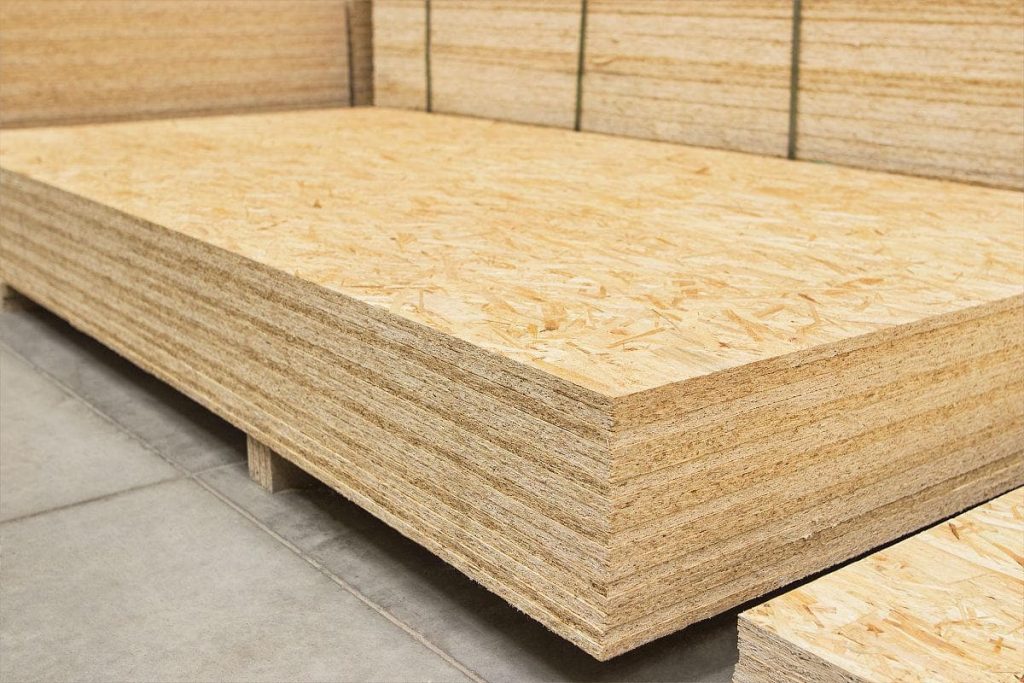
Sanded OSB for Furniture Still Needs a Finish Plan
OSB material reference only; sanding quality and the final finish need separate approval. Sanded OSB…
Plywood vs OSB for Crates Is More Than a Price Choice
Protected panel bundles are a supply-stage reference, not an approved design for a shipping crate….
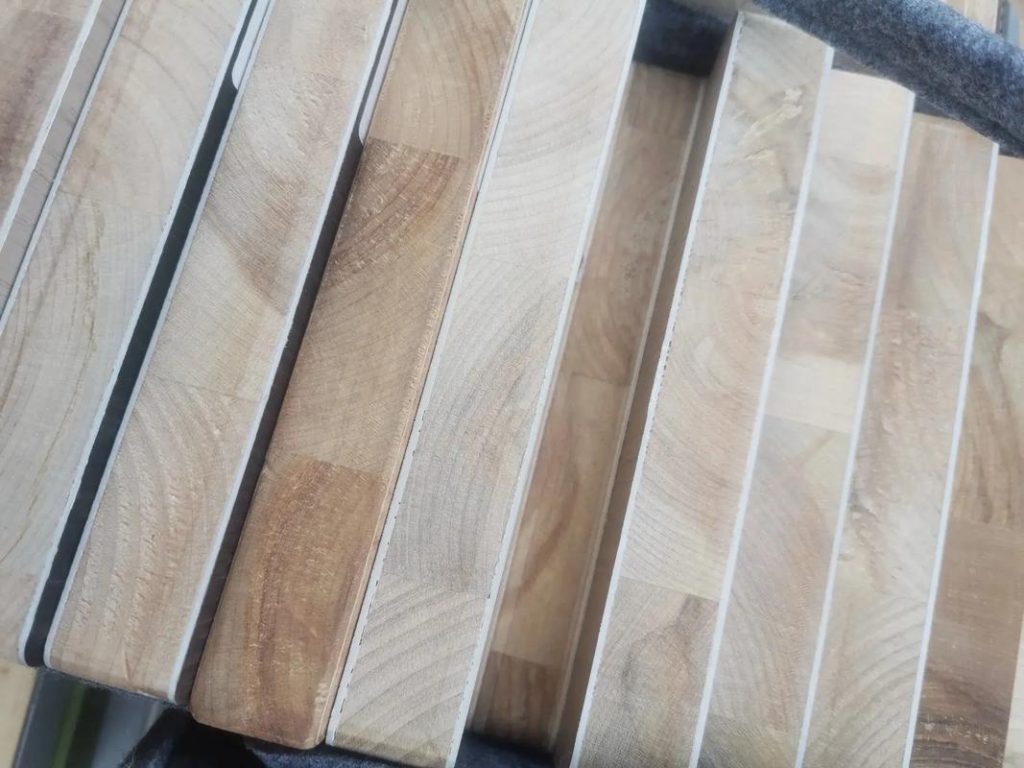
Blockboard vs Finger Joint Board for Furniture Buyers
A visible timber-strip core does not make the finished panel the same as an exposed…

Synchronized Melamine Board Goes Beyond the Print
Woodgrain design reference only. A flat image cannot demonstrate EIR texture or alignment. Synchronized melamine…
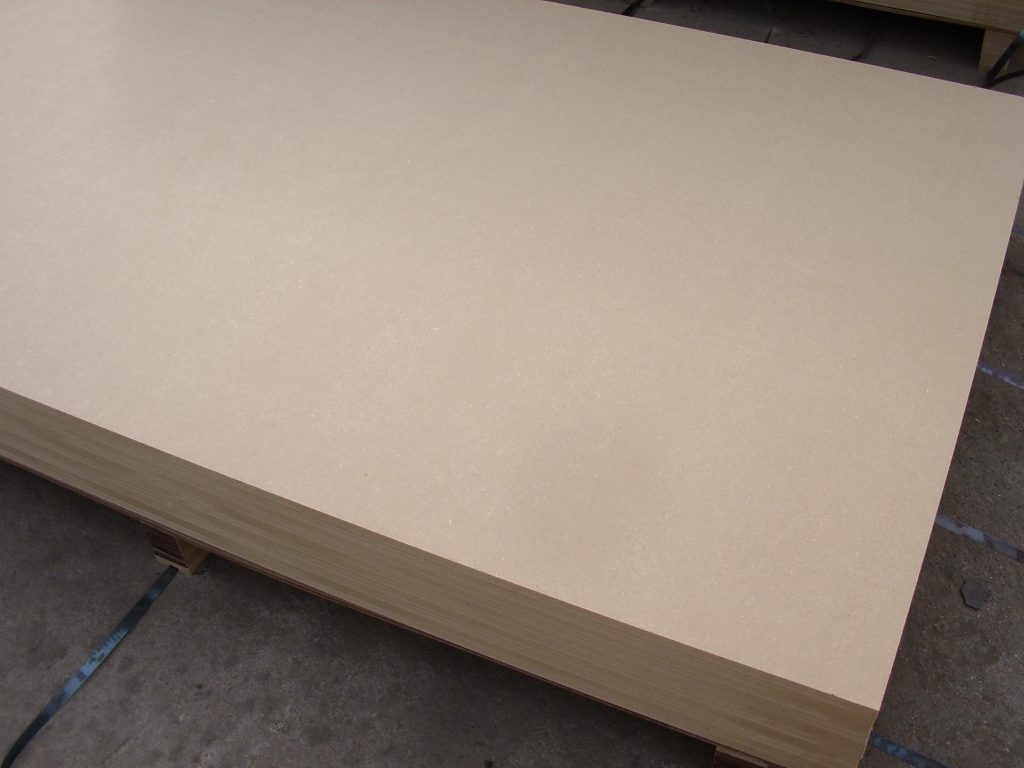
Lightweight MDF vs Standard MDF for Furniture Parts
Panel appearance alone does not identify a lightweight MDF grade. Lightweight MDF can make a…
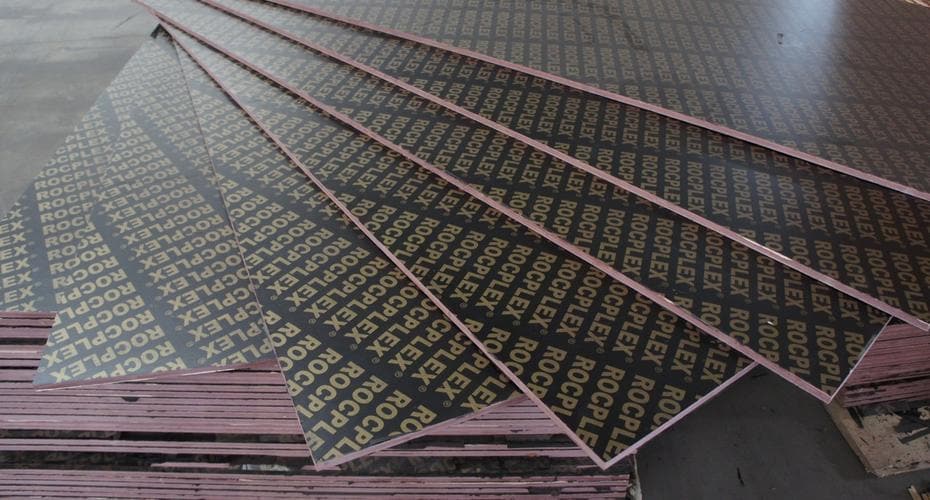
Film Faced Plywood Edge Sealing After Cutting
Film faced plywood edge sealing needs to follow the cutting and drilling plan. Factory edge…
Why Two 18mm MDF Sheets Can Weigh So Differently
See why thickness, density and moisture must be separated before a heavier sheet is treated as a better MDF grade.
Melamine Board Specifications for Import Orders
Review how the decor surface and the selected substrate should be specified separately in a faced-board order.
Pressed Wood Board vs Particle Board vs Chipboard
Use the right substrate name when comparing MDF, particle board and decorative panels for furniture production.
Make the MDF Edge a Stated Part of the Order
Send the component drawing, MDF type, finished surface, edge-band reference, expected use environment and current failure photos if you have them. We can help match the board specification, retain an approval sample and coordinate practical inspection and packing evidence.
Contact Momentimber to review an MDF edge-banding specification.