

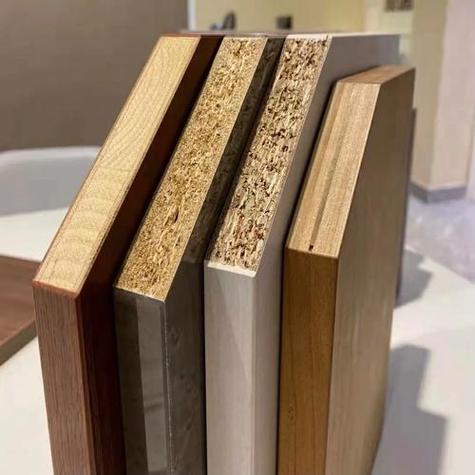
A distributor may have a decor that already sells: the customer likes the color, the edge band is available and sample furniture looks right. Then the original substrate becomes expensive, slow to source or unavailable. Changing the core can look like a simple substitution. It is not. A melamine board substrate change can preserve an appearance while changing weight, machining, fitting performance, moisture response and the way a finished component behaves.
The useful question is not “Can we keep the same decor?” It is “Can we keep the same decor without changing a promise we already made to the customer?” For cabinet carcasses, shelves, doors and shop fittings, the answer depends on which panel function is carried by the face and which function is carried by the core.
Key takeaway: Treat the melamine face and the substrate as two linked systems. A decor match may be possible. A like-for-like product match is not automatic until thickness, texture, gloss, core performance, edge treatment and the customer application have been approved together.
The Surface Can Match While the Panel Changes
A melamine faced board is a decorative surface bonded directly to a wood-based substrate under heat and pressure. It can be particleboard, MDF, plywood, blockboard or another agreed core. The surface controls much of what the buyer sees and cleans. The substrate controls much of what the workshop cuts, drills, edge-bands and loads.
This distinction is built into the product definition. The EN 14322 overview covers decorative melamine faced boards for interior use, while the substrate still needs its own applicable type and performance specification. Do not let one decor code replace that second part of the order.
| What may stay the same | What may change with the core | Why the distributor should care |
|---|---|---|
| Decor code, print and general color family | Weight, stiffness, screw holding and edge structure | The same SKU can behave differently in transport, assembly and service. |
| Texture name or press plate pattern | Surface flatness and support beneath the face | A similar texture can look different under side light or after machining. |
| Matching edge-band target | Exposed-edge absorbency and banding preparation | The same band can need different glue, trimming or sealing control. |
| Finished nominal thickness | Actual tolerance and density profile | Door gaps, hardware settings and container weight can change. |
When a Substrate Change Is Usually Reasonable
A change is more realistic when the decorative panel is used for low-risk interior parts, the component geometry is stable, the customer accepts a new sample and the order does not rely on one special performance claim. For example, an interior filler panel may tolerate more substitution than a wide cabinet door, a shelf carrying heavy stock or a board drilled for a particular connector.
- The approved sample includes the exact decor, texture, gloss and both faces where relevant.
- The finished component is trial-cut, edge-banded and assembled with the actual hardware.
- The buyer confirms whether the part is a carcass, door, shelf, side panel, display fixture or another defined use.
- The project does not require a substrate-specific declaration, emission class or moisture-resistant board type that the replacement cannot support.
- The customer has accepted the new core in writing before serial production or repeat delivery.
Particleboard to MDF is not a cosmetic swap
A switch from melamine faced particleboard to melamine MDF can provide a more uniform, smooth edge for some profiles and painted-looking furniture faces. It can also add sheet weight and change how a long door, hinge setting or truckload is managed. MDF and particleboard do not give the same result in every drilling pattern, fitting design or moisture-exposure path.
The European Panel Federation notes that the colour of an MDF surface can affect the appearance of light or pale resinated papers in some cases. That is a reminder to approve the full panel, not just a loose paper chip. The point is practical: compare the selected finished board under ordinary receiving and showroom lighting, then make a small component using the intended machining.
Four Things Buyers Often Miss During a Repeat Order
1. The face is only as flat as the support beneath it
A decorative face can look acceptable on one loose sample and still reveal a different feel or flatness after the substrate changes. Examine the sample at normal viewing distance and under side light. Check for press marks, local telegraphing, surface particles and any issue that becomes visible after cutting a door or large side panel.
2. Matching edge band is a separate approval
A matched color name does not guarantee that board and edge band match in gloss, texture, thickness or viewing angle. It also does not prove that the band will run cleanly on a new core. Retain a short edge-banded sample, record the band reference and inspect the joint after the adhesive has cooled. This is cheaper than discovering a visible mismatch after a distributor has sold the decor as a coordinated range.
3. Hardware feedback can move before the appearance moves
A connector or hinge cup creates a local test of the core. Drill and assemble the actual hardware at the intended edge distance. Note breakout, pull-through, screw bite and whether the panel needs a different pilot-hole or torque setting. A panel can keep the same visible face while its component behavior changes enough to create returns.
4. A new core may alter the moisture path
The melamine face helps protect the broad surface, but cut edges, drilled holes and incomplete edge bands remain vulnerable points. The replacement core may react differently when exposed to wet cleaning, a kitchen leak or humid storage. Do not describe a finished panel as waterproof unless the exact approved construction and application support that statement.
Use a Small Approval Trial Before You Change the Range
A small importer does not need an elaborate laboratory programme to control this decision. Use a short component trial that recreates the customer risk. Keep the old approved board and the proposed replacement side by side. Use the same saw, edge band, hardware and assembly sequence. Then save the physical pieces and photos as the new Golden Sample record.
| Trial step | What to compare | Record for the order file |
|---|---|---|
| Visual match | Decor, texture, gloss, face-to-face balance and side-light appearance | Decor code, supplier code, sample photo and approval date. |
| Dimension | Actual thickness, size, flatness and edge profile | Measurement points, tool and permitted range. |
| Machining | Saw cut, drilled hole, edge-band joint and trimmed edge | Tool setup, edge-band code, photos and pass/fail notes. |
| Assembly | Hardware fit, door alignment, shelf support or intended load | Hardware drawing, sample component and assembly notes. |
| Packing | Corner protection, face separators and bundle support | Packing sketch, bundle photos and loading evidence. |
For a new supplier or a high-risk component, add the agreed checks to the inspection request. Momentimber can coordinate this through its quality-control process, including Golden Sample comparison, visible-condition checks, selected dimensions, packing confirmation and loading evidence. The work is most useful when the trial criteria are decided before production.
What to Write in the New RFQ
A repeat order should never say only “same color, different core.” That phrase leaves too many decisions open. Write the surface and substrate details separately, then connect them to the component use.
- Product name: for example, double-sided melamine faced MDF or melamine faced particleboard, not only “melamine board”.
- Core type, grade or performance requirement, actual thickness range, size and emission requirement.
- Decor code, texture code, gloss level, face configuration and reverse-balancing requirement.
- Matching edge-band reference, edge thickness and the intended visible-edge standard.
- Component application, hardware type, machining process and moisture-exposure boundary.
- Golden Sample ID, trial approval requirement, inspection points and packing specification.
Do Not Change the Core to Solve Only a Price Problem
A lower sheet price can be real, but it is not automatically a lower landed cost. A heavier board may reduce sheets per container. A weaker or less suitable core may create scrap during drilling, extra edge treatment, fitting complaints or slow-moving inventory if the new batch no longer matches the customer expectation. Compare the final component and the order risk, not just the price per sheet.
The article Raw Particleboard vs Melamine Faced Chipboard explains why a finished surface changes the product range itself. When a substrate is being changed inside that finished range, use the same discipline: name the core, name the surface, approve both, then price the complete configuration.
Keep the Decor, Re-Approve the Product
A melamine board substrate change can be a smart way to broaden a range or secure supply. It becomes risky only when the surface is treated as the whole product. Keep the decor reference, but re-approve the new panel through a component trial, a labelled Golden Sample and a clear RFQ. That lets the customer see continuity while the distributor retains control of the performance change underneath.
Related Reading
Sanded OSB for Furniture Still Needs a Finish Plan
OSB material reference only; sanding quality and the final finish need separate approval. Sanded OSB…
Plywood vs OSB for Crates Is More Than a Price Choice
Protected panel bundles are a supply-stage reference, not an approved design for a shipping crate….
Blockboard vs Finger Joint Board for Furniture Buyers
A visible timber-strip core does not make the finished panel the same as an exposed…

Synchronized Melamine Board Goes Beyond the Print
Woodgrain design reference only. A flat image cannot demonstrate EIR texture or alignment. Synchronized melamine…
Lightweight MDF vs Standard MDF for Furniture Parts
Panel appearance alone does not identify a lightweight MDF grade. Lightweight MDF can make a…
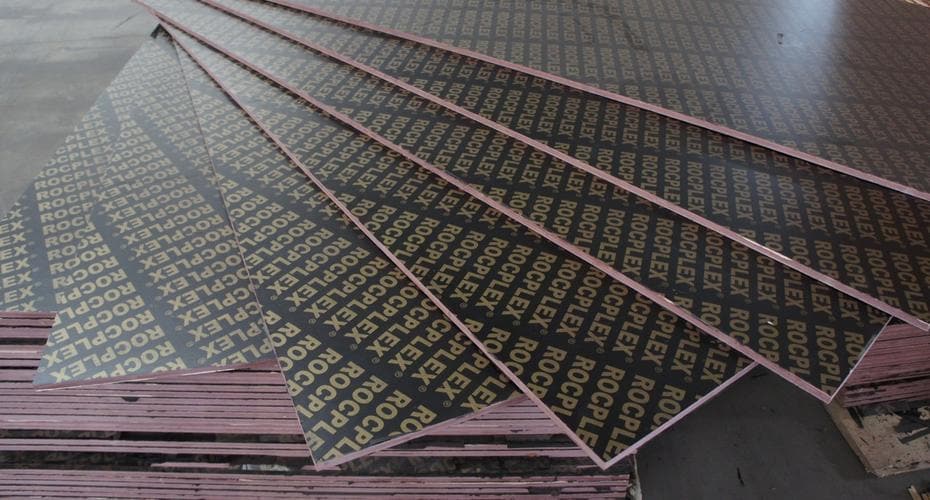
Film Faced Plywood Edge Sealing After Cutting
Film faced plywood edge sealing needs to follow the cutting and drilling plan. Factory edge…
Raw Particleboard vs Melamine Faced Chipboard
See why the finished surface changes SKU planning, processing and the purchaser’s specification.
Why Two 18mm MDF Sheets Can Weigh So Differently
Understand why the same nominal thickness does not settle density, weight or component handling.
Why Cam Locks Break Out of Particleboard
Use a hardware-focused approach when comparing core performance and drilling feedback.
Considering a substrate change for an existing decor? Send the current sample, target component, core options, edge-band reference and destination use. We can help turn the comparison into an approval trial and an order-ready specification.