

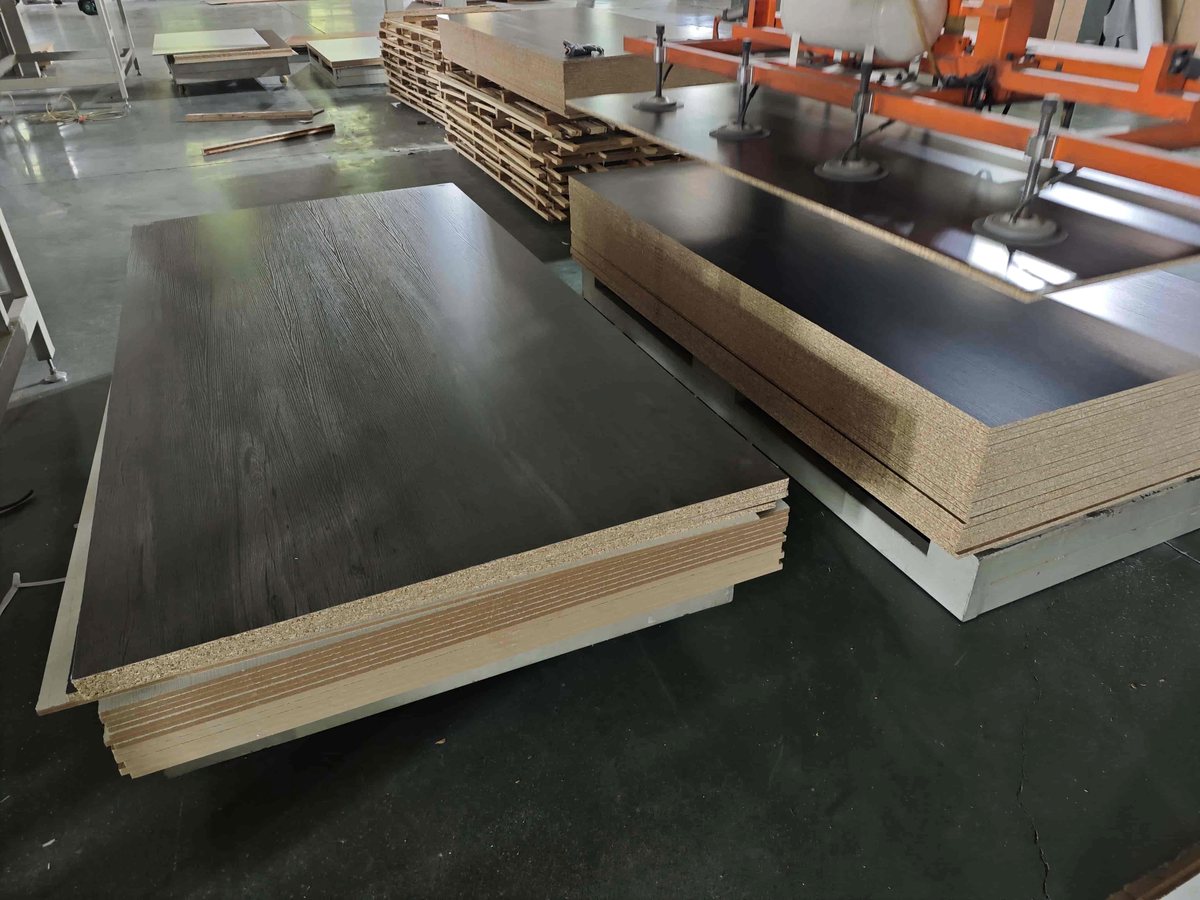
Suppose a distributor opens a pack of glossy furniture boards. The film looks intact, but peeling it reveals a sticky patch or a mark. Melamine board protective film is a temporary covering used to protect the finished face during agreed handling or processing. It is not the permanent melamine paper. Approve how it comes off, and what the surface looks like underneath, before treating film as a complete protection plan.
Not every melamine-faced board is supplied with film, and not every finish needs the same arrangement. The useful buying question is whether the proposed film, decorative face and delivery route have been considered together. A transparent layer and a clean loading photograph cannot answer that by themselves.
Key takeaways
- Separate temporary protective film from permanent decorative melamine paper.
- Approve the actual finish and removal conditions rather than a generic film description.
- Keep an untouched sample and the film identity if a removal complaint appears.
What Melamine Board Protective Film Does Not Tell You
In the melamine board product range, resin-impregnated paper forms a permanent surface over a wood-based substrate. A removable film sits above that surface when included. Particleboard or MDF is still the internal board. Keep these three things separate in the enquiry so a request for film does not become a request to change the decorative material.
Trade descriptions can be confusing. A supplier may use laminate, foil, film or paper in different ways. Ask whether the covering is removable and what remains after it is removed. If the proposed surface is PET, PVC or separately bonded HPL, identify that as a different product rather than calling it direct melamine paper.
The NEN overview of EN 14322 helps identify decorative melamine-faced interior boards and distinguishes that scope from the HPL systems it excludes. It is not an approval of a temporary film or a removal procedure. Those details belong to the actual supplied surface-protection system.
| Layer or protection | Purpose | What the buyer should identify |
|---|---|---|
| MDF or particleboard substrate | The internal panel used for the furniture component. | Product reference, finished thickness and intended use. |
| Melamine decorative face | The permanent colour, texture and surface system. | Approved decor and finish on each side. |
| Temporary protective film | Optional removable protection for agreed stages. | Film identity, covered faces and removal instructions. |
| Bundle packaging | Protection during handling, storage and transport. | Wrapping, face protection, edges, supports and labels. |
Choose Film for the Finish, Not Just the Board Name
A smooth gloss finish and a heavily textured finish do not present the same surface. Ask the producer which film is proposed for the actual finish, and whether the relevant handling or machining steps have been considered. Avoid accepting any available transparent film simply because it adheres when first applied.
Surface-protection manufacturer POLIFILM describes film selection as material- and process-specific. That is a useful selection principle, not a recommendation of one product for your order. Ask the panel producer or film provider to confirm compatibility and the applicable conditions in writing.
Adhesion must suit both protection and removal. A film that lifts during handling may not protect the face as intended. A film that is difficult to remove can create extra work or an appearance dispute. Buyers should approve those outcomes on the actual surface rather than judging film quality by how strongly one corner sticks.
Do not infer abrasion resistance, a waterproof board or outdoor suitability from the presence of film. It does not cover every cut, hole or corner, and it does not change the substrate grade. Keep dry storage, suitable packaging and appropriate handling in the plan even when the face is protected.
Approve the Surface Under the Film
Ask for a representative finished sample with the proposed film and an identified reference without film. Follow the supplied removal instructions on a trial area. Compare the revealed surface with the reference under the same ordinary light. This is a practical approval check, not a standardized adhesion or surface-durability test.
The melamine texture and repeat-order guide is useful here. Film can change how a surface feels and appears while covered. Approve colour, texture and gloss on the exposed finished face as well as checking protection. A film supplier label cannot replace the decorative reference.
Keep the sample identity, film reference and date applied if available. Record the date removed and relevant storage observations. Ask the provider what trial period and conditions are meaningful for this order. A successful immediate peel is reassuring, but it does not approve a long transit or storage period under different conditions.
Use the expected route, not a homemade stress test
Describe the likely sea journey, warehouse stock period and processing sequence. Ask whether the documented film instructions cover them. Do not heat samples in an oven or leave them outdoors as an improvised acceptance test. Such conditions may be irrelevant, unsafe or simply outside the product instructions.
Keep the Workshop Instructions Clear
If boards will be sawn, drilled or edge-banded with film in place, ask the workshop and producer to confirm the sequence. Some operations may need film removed or trimmed locally. The approved process should not leave loose film interfering with a tool, adhesive bond or finished edge. Follow equipment and material instructions rather than inventing one rule for every workshop.
Also decide who removes the remaining film: the processor, furniture assembler, installer or customer. That choice affects how long it remains on the surface and who can inspect the revealed finish. Put the instruction where the receiving team can find it, not only in a message to the purchasing manager.
- Confirm whether film covers one face or both faces.
- Record the film reference and relevant storage or removal instructions.
- Agree when the finished face is inspected after removal.
- Identify the party responsible for removal and any approved cleaning.
If the route or stock period changes, check the instructions again. Do not assume that extra weeks in storage are harmless, or that a film advertised for another industry has the same allowed exposure. There is no universal removal deadline that this article can safely assign to every melamine-panel order.
Investigate a Sticky Patch Without Destroying the Evidence
Start with the symptom. Is the mark on the removable film, on the permanent surface or beneath the decorative face? Photograph an entire identified sheet before taking close-ups. Keep a piece with film still attached and a piece showing the problem. Record the bundle, quantity checked and whether the symptom repeats.
Use the melamine surface-defect guide to keep descriptions precise. A residue-like patch, a lifted decorative layer and a press mark are different observations. A phone photo alone cannot prove whether the source is film, decorative surface, handling or cleaning.
| Observation | Keep before reworking | Next discussion |
|---|---|---|
| Sticky-looking or smeared patch | Untouched area, removed film and product identities. | Ask for an approved check or cleaning method. |
| Decorative face lifts during removal | Both separated surfaces and the original sheet context. | Stop wider removal and ask the producer to investigate. |
| Scratch visible after peeling | Full-sheet photos, film condition and handling record. | Compare when and where the mark first appeared. |
| Only some bundles affected | Bundle IDs and an identified unaffected comparison. | Agree whether to expand the sampling scope. |
Do not rub the entire batch with a strong solvent or an abrasive pad before the supplier sees it. That can change gloss, texture or colour and make a fair investigation harder. If cleaning is proposed, obtain approval, trial a small identified area and retain an untouched reference. Surface rescue and claim evidence need to be planned together.
Put Removal Approval Into the Order Record
Include the substrate and finished thickness, both decorative faces, film arrangement, provider reference and applicable instructions. Attach the approved revealed-surface reference. State how a sampled check will be recorded at receiving and what should happen if removal exposes an unexpected mark. These details make a modest protection option easier to manage.
For a repeat order, require confirmation before changing the film or its application arrangement. Matching the decor code alone does not confirm the protection system. Keep the old and new trial records distinct so the warehouse can identify which instruction applies to which bundle.
Momentimber can coordinate surface references, sample review and selected packing evidence for raw and melamine-faced panel requirements. Our company introduction explains this supplier-service role. Agreeing on the revealed surface before shipment is more useful than adding film as an unexplained line on the packing list.
Frequently Asked Questions
Related Reading
Sanded OSB for Furniture Still Needs a Finish Plan
OSB material reference only; sanding quality and the final finish need separate approval. Sanded OSB…
Plywood vs OSB for Crates Is More Than a Price Choice
Protected panel bundles are a supply-stage reference, not an approved design for a shipping crate….
Blockboard vs Finger Joint Board for Furniture Buyers
A visible timber-strip core does not make the finished panel the same as an exposed…
Synchronized Melamine Board Goes Beyond the Print
Woodgrain design reference only. A flat image cannot demonstrate EIR texture or alignment. Synchronized melamine…
Lightweight MDF vs Standard MDF for Furniture Parts
Panel appearance alone does not identify a lightweight MDF grade. Lightweight MDF can make a…
Film Faced Plywood Edge Sealing After Cutting
Film faced plywood edge sealing needs to follow the cutting and drilling plan. Factory edge…
Plywood for Melamine Facing Needs More Than Sanding
Plywood for melamine facing needs more than a smooth touch. Sanding can prepare a face,…
Cleaning Melamine Board Without Damaging the Finish
Cleaning melamine board should start with the supplied care instructions and a gentle method, not…
Melamine Board Defects: A Buyer Quality Guide
Keep film residue separate from blistering, lifting and permanent surface marks.
Melamine Board Texture and Repeat Orders
Approve the finish itself, not only its appearance through a transparent film.
Melamine Board Substrate Change: What Changes?
Remember that the surface protection does not approve the internal board.
Send the decor, texture, substrate and expected storage or processing route. We can help include surface-protection and removal checks in a clear melamine-board enquiry.