

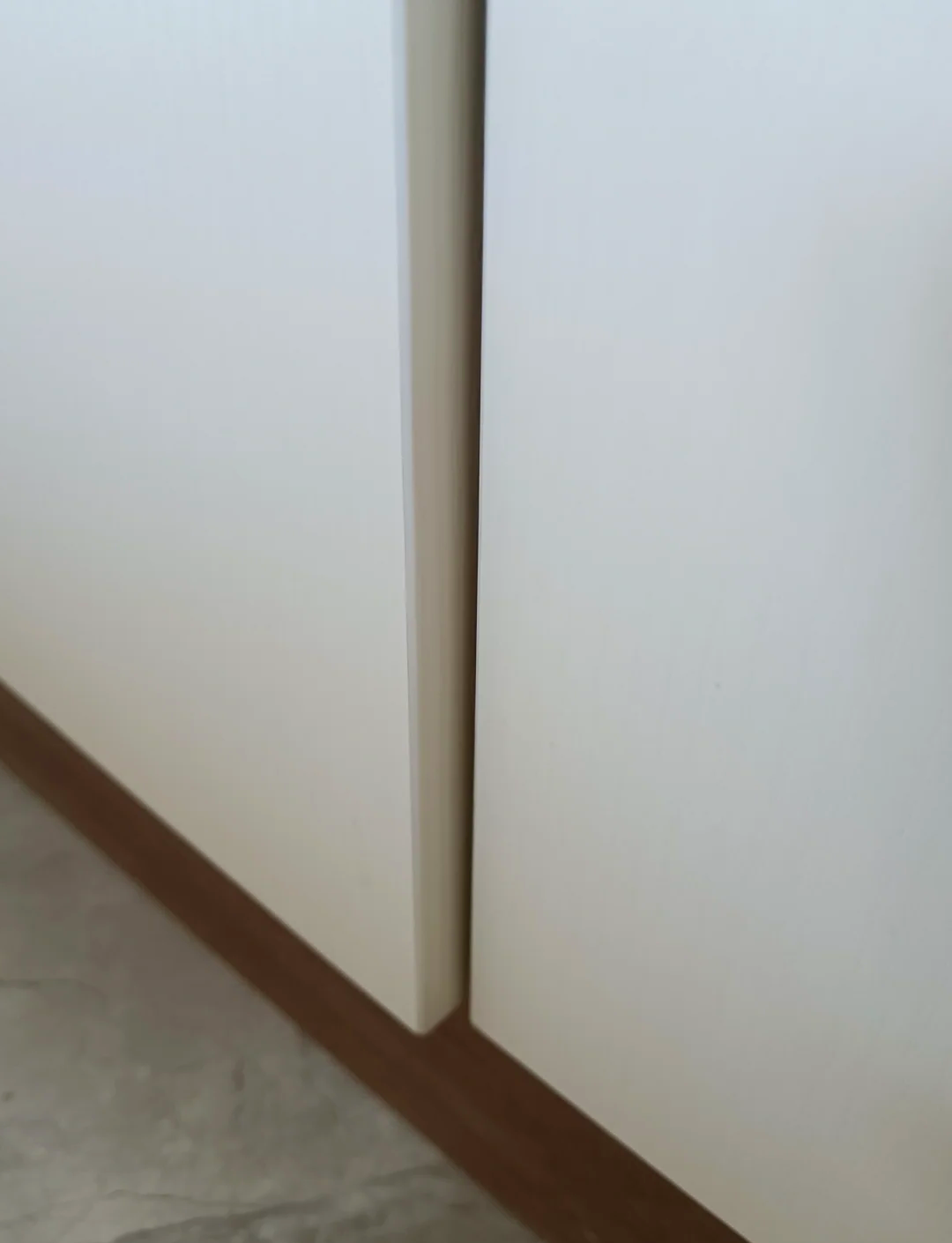
The hand sample was flat. The first finished door was flat too. Then the container reached the cabinet factory, the panels sat near an open loading bay, and several tall doors started to twist. A blockboard door warping complaint often becomes a simple accusation against the board. That is too early. A large door reflects the board construction, the face build-up, the machining pattern, the storage condition and the way the panel is fixed into furniture.
For an importer, the real task is to identify whether the issue was already present in the board, introduced during transport or storage, or created when a symmetric panel was made asymmetric by cutting, routing or one-sided treatment. The answer changes the next order, the claim evidence and the door design.
Key takeaways:
1. A flat small sample does not prove a tall or wide blockboard door will stay flat in service.
2. Core-strip condition, face construction and balanced finishing influence the starting condition of a large panel.
3. Uneven support, rain exposure and one-sided processing can add twist after the board leaves the factory.
4. Approve a full-size Golden Sample door or panel, not only a hand sample.
5. Record flatness, storage and machining evidence before a warped panel is forced back into shape.
The Short Answer: A Door Is More Than a Board
Blockboard is built around a core of wood strips, with face and crossband layers that create a usable panel. It can be a sensible choice for wide furniture parts when the core and construction suit the job. The Blockboard product page introduces the panel system. For a tall door, however, the purchase decision needs to continue through door dimensions, decorative faces, hardware layout and the storage path after arrival.
The Wood Panel Industries Federation notes that correct storage matters for all wood-based panels: stacks should be flat, supported on a level base, kept clear of ground moisture, and supported with equal-thickness battens when a close pallet base is not available. Its PanelGuide makes the commercial point clearly: flatness can be lost after delivery if the handling plan is not part of the order.
| When the twist appears | What it may indicate | First evidence to keep |
|---|---|---|
| Before machining, in a sealed bundle | Possible original flatness, construction or transport issue requiring a traceable lot review. | Bundle label, wrapper condition, stack position, diagonal straightedge photos. |
| After panels were stored upright or on uneven bearers | Support or moisture imbalance may have changed the panel after delivery. | Warehouse floor, supports, stack photos and storage timeline. |
| After routing, grooving or adding a face treatment on one side | The finished door may no longer have a balanced build-up. | Component drawing, machining sequence and both-face treatment record. |
| Only after hinges and hardware are fitted | Door geometry, hinge layout or frame alignment may be amplifying a smaller panel deviation. | Door size, hinge positions, frame measurement and unloaded panel check. |
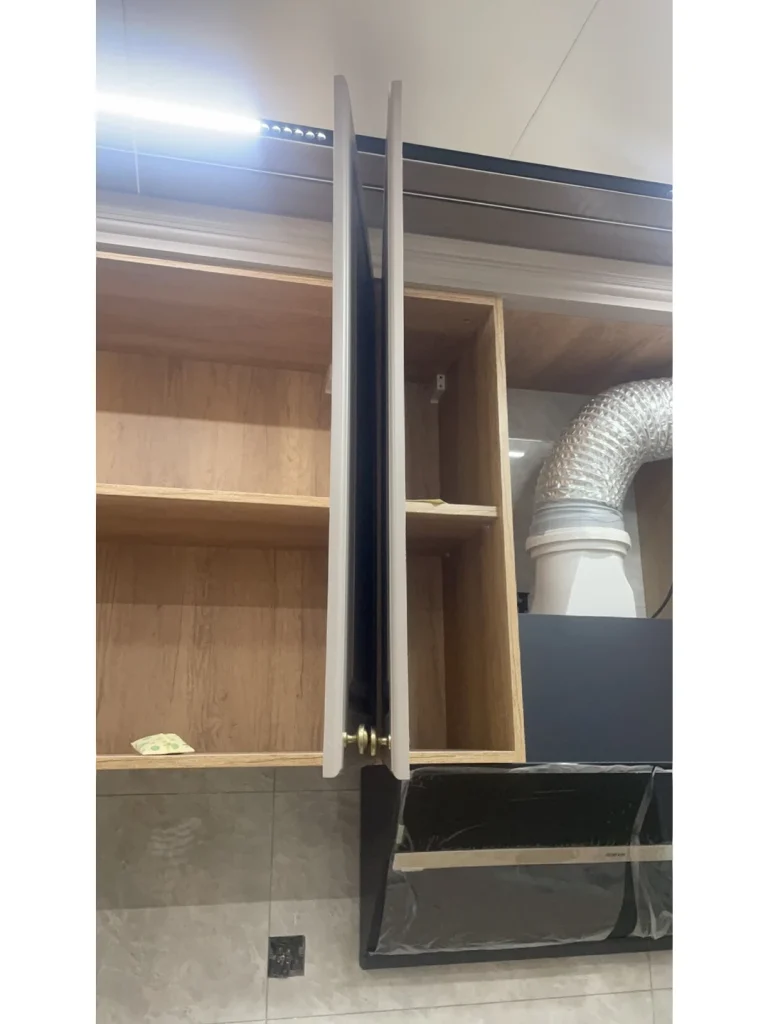
Why a Flat Sample Can Become a Twisted Door
A small sample has short spans and less leverage. A full-height wardrobe or cabinet door has a larger diagonal, more surface area exposed to air and more opportunity for a small construction or storage difference to become visible. The question is not whether the board looked flat on a table once. The question is whether the complete door system remains balanced through transport, machining, storage and installation.
The core must be consistent before the decorative work begins
Blockboard relies on a timber-strip core. Large gaps, uneven strip condition, local moisture variation or irregular support below the face layers can create a risk that only becomes obvious after cutting. The article Blockboard Core Gaps explains why a clean face does not show every core condition. For door panels, cross-section checks and a full-size trial matter more than a photo of the surface.
A surface system can add stress if the two sides are not treated as a pair
A decorative face, whether melamine, paint, film or another agreed finish, should be described separately from the blockboard core. The visible face changes appearance and cleaning behaviour; it does not erase the underlying core behaviour. When one side is routed deeper, receives a different coating build-up or is exposed to moisture while the opposite side is protected, a previously flat panel may move. Do not call a door “the same board” after changing only one face of the system.
Approve the Right Sample: Full Size, Normal Handling, Real Hardware
A Golden Sample should represent the risk. For a 2,100 mm wardrobe door, an A4 offcut is useful for colour but cannot validate flatness. Make a representative full-size panel or at least a meaningful long-panel trial. Store it under normal workshop conditions, then check it before and after the intended machining and hardware fitting.
| Approval check | Practical method | Why it matters |
|---|---|---|
| Panel size | Use the planned door size or a long-panel substitute with the same construction. | Short samples hide diagonal twist and span-related movement. |
| Flatness check | Place on a known flat surface and use straightedge or diagonal checks at agreed positions. | Creates a repeatable record instead of “looks flat” language. |
| Surface balance | Record both faces, backing, grooves, routing and protective films. | Shows whether later processing changes the panel balance. |
| Hardware trial | Fit the intended hinges, handle holes and any stiffener or frame detail. | Separates panel twist from door installation geometry. |
| Conditioning | Keep the trial in representative indoor conditions before final approval. | Avoids approving an unusually dry, wet or freshly pressed sample only. |
For a melamine-faced configuration, record the surface and substrate independently. The article Can You Change the Substrate Without Changing the Decor? explains why an unchanged appearance is not proof that the complete panel is unchanged. That distinction is just as important when approving a door flatness trial.
Storage and Transport Can Turn a Manageable Risk Into a Claim
A good panel can be damaged by a poor stack. The bundle may be left on a damp floor, supported by uneven bearers, stored vertically for convenience, or opened and left unprotected near a doorway. These conditions do not prove that a buyer caused the warp. They do mean that the evidence must include the material’s journey after arrival.
Technical handling guidance from Sonae Arauco similarly recommends level storage areas, flat support and protection from drastic condition changes; it warns that unevenness can lead to warping that is often irreversible. The storage and handling guidance supports a simple supplier-buyer rule: record the stack before moving the disputed panels.
- Keep bundles horizontal on a rigid, level base with aligned supports; do not use loose, uneven offcuts as temporary bearers.
- Keep the panels clear of wet floors and protect open bundles from rain, direct sun and sustained airflow from an open door.
- Keep all edges flush in the stack so the broad faces support each other evenly.
- Do not stand large door panels upright for extended storage unless the product and support system are designed for it.
- Photograph the first full-size panels before machining, then after machining and again after hardware fitting.
- Keep a retained full-size or long-panel Golden Sample for the first shipment and any construction change.
How to Diagnose Twist Without Creating a Worse Claim
Do not immediately clamp a warped door flat, plane it, or fit extra hinges. Those actions can erase the condition that needs to be reviewed. First separate the panel from the furniture: remove it if possible, place it on a confirmed flat reference and record bow, cup or twist at agreed points. Then compare it with a protected sample from the same lot.
| Observed pattern | First question | Next decision |
|---|---|---|
| Several unopened panels show similar diagonal twist | Was the same construction and lot used, and was the bundle protected in transit? | Hold the lot, compare against the Golden Sample and request a joint specification review. |
| Only doors with one-sided routing or coating move | Did processing create an unbalanced build-up? | Review the component design and add a balanced back treatment or process change. |
| Only lower panels in a stack are affected | Were the floor, bearers or wrapper wet or uneven? | Preserve storage evidence before assigning a board cause. |
| A flat panel becomes misaligned only after installation | Are the hinges, frame and door clearances correct? | Check installation geometry before reclassifying the panel as defective. |
Momentimber can coordinate full-size sample approval, construction records, in-process checks, packing confirmation and loading evidence for blockboard orders. Our sourcing and quality-control approach works best when the acceptable panel condition and the evidence sequence are written before production.
Put Door Flatness Into the RFQ, Not Into a Later Argument
Avoid an RFQ that says only “18 mm blockboard for doors.” It leaves the most important decisions unstated. Identify the end use, full dimensions, core expectation, both face systems, machining, storage boundary and acceptance method. You do not need a complicated laboratory programme. You do need a practical reference for a real door.
RFQ wording to adapt:
Blockboard for [door type], [length] x [width] x [thickness], agreed core construction and face build-up on both sides. Finished panel use: [wardrobe/cabinet/partition]. Record all grooves, routing, surface treatments and hardware positions. Full-size Golden Sample panel to be checked on a confirmed flat reference before and after agreed machining. Packing, support-bearer layout, moisture protection and receiving-photo sequence to be agreed before bulk loading. Any change to core, face construction, thickness, machining or hardware layout requires written approval.
Send the drawing, planned door dimensions, face construction and destination storage conditions through the Momentimber contact page. That gives the supplier and buyer a chance to agree on a workable sample rather than discover the actual specification after a door has already moved.
Flatness Is a Product-System Decision
A flat blockboard door is not created by a single inspection at the end of the line. It comes from a sound core, a balanced face build-up, a representative sample, careful storage and a door design that does not add unnecessary stress. When those points are visible in the order file, a buyer can prevent many twist complaints and diagnose the remaining ones fairly.
Related Reading
Sanded OSB for Furniture Still Needs a Finish Plan
OSB material reference only; sanding quality and the final finish need separate approval. Sanded OSB…
Plywood vs OSB for Crates Is More Than a Price Choice
Protected panel bundles are a supply-stage reference, not an approved design for a shipping crate….
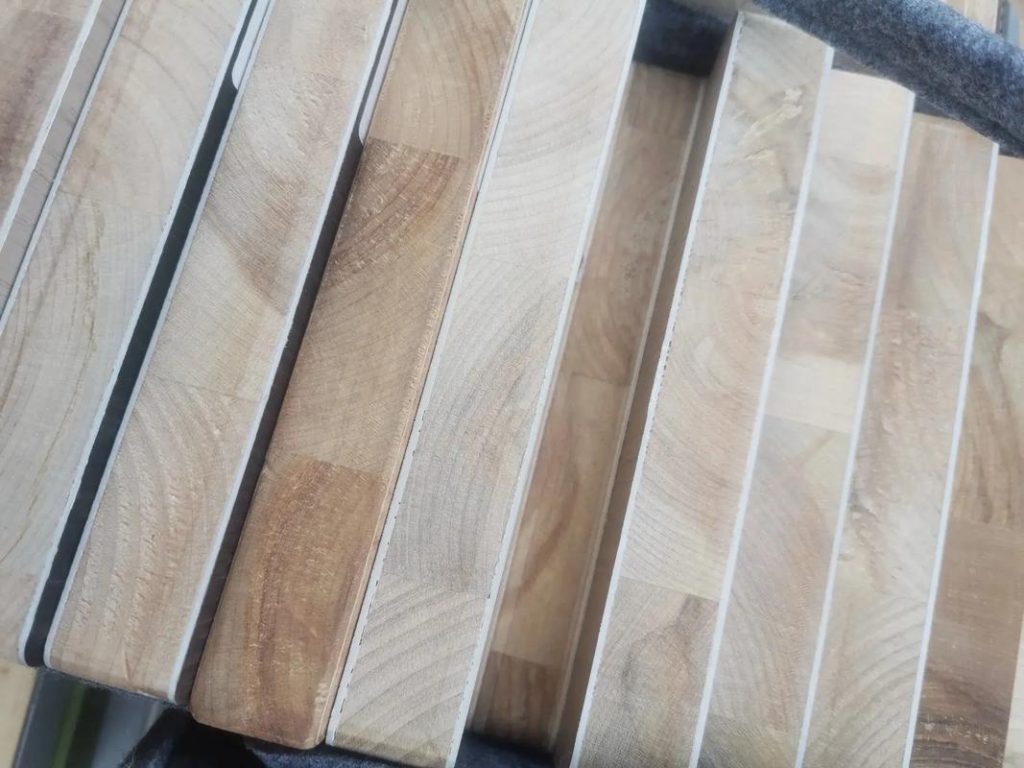
Blockboard vs Finger Joint Board for Furniture Buyers
A visible timber-strip core does not make the finished panel the same as an exposed…

Synchronized Melamine Board Goes Beyond the Print
Woodgrain design reference only. A flat image cannot demonstrate EIR texture or alignment. Synchronized melamine…
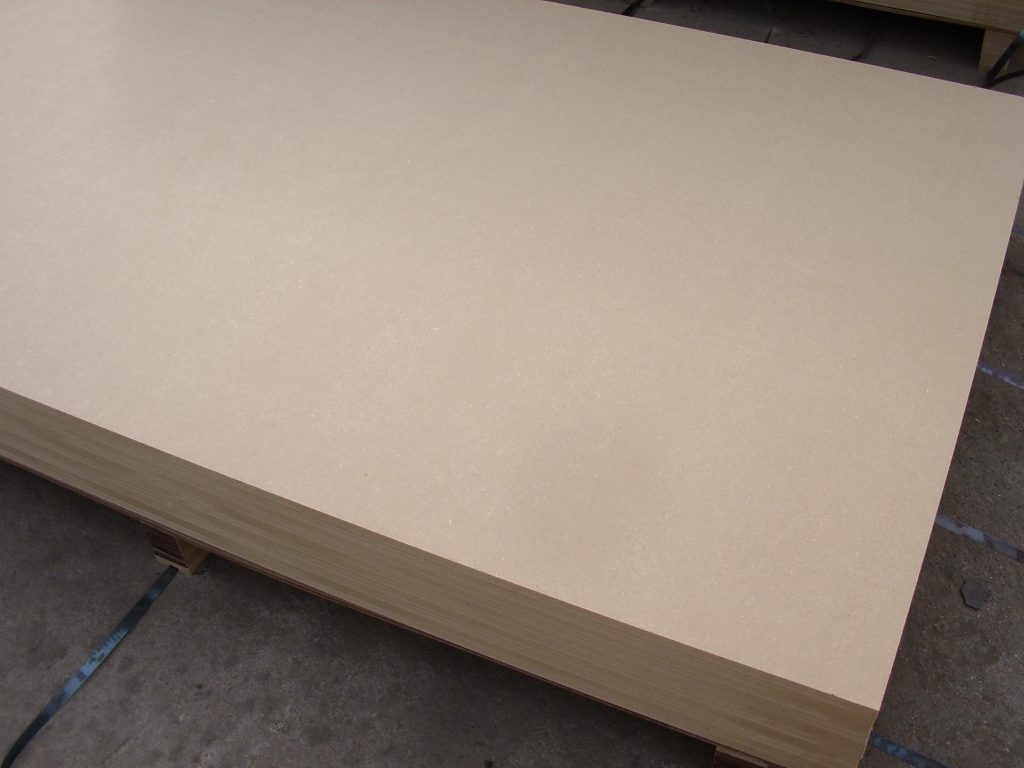
Lightweight MDF vs Standard MDF for Furniture Parts
Panel appearance alone does not identify a lightweight MDF grade. Lightweight MDF can make a…
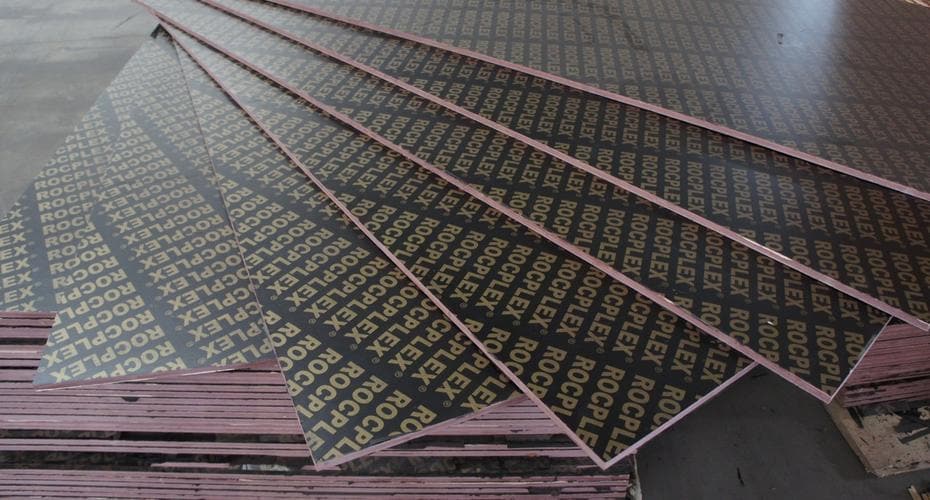
Film Faced Plywood Edge Sealing After Cutting
Film faced plywood edge sealing needs to follow the cutting and drilling plan. Factory edge…
Blockboard Core Gaps: What They Change in Cutting, Screws and Claims
Inspect the strip core before a clean face leads a buyer to assume every hidden condition is acceptable.
Why Melamine Blockboard Shelves Still Sag
See how span, load and support create a different blockboard risk after a panel leaves the factory.
Melamine Blockboard vs MFC for Wardrobes
Compare the core and surface decisions that shape wardrobes, shelves and visible furniture components.
Planning large blockboard doors or tall furniture panels? Send the dimensions, face build-up, machining drawing, hardware layout and destination storage conditions. We can help define a practical Golden Sample and inspection record before production.
Contact Momentimber about blockboard door sourcing and flatness control.