

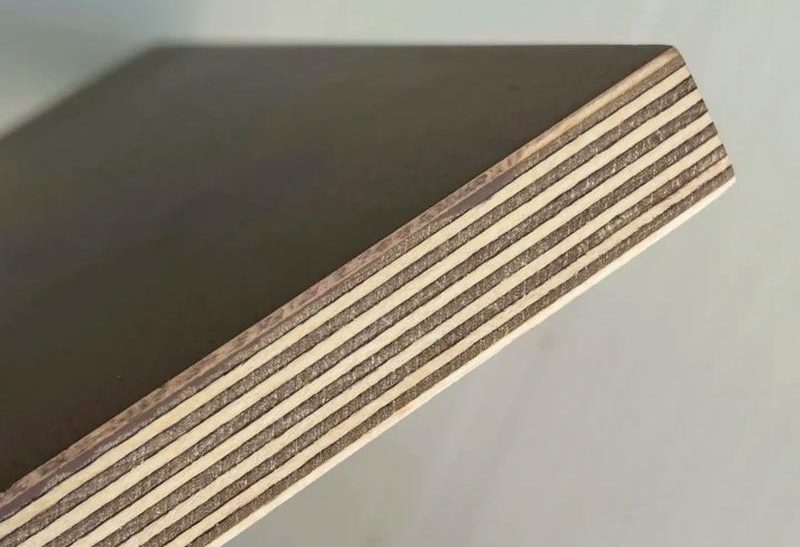
A buyer asks for marine plywood, but the quotation only says “waterproof glue.” Another supplier offers commercial plywood at a much lower price and promises the same performance. This is where a marine plywood vs plywood comparison must move beyond product names. Bond durability matters, but veneer species, core gaps, face quality, construction and the intended wet exposure also decide whether the panel is suitable.
The short answer is simple: use a recognized marine grade only when the application and contract require it. For ordinary indoor furniture, dry packaging or short-term protected use, a correctly specified commercial panel may be the better value. Paying for a label without checking the construction creates the worst result – a higher price with no clear acceptance standard.
Key takeaways:
1. Exterior-type glue alone does not make a panel marine grade.
2. “Commercial plywood” is a trade description, so the order must define its construction and use.
3. Core gaps, veneer quality and species durability matter when water can reach the panel.
4. Marine plywood still needs sealed edges, correct detailing and maintenance.
5. Approve a labelled sample, inspection method and document package before production.
The Short Answer: Marine Plywood vs Plywood
Marine plywood is a tightly controlled plywood category intended for demanding marine or waterway applications under a named standard. Commercial plywood is a broad market term. It can describe anything from economical indoor furniture panels to better-grade exterior-bonded panels, depending on the supplier and country.
That difference changes the purchasing method. A marine order should name the standard, class, veneer species or permitted species group, bond requirement, dimensions, appearance and certification evidence. A commercial order should name the actual application and measurable acceptance points. Momentimber can match commercial and application-specific plywood options, but the product name must never replace a written specification.
| Buyer question | Marine plywood direction | Commercial plywood direction |
|---|---|---|
| Typical use | Marine craft, waterway work or projects that name a marine standard | Indoor furniture, cabinets, packaging, partitions and general protected uses |
| Product definition | Named standard and grade or class | Supplier and buyer agreement; the term alone is not enough |
| Bond expectation | Durable bond suitable for the stated marine exposure | UF, MUF, phenolic or another system matched to service conditions |
| Veneer and core control | Tighter limits on species, veneer quality and core construction | Can range from economical patched cores to selected furniture cores |
| Evidence | Standard mark, certificate and traceable production records when required | Golden Sample, order specification and agreed inspection records |
| Cost logic | Higher material selection and control cost | Broader price range and more room to optimize for the real application |
Why Waterproof Glue Is Not the Whole Answer
Plywood is a system. Adhesive holds the veneers together, but it cannot repair a weak veneer, a large core gap or poor panel detailing. A durable bond may survive wetting while the wood fibres swell, the edges check, the face deteriorates or an unsupported void causes a local failure.
APA explains that bond classification indicates adhesive resistance to moisture exposure. It does not by itself define structural strength or resistance to fungal decay. Its official plywood selection and bond classification guide also distinguishes Exterior panels from Exposure 1 panels. This is useful evidence for buyers who assume every exterior-type adhesive creates the same finished product.
The glue name can also be ambiguous
Terms such as WBP, phenolic, melamine and exterior glue are often used loosely in quotations. Ask for the resin system, claimed standard, test method and report that applies to the offered construction. Then connect the result to the end use. Our guide to plywood glue types and bond selection explains why the same glue label can cover different formulations and performance levels.
What a Marine Standard Actually Controls
BS 1088:2018 is one recognized marine plywood specification. The official BSI scope states that it covers standard and lightweight classes intended primarily for marine craft and other marine or waterway applications. It addresses resistance to biological deterioration and loss of bond strength over time, while warning that other end-use properties may still need separate requirements.
The BSI marine plywood requirements overview also notes that rapid water entry at panel edges can create differential swelling and local wood-fibre rupture. In other words, even compliant marine plywood is not a substitute for edge protection, drainage and a maintained waterproof envelope.
Important boundary: A supplier should not claim BS 1088 merely because a boil test looks acceptable. If the order names the standard, request evidence that identifies the producer, product, class, thickness, issuing body and period of validity.
Four Construction Differences Buyers Should Inspect
1. Face and back veneers
Face quality affects finishing and weather exposure, but a clean face does not prove the internal construction. Record the species, appearance grade, patch limits, sanding requirement and permitted repairs. If the panel will be clear-coated, approve colour and repair appearance on a physical sample.
2. Core veneer species and durability
The core carries much of the panel volume. Species influences density, machining, biological durability and dimensional response. A supplier description such as poplar, eucalyptus, hardwood or mixed core should be verified with a labelled edge sample. The plywood structure and core guide shows how veneer sequence, thickness and orientation affect the finished panel.
3. Gaps, overlaps and repairs
Large gaps reduce local support and create weak zones around screws, cut-outs and narrow parts. Overlaps can create thickness highs and sanding-through risk. Inspect exposed edges from several sheets and cut at least one sample from the centre. Do not judge the core from one neat factory-trimmed corner.
4. Balanced construction and moisture condition
A balanced lay-up helps control movement, but storage and processing still matter. Wet bundles, uneven face thickness or one-sided finishing can contribute to bow and twist. Record panel moisture and flatness at inspection, then protect bundles from rain and floor moisture during transport and warehousing.
Where Commercial Plywood Is the Better Purchase
In a marine plywood vs plywood decision, marine grade is not automatically the best commercial answer. An indoor cabinet body, dry retail fixture or protected packaging component may not benefit from the tighter marine specification. The buyer can often spend the budget more effectively on stable thickness, a cleaner furniture core, better sanding, lower emissions or improved packing.
Choose commercial plywood when the application is dry or protected, the buyer has a clear performance specification, and a lower-cost construction can be inspected reliably. Do not downgrade when a boat designer, project specification, insurer, local code or end customer explicitly requires a marine standard.
| Application situation | Practical choice | Reason |
|---|---|---|
| Interior furniture in controlled humidity | Furniture or commercial plywood | Machining, surface and emissions usually matter more than marine classification |
| Kitchen cabinet away from direct leaks | Moisture-aware furniture plywood with sealed edges | Service detailing can be more important than buying a marine label |
| Temporary protected site use | Specified exterior-bond or project-grade plywood | Match the expected exposure period and structural requirement |
| Boat hull or marine craft component | Named marine grade required by the design | The application needs traceable veneer and bond requirements |
| Outdoor panel with exposed edges | Project-specific exterior system | Panel, coating, edge seal, fixings and drainage must work together |
| Low-cost export packaging | Commercial or packaging plywood | Strength, nail holding, weight and phytosanitary rules drive value |
How to Check the Difference Without a Laboratory
An importer does not need to buy specialist equipment for every shipment. Start with evidence that can be repeated: two retained Golden Samples, clear labels, edge photographs, a simple measuring pattern and one agreed bond-test record from the supplier. When a formal marine claim is required, independent certification and the applicable standard remain more important than a buyer-made test.
- Confirm identity: match the producer, order number, thickness, grade and claimed standard on the document and bundle label.
- Compare the faces: place production sheets beside the Golden Sample under the same light and record repairs, splits and sanding defects.
- Open the core: inspect multiple edges and one centre cut for gaps, overlaps, bark, loose fibres and inconsistent veneer thickness.
- Measure consistently: check length, width and thickness at agreed points on sheets from different bundles.
- Review bond evidence: confirm the test method, sample identity, date and result rather than accepting a photo of boiling water.
- Protect the shipment: verify film, top and bottom boards, edge protection, runners, straps, marks and container condition.
- Retain records: keep samples, inspection sheets, loading photos, bundle counts and container seal evidence.
For a practical small-company routine, use our plywood warehouse inspection checklist. These checks do not certify marine plywood, but they help a buyer detect construction drift before the material reaches customers.
What Changes the Landed Cost
Marine plywood usually costs more because the supplier must control veneer selection, core construction, bonding and documentation more tightly. The difference can grow with certified species, decorative faces, unusual thicknesses, small batches or third-party oversight. However, the cheaper board may become expensive if it creates cutting loss, swelling claims or rejected project documentation.
Compare cost per accepted component, not only cost per sheet. A useful marine plywood vs plywood cost comparison includes freight, loading quantity, packing, inspection, machining yield, coating or sealing, replacement stock and claim handling. A well-specified commercial panel can beat an unnecessary marine grade. A verified marine grade can beat a cheap “waterproof” panel when failure stops a boat, project or production line.
What to Write in the RFQ and Contract
The purchase document should make it impossible to switch between product meanings after the order is placed. Avoid a one-line specification such as “18mm marine plywood, best quality.” Use a comparison sheet that both supplier and buyer can sign.
| Contract field | What to state |
|---|---|
| End use and exposure | Component, wetting pattern, indoor or outdoor condition and expected service environment |
| Product identity | Marine standard and class, or detailed commercial plywood construction |
| Veneers | Permitted species, face and back grade, core requirements and repair limits |
| Bond | Applicable bond class, test method and required evidence |
| Dimensions | Finished length, width, thickness range, squareness and measuring method |
| Appearance | Colour, sanding, patches, splits, putty and approved Golden Sample |
| Performance | Only the properties required by the application, with named methods |
| Packing | Bundle quantity, moisture protection, supports, straps, labels and shipping marks |
| Inspection | Sampling, acceptance criteria, document review and action for a failed lot |
| Traceability | Producer, batch, packing list, loading photos and retained samples |
Momentimber can coordinate specification matching, sample approval, production follow-up, inspection and packing across plywood constructions. Our supplier and quality-control approach is designed to keep the approved product meaning consistent from quotation to container loading.
Frequently Asked Questions
Specify the Exposure Before Choosing the Label
Send the intended application, destination, thickness, face requirement, wetting risk and any named standard. We can help separate necessary marine controls from commercial features that add cost without improving the result.
Contact Momentimber to compare marine and commercial plywood specifications.