

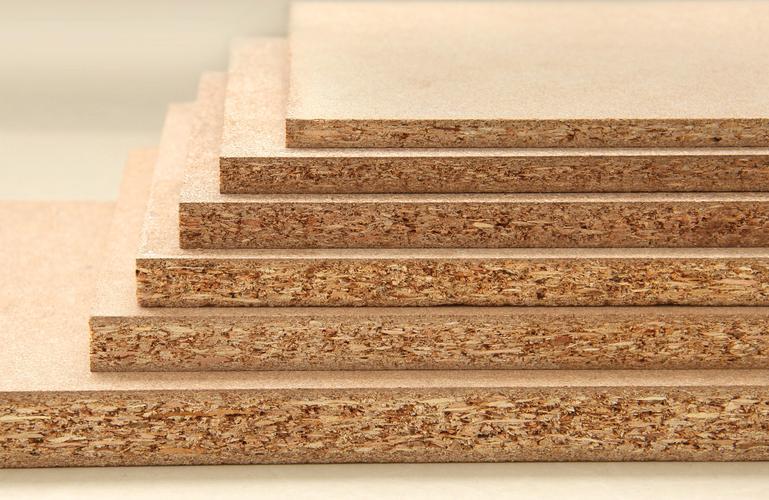
A cabinet factory receives an order labelled “18 mm melamine chipboard.” The decor is approved, the board is flat, and the price looks right. Yet drawer runners need adjustment, a connector sits too close to the face, or an edge-band machine needs a new setting. The board did not necessarily fail. The order simply did not define particleboard thickness tolerance in a way that matched the finished component and its hardware.
For importers and distributors, nominal thickness is a starting point, not a complete acceptance rule. A useful specification tells the supplier which finished board is being bought, where it will be measured, what range is acceptable and which machining or fitting depends on that range. It also separates the particleboard substrate from a melamine surface system, because a faced cabinet panel is judged as the complete product, not as a raw core with a colour added later.
Key takeaways:
1. “18 mm particleboard” is not enough for a cabinet order with programmed drilling or hardware.
2. Agree the nominal finished thickness, acceptable tolerance, measurement positions and sample plan.
3. Treat MFC as a complete faced panel while still recording the particleboard substrate separately.
4. Test thickness on a real edged and drilled component, not only a sheet offcut.
5. Keep the approved readings, first-bundle photos and Golden Sample for repeat orders or claims.
Particleboard Thickness Tolerance and Cabinet Fit
Particleboard is used in a wide range of interior furniture applications. The Particleboard product range is the material starting point, while the European Panel Federation overview describes its common role in furniture and interior uses. In those uses, a sheet can be cut into many different parts, each with its own dependence on thickness: a shelf, side panel, drawer front, hinge area or connector rail.
A small difference may not matter for a simple packing divider. It can matter for a cabinet part designed around a preset drilling depth, a fixed cam-lock position, a specific edge-band profile or paired doors with a tight reveal. This is why the buyer should describe the component first, then translate that component into a thickness rule the supplier can sample and the receiver can check.
| Component situation | Why thickness matters | What to state in the order |
|---|---|---|
| Cabinet side and fixed shelf | Connector drilling and shelf-pin positions depend on the finished panel dimension. | Nominal finished thickness, tolerance, hole drawing and measurement positions. |
| Melamine-faced door or drawer front | Face system, edge band and hardware setting all meet at the finished edge. | MFC thickness, face/reverse requirement, edge band and first-piece trial. |
| Cam-lock or dowel joint | The fitting must engage at the intended depth without breaking through a face. | Hardware model, drilling depth, distance from face and component sample. |
| Edge-banded panel | Banding settings and visual joint can change if the finished edge differs. | Raw or faced state, nominal thickness, tolerance and planned band reference. |
| Mixed container order | Different thicknesses and decors can be confused at receiving. | Bundle label, size, thickness, decor, core and pallet plan for every SKU. |
Specify the Complete Board, Not Only the Core
A raw particleboard order and a melamine-faced chipboard order should not use the same one-line description. Raw board may be selected for local lamination, coating or other processing. MFC already includes a decorative face system and is commonly supplied for furniture components. The Raw Particleboard vs Melamine Faced Chipboard guide explains why distributors should separate those product lines when they quote customers.
For a faced panel, record the complete finished thickness as well as the surface description. The EN 14322 standard summary covers dimensional tolerances and surface requirements for decorative melamine-faced boards used in interior furniture applications. That is a useful procurement reminder: the face, dimension and substrate all belong in the acceptance conversation.
Do not let a decor code replace the specification
A decor code identifies appearance. It does not state actual thickness, core build, face/reverse configuration, board size, edge condition or component use. When a distributor sells the same decor in several thicknesses or on different particleboard grades, each SKU should have its own specification line and bundle label.
Do not let a caliper reading replace the component trial
A caliper check is necessary, but it does not answer every fit question. The buyer should still machine one representative cabinet part with the intended drilling, connector, edge band and hardware. This turns a number on a sheet into a pass or fail on the component customers will actually install.
Agree How to Measure Before a Claim Exists
Many thickness disputes become expensive because the first measurement happens after a problem is reported. One person measures a damaged corner. Another measures a different point after edging. A third compares it with a nominal number from an old drawing. The solution is not to measure every sheet forever. It is to agree a repeatable sampling plan before shipment.
| Measurement rule | Practical version for a B2B order | Why it helps |
|---|---|---|
| Reference state | State raw particleboard or finished melamine-faced board. | Prevents one side discussing the core while the other discusses the complete panel. |
| Measurement positions | Use several agreed positions away from edge damage; mark them on the sample diagram. | Makes factory, inspection and receiver readings comparable. |
| Sampling plan | Check the approved sample, the first production bundle and selected bundles before loading. | Provides evidence without pretending every sheet needs laboratory inspection. |
| Tool and record | Use one practical caliper method and record readings with date, label and photos. | Lets both sides review the same evidence if a machining issue appears. |
| Component check | Run one edged and drilled part using the planned fittings. | Shows whether the measured range is suitable for the actual cabinet process. |
Particleboard construction still matters alongside thickness. A smooth face can sit over a different core structure, which may change the result around a fitting or cut edge. The Three Layer Particleboard guide explains why buyers should assess the face layer and core layer separately instead of treating a smooth surface as proof of every internal property.
Put Thickness Into the Hardware Conversation
A hardware complaint is often reported as a board complaint, but the record needs to separate them. Was the drilling depth set for the agreed thickness? Was the fitting designed for that component? Did the workshop change the edge-band or face reference? Was the actual sheet inside the agreed range? A small sample component can answer those questions before a full cabinet line is assembled.
The Cam Locks Break Out of Particleboard article provides a practical starting point for connector zones. In a thickness-focused order, add the fitting drawing and an approved drilling trial to the Golden Sample. That keeps the supplier from being blamed for a setup change and keeps the buyer from accepting a board that cannot support the agreed furniture process.
- Describe the finished component, not only the nominal sheet thickness.
- State whether the reading applies to raw particleboard or the completed melamine-faced panel.
- Agree measurement positions and a realistic sample plan before production.
- Use the planned edge-band and hardware on a representative part before bulk approval.
- Keep reading records with the bundle label, sample photo and component trial.
RFQ Language That Prevents Ambiguous Offers
The most useful RFQ line is specific enough to compare quotations but simple enough for a factory, inspection team and receiver to follow. Avoid vague phrases such as “standard 18 mm.” A supplier may use a standard that is reasonable for one furniture program and unsuitable for another. Give the actual application and ask for confirmation against the agreed sample.
RFQ wording to adapt:
Particleboard or melamine-faced chipboard for [cabinet component], [sheet size] x [nominal finished thickness]. Required tolerance: [agreed range], measured at [agreed positions] on the finished [raw/faced] board. Surface: [decor, texture, gloss, single/double face]. Include edge-band reference and hardware drawing for [connector/hinge/runner]. Approve one edged and drilled component before bulk production. Retain the labelled Golden Sample and first-bundle measurement record.
A Better Tolerance Rule Gives Everyone a Fairer Claim
The aim is not to use thickness tolerance as a reason to reject normal production variation. It is to connect an agreed range to a real cabinet use. When the board, surface, measurement plan and component trial agree, a distributor can give customers a reliable quote and a supplier can respond fairly if something changes in a repeat order.
Momentimber supports product matching, sample review, production follow-up, inspection and packing evidence for raw and melamine-faced particleboard programs. Our company profile explains this supplier-service role. Send the cabinet drawing, target thickness, decor reference and fitting details before ordering so the offer can be checked against the finished component, not only a number on a sheet.
FAQ
Related Reading
Sanded OSB for Furniture Still Needs a Finish Plan
OSB material reference only; sanding quality and the final finish need separate approval. Sanded OSB…
Plywood vs OSB for Crates Is More Than a Price Choice
Protected panel bundles are a supply-stage reference, not an approved design for a shipping crate….
Blockboard vs Finger Joint Board for Furniture Buyers
A visible timber-strip core does not make the finished panel the same as an exposed…

Synchronized Melamine Board Goes Beyond the Print
Woodgrain design reference only. A flat image cannot demonstrate EIR texture or alignment. Synchronized melamine…
Lightweight MDF vs Standard MDF for Furniture Parts
Panel appearance alone does not identify a lightweight MDF grade. Lightweight MDF can make a…
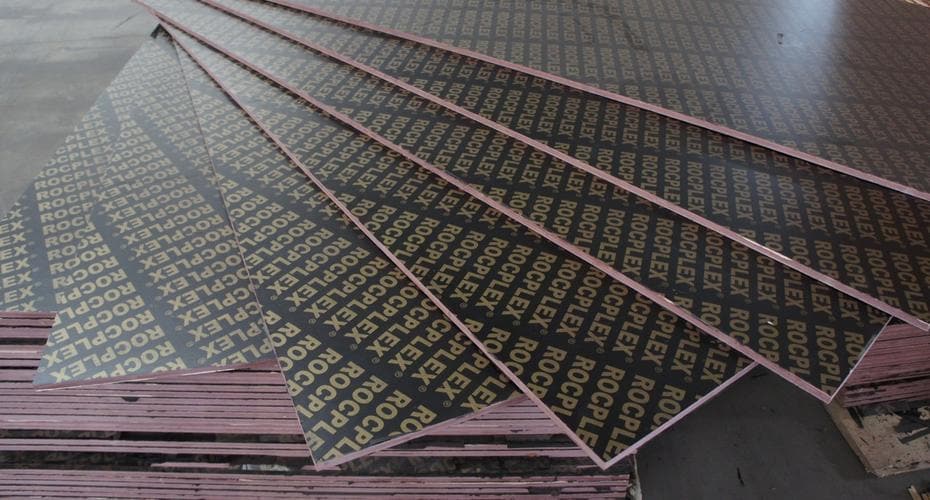
Film Faced Plywood Edge Sealing After Cutting
Film faced plywood edge sealing needs to follow the cutting and drilling plan. Factory edge…
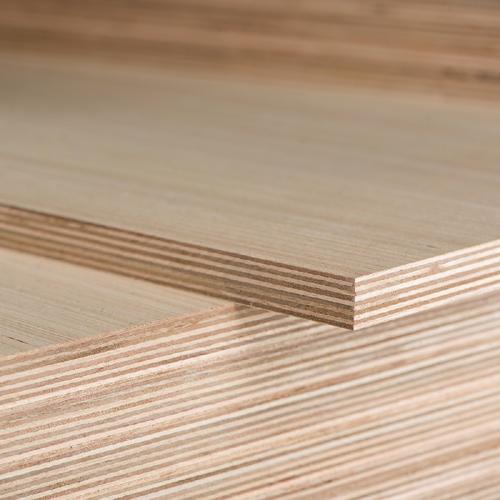
Plywood for Melamine Facing Needs More Than Sanding
Plywood for melamine facing needs more than a smooth touch. Sanding can prepare a face,…
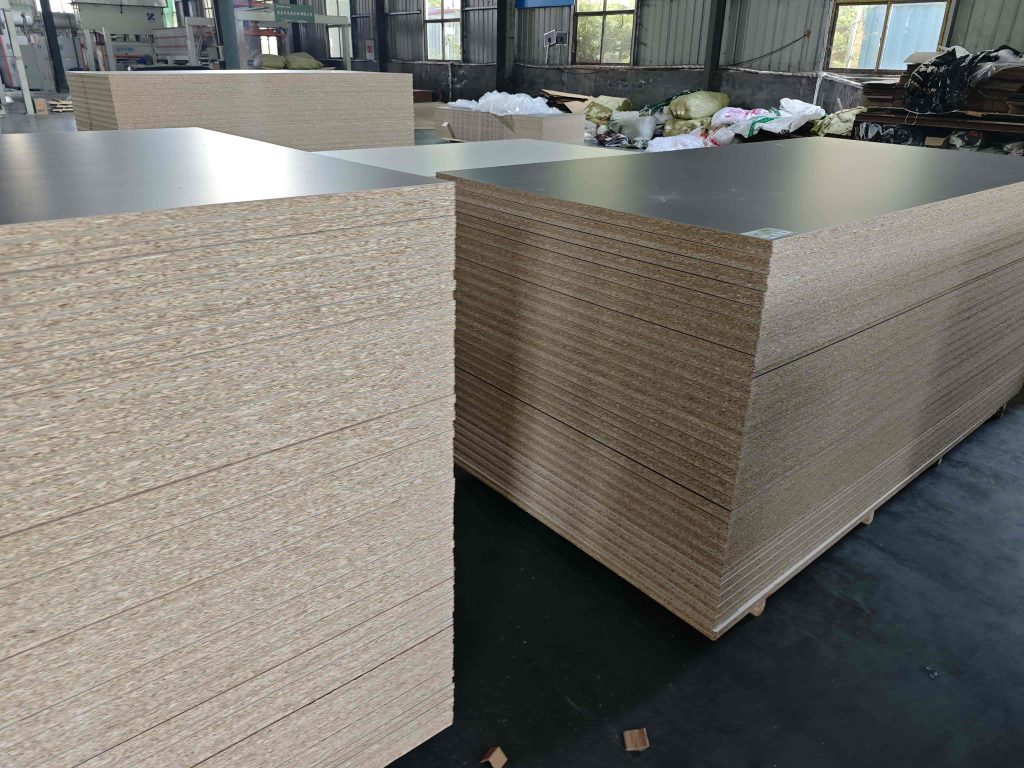
Cleaning Melamine Board Without Damaging the Finish
Cleaning melamine board should start with the supplied care instructions and a gentle method, not…
Raw Particleboard vs Melamine Faced Chipboard
Separate the board substrate from the finished surface system before comparing two supplier offers.
Three Layer Particleboard: Why a Smooth Face Can Hide a Weak Core
Understand face and core layers before a furniture quote is reduced to one thickness number.
Why Cam Locks Break Out of Particleboard
Check drilling position, fittings and board structure when cabinet hardware is part of the order risk.
Need particleboard or MFC matched to a cabinet component? Send the drawings, finished thickness requirement, hardware and edge-band reference. We can help turn them into a practical sourcing specification.
Contact Momentimber about particleboard and melamine-faced board sourcing.