

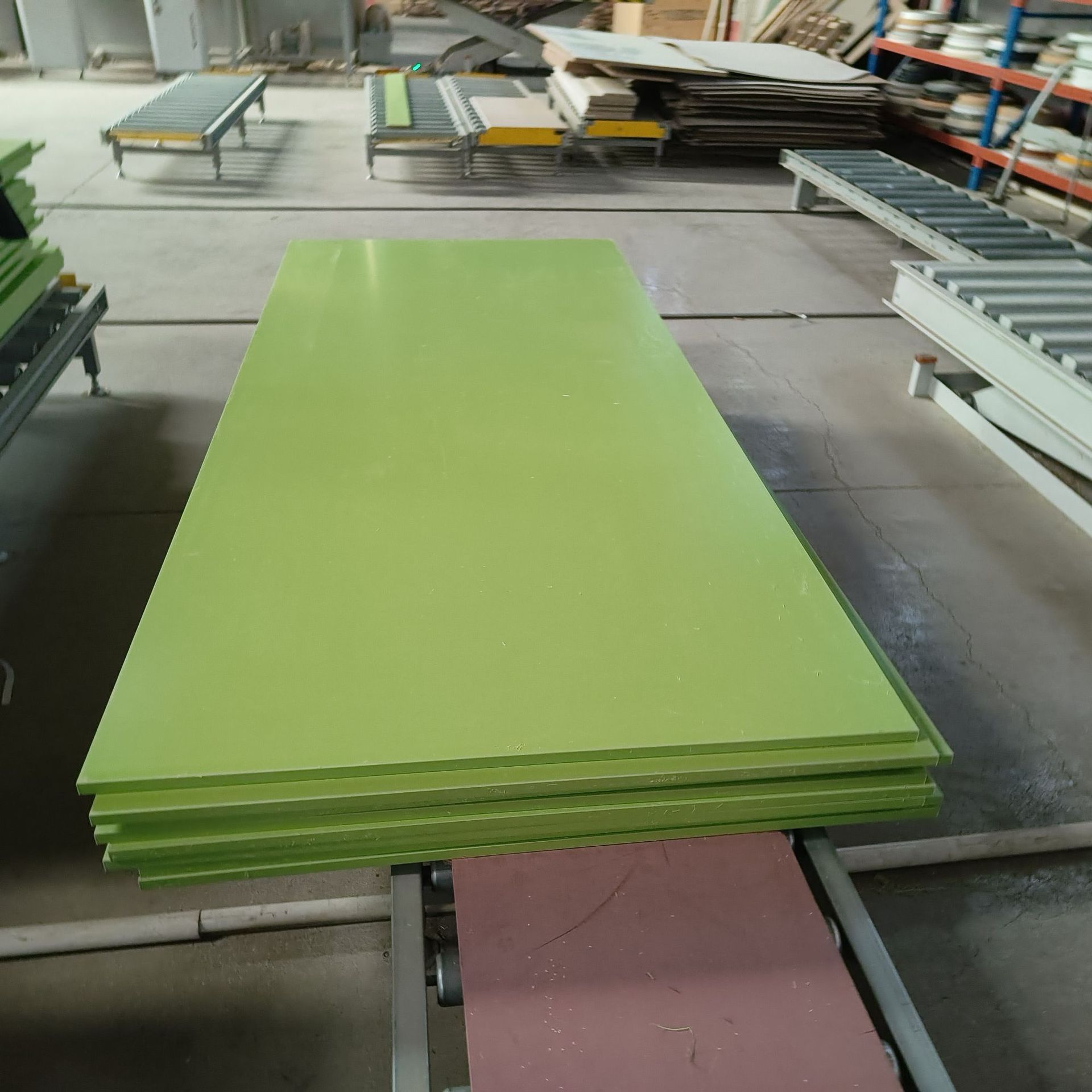
Is green MDF waterproof? No. Green colour alone cannot prove how a board will perform around moisture. Some suppliers use green dye to identify a moisture-resistant range. The buying decision still needs the actual MDF grade, intended use and edge details. For a cabinet order, ask what the board is specified to do before promising a customer that it will resist water.
What the Green Colour Can Tell You
The European Panel Federation guide describes colouring as a way used to identify some special MDF products. It is a useful visual aid. It is not a complete product specification, and the practice can vary between suppliers.
Ask for the declared type of MDF board and its intended use. Keep the supplier reference with a labelled physical sample. If the quote says only green board, the receiving team has no clear performance description to check.
The same applies when a customer asks for MR MDF. MR usually means moisture resistant in trade conversation. Write out the requirement and ask the supplier to confirm its product. A short name should start the discussion, not finish it.
Is Green MDF Waterproof Under a Melamine Face?
A suitable moisture-resistant grade can be useful for a defined humid interior. That does not make a cabinet safe from a leaking pipe, standing water or an unsealed cut-out. First describe the exposure. Then choose the board and the cabinet detail together.
A melamine face adds a finished decorative surface. The inside is still an MDF substrate. After cutting or drilling, the component has new edges and holes that the original face does not cover. Check those routes before calling the finished part waterproof.
| What the buyer sees | What still needs confirmation |
|---|---|
| Green core | Declared MDF grade and intended use. |
| Clean melamine face | Substrate requirement, exposed cuts and joints. |
| Moisture-resistant wording | Relevant product evidence and service limits. |
| A kitchen application | The specific cabinet part and expected exposure. |
Ask Four Questions Before Buying
Start with the furniture part. A dry upper-cabinet door, a side beside a damp wall and a base below a sink face different risks. Send that information with the size, thickness and quantity. It helps the supplier propose a relevant product instead of relying on colour.
- Which MDF type is being offered, and what use conditions does the supplier declare?
- Is the order for raw MDF or a complete melamine-faced panel?
- How will cut edges, holes and joints be protected in the finished component?
- Which product reference and documents will identify the delivery?
For a fuller order checklist, use the MDF cabinet specification guide. Keep the grade, surface and component details in the same approval record. This makes repeat orders easier to compare and avoids losing the requirement in a long message thread.
A small importer can use an approved component and a few clear photographs. Show the face, edge, label and relevant fitting detail. Keep an unaltered sample. A casual soak video may raise a question, but it cannot replace a named test method or establish the whole order specification.
Use the Sample When the Goods Arrive
At receiving, compare the labels and supplied board with the order reference. Check for wet wrapping, swollen edges and damaged corners before the panels enter normal stock. Record a problem while the bundle identity is still visible. Colour alone is too weak a check for either acceptance or a claim.
Momentimber can coordinate raw and melamine-faced MDF requirements with the intended cabinet part. Our About Momentimber page explains the supplier role. Tell us where the component will be used so the enquiry includes the details that matter to the buyer.
Frequently Asked Questions
Related Reading
Sanded OSB for Furniture Still Needs a Finish Plan
OSB material reference only; sanding quality and the final finish need separate approval. Sanded OSB…
Plywood vs OSB for Crates Is More Than a Price Choice
Protected panel bundles are a supply-stage reference, not an approved design for a shipping crate….
Blockboard vs Finger Joint Board for Furniture Buyers
A visible timber-strip core does not make the finished panel the same as an exposed…
Synchronized Melamine Board Goes Beyond the Print
Woodgrain design reference only. A flat image cannot demonstrate EIR texture or alignment. Synchronized melamine…
Lightweight MDF vs Standard MDF for Furniture Parts
Panel appearance alone does not identify a lightweight MDF grade. Lightweight MDF can make a…
Film Faced Plywood Edge Sealing After Cutting
Film faced plywood edge sealing needs to follow the cutting and drilling plan. Factory edge…
Plywood for Melamine Facing Needs More Than Sanding
Plywood for melamine facing needs more than a smooth touch. Sanding can prepare a face,…
Cleaning Melamine Board Without Damaging the Finish
Cleaning melamine board should start with the supplied care instructions and a gentle method, not…
Particleboard Worktops vs Ordinary Cabinet Board
Particleboard worktops can have a chipboard core without being the same product as an ordinary…
MDF Board for Cabinets: What Importers Should Specify Beyond Thickness
Use the full component specification when the colour question is settled.
MDF Screw Holding: Why the Same Hinge Fails on One Board and Not Another
Match the MDF component to its drilling and fixing requirements.
Melamine Board Substrate Change: What Changes?
See why a decorative surface and the core beneath it need separate approval.
Tell us the cabinet part, expected moisture exposure and surface you need. We can help define an MDF enquiry that is clear enough to quote.