

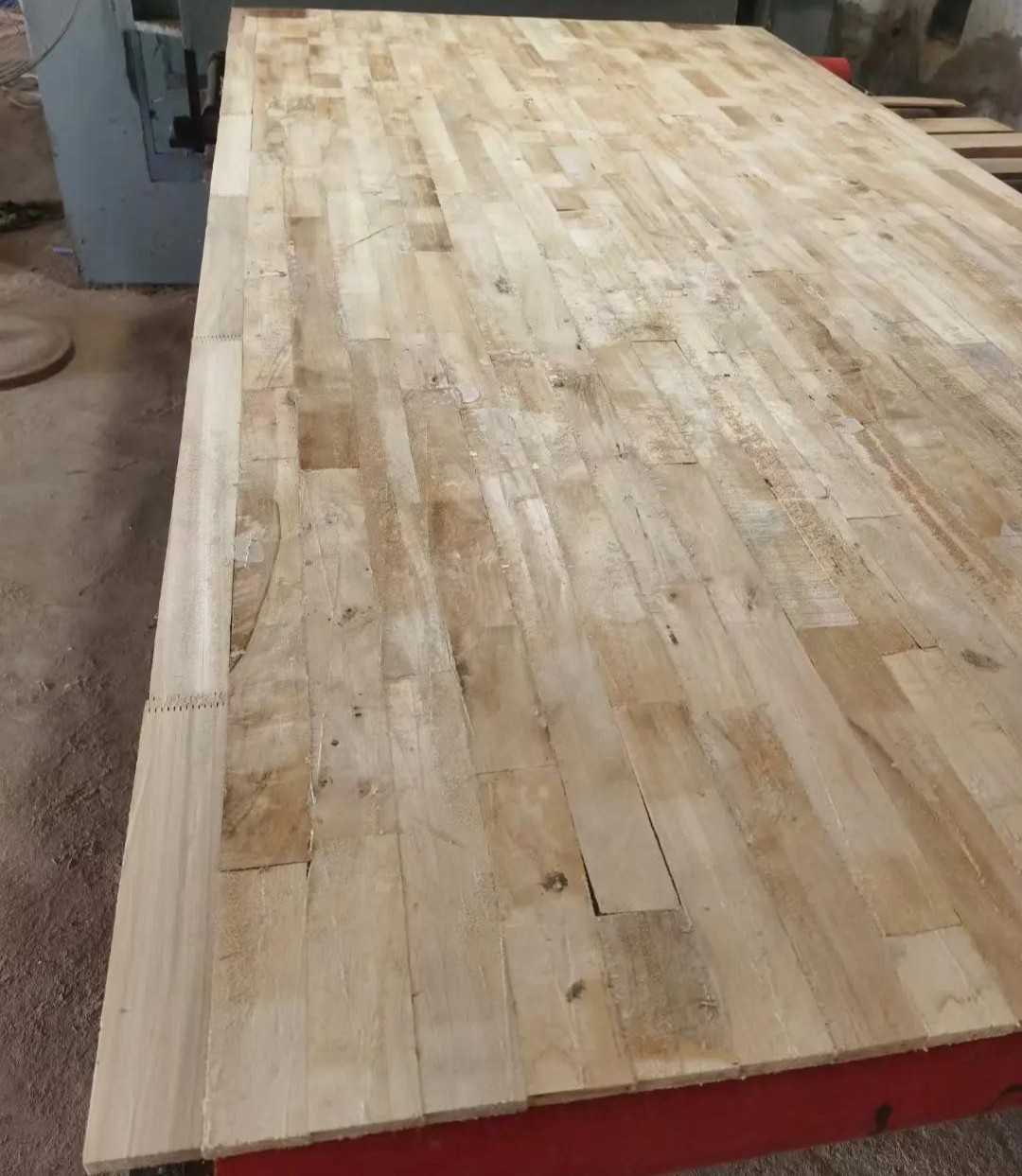
A distributor opens a pack of white melamine blockboard. Seen straight on, the sheets look clean. When a full panel is stood beside a window, faint parallel lines appear across the face. The furniture buyer worries they will show on every wardrobe door. Blockboard telegraphing means that the core-strip pattern or unevenness beneath the face becomes visible as lines or shallow ridges on the finished surface. The useful next step is to compare the whole panel with an approved reference under agreed viewing conditions.
A phone close-up rarely settles this question. Lighting can exaggerate a shallow feature, while a tiny sample can miss a repeated pattern. Before accepting or rejecting the batch, separate the visible symptom, the intended application and the evidence needed to establish its cause. That gives both the importer and supplier a fair starting point.
What Blockboard Telegraphing Actually Looks Like
A blockboard substrate contains an internal strip core and supporting face layers. On some faced panels, repeated shallow ridges or lines can follow features beneath the decorative surface. Buyers often call this print-through or telegraphing. Those words describe an appearance; they do not identify one guaranteed production fault.
Look at the pattern before discussing responsibility. A long, repeated pattern may justify examining the underlying construction. A single depression may instead be a handling dent. A mark that repeats at the same location on many sheets could point toward the pressing or handling process. Each is a lead to investigate with the factory, not a diagnosis from a photograph.
| Visible symptom | Useful comparison | Next question |
|---|---|---|
| Parallel shallow lines | Whole face and an identified cross-section | Does the spacing or direction correspond to construction beneath the face? |
| An isolated dent | Packaging and adjacent sheets | Was the face locally pressed or damaged during handling? |
| Raised blister or lifting face | Edge condition and affected area | Is there a separate bonding problem that needs escalation? |
| Pattern changes with viewing angle | Approved panel under identical lighting | Does it exceed the agreed appearance for this component? |
The Melamine Face Needs Support Underneath
In melamine-faced boards, the resin-impregnated decorative paper forms the surface system. Blockboard forms the substrate system. A paper sample can confirm a decor, but cannot show how that decor will look after pressing on a particular substrate. A smooth texture, dark decor or reflective finish may also reveal unevenness differently.
Ask the supplier to identify the build-up between the timber-strip core and the decorative face. Relevant details include the number, type and agreed thickness of supporting layers, their continuity, the prepared face condition and the construction on the reverse. Sanding and pressing also belong in the discussion. A construction drawing and labelled edge sample make these details easier to compare.
Do not turn this into a rule that more layers always mean a better panel. Two boards with the same layer count can have different supporting layers and surface preparation. Nor should decorative paper be specified as a cure for an uneven substrate. Approve the actual faced construction for the application before assigning value to a marketing description.
Keep core direction separate from face acceptance
The blockboard core-direction guide explains how internal strip orientation connects to the cut list. Use that drawing as a reference when recording the surface pattern. A clear direction arrow helps the supplier compare lines on the face with the edge construction, without assuming that orientation alone caused the complaint.
Why a Full Panel Tells More Than a Small Sample
A small chip is useful for colour and texture, but it may contain only one strip joint or none at all. A full panel shows the repetition and the way the surface will read across a door or side panel. For an appearance-sensitive order, approve at least a representative large component made from the intended construction. Retain a smaller labelled cross-section with it.
Use a stable support and look at the panel face-on and under ordinary side light. Record the approximate viewing distance, light source and angle so the receiving team can repeat the comparison. A severe inspection lamp may reveal details customers never see. Equally, a dark warehouse may hide a pattern that becomes obvious on an installed door. The acceptance method should reflect the promised application.
The EN 14322 overview from NEN places surface requirements and dimensional tolerances within the scope of decorative melamine-faced interior boards. It is a useful standards reference when applicable. It does not replace an agreed appearance sample, and this article does not assign a universal permitted line depth or viewing distance.
Check When the Pattern Appeared
Ask when the lines were first seen: before facing, after facing, during receiving, or after the furniture shop cut the panels. Keep the timing factual. If the supplier retains an approved finished panel and the importer retains an arrival panel, compare them before either is reprocessed. This can narrow the investigation considerably.
Wood exchanges moisture with surrounding air, as explained in the USDA Wood Handbook discussion of wood and moisture. That general principle is one reason conditioning and storage records can matter in a panel investigation. It does not prove that moisture caused a particular line pattern, or provide a blockboard-specific limit.
Record whether bundles were wet, wrapping was damaged, sheets were leaned unevenly or one face was exposed for a long period. Also ask whether the mark is present on untouched sheets. Do not sand, heat or wet a disputed panel to make the symptom clearer. Keep an unaltered reference and let the supplier review the evidence first.
If a workshop already uses a moisture meter, record the instrument and its setting with any readings. A number taken through a decorative face is not automatically comparable with a reading on an exposed timber strip. Ask the supplier how the approved board was assessed and agree a comparable check. Use a surprising reading as a reason to investigate, rather than proof that one party stored the board badly. A small business can collect good evidence without claiming more accuracy than its tools provide.
Agree on Appearance Before the Container Is Loaded
The most useful buying document states which faces matter. A large exposed wardrobe door needs a different appearance discussion from a covered internal part. Specify the decor, texture, faced sides, finished thickness and supporting construction. Attach the accepted component photo and identify the retained physical sample. Written approval should connect all of these to the purchase order.
| Order record | Buyer and supplier agreement | Receiving evidence |
|---|---|---|
| Application and visible face | Identify the door, side or other part and its exposed surfaces. | Component drawing and face labels. |
| Construction | Confirm the actual supporting layers and reverse arrangement. | Labelled edge sample and supplier confirmation. |
| Appearance reference | Use the approved faced panel under repeatable normal viewing conditions. | Reference photos, sample ID and approval date. |
| Inspection scope | Agree which bundles and sheets will be checked and what triggers wider review. | Sampled bundle IDs, sheet positions and photos. |
For example, an importer buying white panels for wardrobe doors can ask the supplier to show a large faced sample beside a labelled edge. The importer approves the appearance in the intended showroom light and keeps a matching piece. This is a proposed approval method, not a claim about a completed Momentimber project. It is practical even when neither business owns inspection equipment beyond a straightedge, a caliper and a phone.
Build a Claim Around the Affected Scope
If a shipment differs from the reference, record how many sampled sheets show the pattern and where they came from. Photograph a whole sheet before close-ups. Include the bundle label, both faces and the edge. A ruler or straightedge can provide context, but a photograph is not an agreed tolerance measurement unless the method was defined beforehand.
Keep the face issue separate from melamine blockboard cutting damage. A chipped exit edge, a raised blister and parallel surface lines may need different investigations. Combining them into one unspecific claim makes the evidence harder to use and can delay a reasonable remedy.
Discuss sorting, replacement or a restricted application only after the agreed appearance and affected quantity are clear. A cosmetic deviation does not automatically condemn every sheet in a container. Conversely, an acceptable small colour chip does not excuse an exposed-door surface that differs from the approved full panel.
Momentimber can coordinate construction confirmation, sample review and selected inspection evidence for raw and melamine-faced blockboard. Our About Momentimber page explains the supply and follow-up role. Send the component use and visual reference early so the approval can protect the furniture sale as well as the board purchase.
Frequently Asked Questions
Related Reading
Sanded OSB for Furniture Still Needs a Finish Plan
OSB material reference only; sanding quality and the final finish need separate approval. Sanded OSB…
Plywood vs OSB for Crates Is More Than a Price Choice
Protected panel bundles are a supply-stage reference, not an approved design for a shipping crate….
Blockboard vs Finger Joint Board for Furniture Buyers
A visible timber-strip core does not make the finished panel the same as an exposed…

Synchronized Melamine Board Goes Beyond the Print
Woodgrain design reference only. A flat image cannot demonstrate EIR texture or alignment. Synchronized melamine…
Lightweight MDF vs Standard MDF for Furniture Parts
Panel appearance alone does not identify a lightweight MDF grade. Lightweight MDF can make a…
Film Faced Plywood Edge Sealing After Cutting
Film faced plywood edge sealing needs to follow the cutting and drilling plan. Factory edge…
Melamine Blockboard Cutting: Why Edges Chip
Keep a face appearance complaint separate from a saw-cut edge problem.
Blockboard Core Direction: How It Changes Cutting Plans and Door Stability
Connect the internal strip direction to the furniture drawing and visible faces.
Melamine Board Defects: A Buyer Quality Guide
Compare core-line appearance with blisters, press marks and other surface symptoms.
Send the intended furniture part, face reference, panel size and surface expectations. We can help define a practical melamine blockboard sample and order specification.