

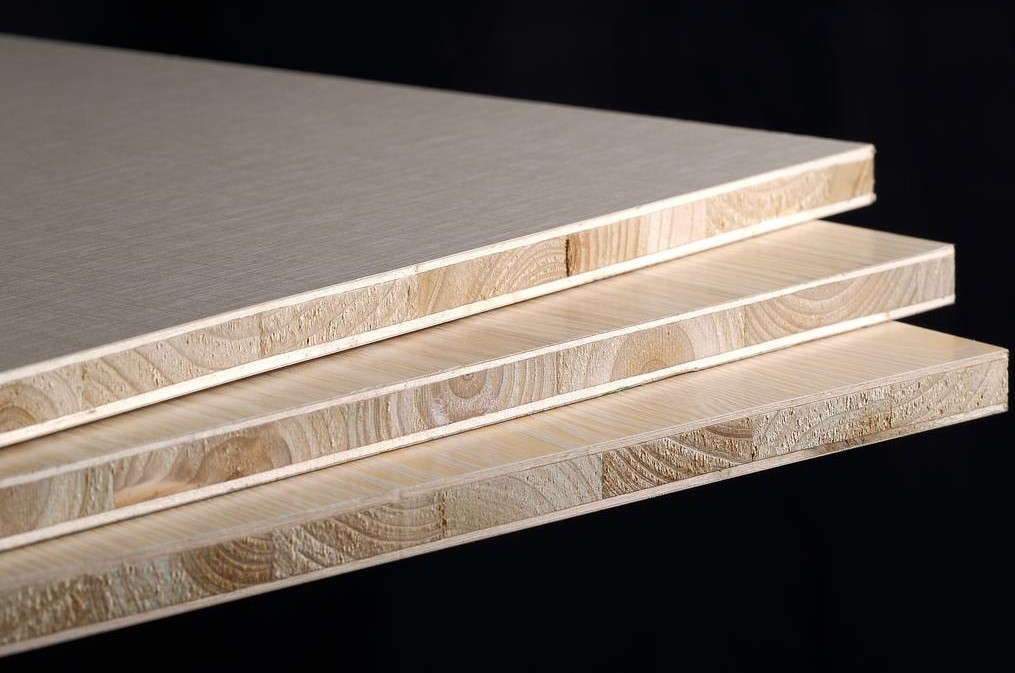
Two suppliers offer 18 mm blockboard. One sheet feels noticeably lighter, and the buyer asks which offer has the better quality. Blockboard density means the mass of a board divided by its volume, usually expressed in kilograms per cubic meter. It can explain part of that weight difference. It cannot, by itself, tell an importer which panel will make a better wardrobe door or cabinet side.
The useful question is not simply how heavy the board should be. It is whether the two suppliers are describing the same finished size, core construction, moisture condition and surface. Start there. Otherwise, a weight comparison can hide a thickness difference, a different face build-up or a quotation for an entirely different product.
Which Blockboard Density Is the Supplier Quoting?
A blockboard panel combines timber strips with supporting face layers and adhesive. A melamine-faced version also has a decorative surface system. The density of one timber species is therefore not the density of the complete board. Ask which material the quoted number describes before putting it into a loading or costing sheet.
There are three descriptions buyers often mix up: the density of the core timber, the average density of the raw panel and the density of the finished faced panel. Even if each number is correct, they answer different questions. For a per-sheet shipping estimate, the finished panel is normally the relevant object. For a production discussion, the individual layers may also matter.
| Quoted description | What it describes | Buying check |
|---|---|---|
| Core timber density | A property of the timber reference, not the whole board. | Confirm species and measurement basis; do not treat it as finished-sheet mass. |
| Raw panel density | The complete unfinished panel at stated dimensions and condition. | Match the raw construction and actual thickness. |
| Finished panel density | The supplied board including its agreed facing and build-up. | Use finished dimensions and representative sheet weights. |
Why Two 18 mm Sheets Can Weigh Differently
First check the dimensions. A nominal 18 mm description does not prove that two measured sheets have identical thickness. Length and width also matter. A small difference across a full panel changes volume, so a heavier sheet is not automatically denser. Write down the measured dimensions before trying to explain the weight.
Next compare the internal construction. Timber species, strip arrangement, supporting layer thickness and adhesive content contribute to the finished mass. A supplier may describe both panels as poplar-core blockboard while using a different face build-up. The short trade name is useful for conversation, but it is not a complete construction record.
Moisture is another reason to be careful. The USDA Wood Handbook discussion of wood and moisture explains that wood exchanges moisture with its surroundings and that moisture affects physical properties. This is a general material principle, not a permitted blockboard moisture range. Compare samples under a stated condition rather than calling any weight increase better quality.
Finally check whether both offers are raw boards or both are finished boards. A melamine-faced sheet and its raw substrate do not have the same surface mass. More importantly, the faced product may have a different supporting construction. Ask the supplier to confirm the finished product that will actually be loaded, not just the substrate name on an earlier message.
Calculate Sheet Weight Before Comparing the Offers
Use meters for length, width and thickness. Sheet volume equals length multiplied by width multiplied by thickness. Estimated sheet mass equals that volume multiplied by finished-panel density. Keep the units visible in the spreadsheet. Entering 18 instead of 0.018 for thickness gives a result one thousand times too large.
Arithmetic example only: a finished sheet measuring 1.22 x 2.44 x 0.018 m has a volume of 0.0535824 cubic meters. If the assumed finished-panel density is 400 kg/m3, the calculated mass is about 21.43 kg. At an assumed 500 kg/m3, it is about 26.79 kg. These are demonstration inputs, not a typical range, product specification or Momentimber quotation.
| Assumed input | Calculation | Illustrative result |
|---|---|---|
| 1220 x 2440 x 18 mm | 1.22 x 2.44 x 0.018 | 0.0535824 m3 per sheet |
| 400 kg/m3 finished density | 0.0535824 x 400 | 21.43 kg per sheet |
| 500 kg/m3 finished density | 0.0535824 x 500 | 26.79 kg per sheet |
| 24 kg measured sheet mass | 24 divided by 0.0535824 | About 448 kg/m3 at those dimensions |
That last calculation works in reverse. If a measured sheet weighs 24 kg, divide its mass by its measured volume to estimate its average density. Use actual dimensions for a meaningful receiving comparison. Do not calculate from a nominal size and then present the result as a laboratory density test or a certification of the whole shipment.
Does Higher Density Mean Better Blockboard?
Not as a stand-alone buying rule. A door needs suitable stiffness, flatness, fixing details and construction for its size. A clean-looking heavy sheet may still have an unsuitable core arrangement or a local bond problem. A lighter construction may suit a weight-sensitive component, provided its performance is approved for that use.
For a practical comparison, the melamine blockboard versus MFC wardrobe guide connects substrate choice with the component. Keep the sheet mass in that decision, but do not let it replace the component drawing, hardware arrangement or agreed sample. A board that is easier to carry is not automatically a better shelf.
Direction and local construction still matter
The blockboard core-direction guide addresses another issue a scale cannot show. Internal strip direction must be considered with the cut plan. Weighing the panel cannot establish that direction, reveal a local gap beneath a fitting or confirm the bond. Inspect those features separately when they matter to the application.
A Small Importer Can Make a Useful Weight Check
Use a platform scale that can safely support the sheet and has enough capacity for its mass. Check zero and use a known reference weight if available. Record any supports included in the reading and subtract their mass. Do not balance a full sheet unsafely on a small household scale just to obtain a number.
Agree a practical sampling scope with the supplier. Identify the bundles and positions from which sheets are selected. Measure size and thickness, weigh the sheets and keep individual results rather than reporting only an average. A small group of consistent readings is more informative than one unlabelled photograph, but it still does not establish every sheet in a container.
- Record sheet ID, bundle ID and whether the product is raw or faced.
- Record actual dimensions, scale identification and measured mass.
- Keep the approved construction reference and storage observations together.
- Investigate unusual readings before mixing the sampled sheets into stock.
If one sheet is much heavier, repeat the weighing and dimension checks first. Look for a different label, wet packaging or a changed face build-up. Do not immediately infer a density defect or use an uncalibrated moisture reading to settle responsibility. Share the observations with the supplier and decide whether a wider check is needed.
Write a Quote Basis That Survives a Repeat Order
An enquiry should state finished dimensions, the raw or faced condition, the proposed core and supporting construction, and the intended component. If mass is important, request a representative finished-sheet weight and how it was obtained. Clarify whether any agreed range is a contractual acceptance requirement or planning information only.
For melamine-faced board orders, add the decor, texture and treatment of each side. A repeat order should not silently change the substrate to meet the same nominal thickness or weight. Keep the approved sample identity and the construction reference with the purchase order so the receiving team can compare like with like.
Use verified net panel mass for loading estimates, then add packing mass and confirm container and inland transport limits with the logistics provider. A density calculation is not a loading approval. Packaging, weight distribution, payload restrictions and the final verified gross mass still need their own checks. Avoid promising a sheet count from density alone.
Momentimber can coordinate construction matching, sample review and production follow-up for raw and melamine-faced blockboard. Our company introduction explains this supplier role. A clear drawing and agreed comparison basis are more useful than asking for the heaviest board available.
Frequently Asked Questions
Related Reading
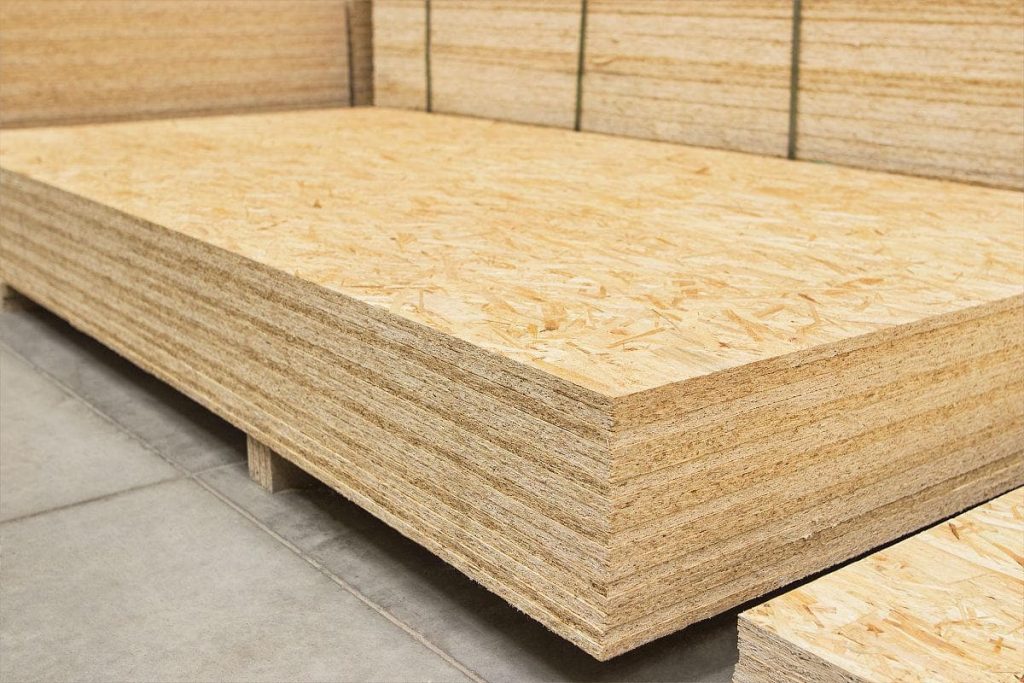
Sanded OSB for Furniture Still Needs a Finish Plan
OSB material reference only; sanding quality and the final finish need separate approval. Sanded OSB…
Plywood vs OSB for Crates Is More Than a Price Choice
Protected panel bundles are a supply-stage reference, not an approved design for a shipping crate….
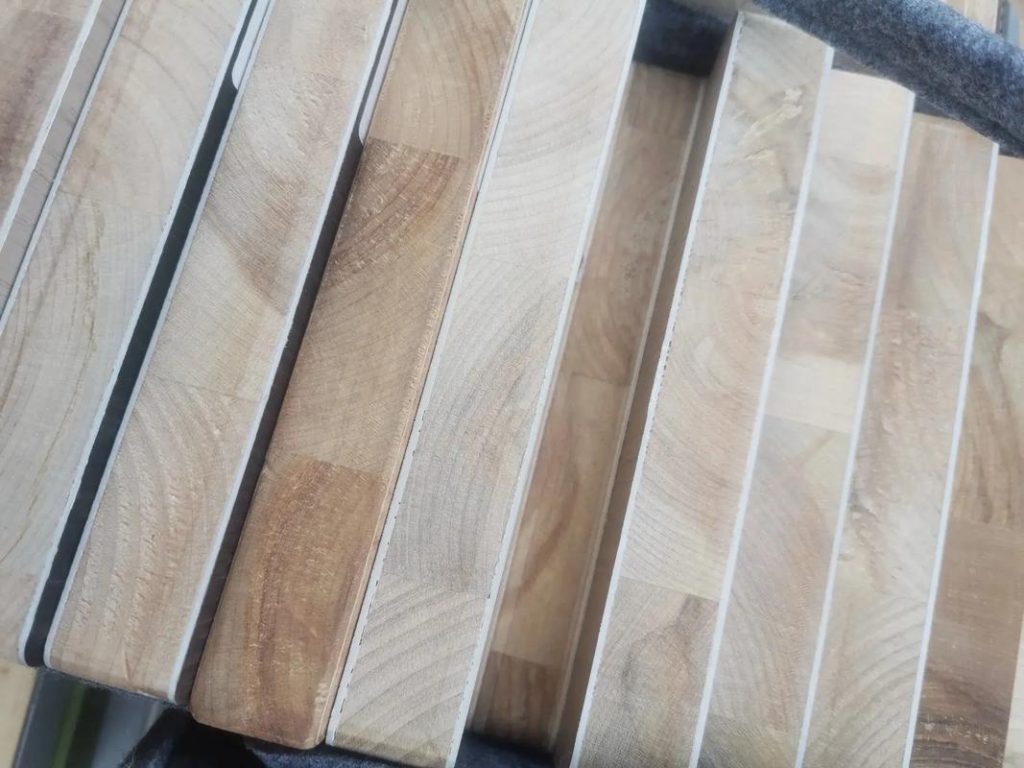
Blockboard vs Finger Joint Board for Furniture Buyers
A visible timber-strip core does not make the finished panel the same as an exposed…

Synchronized Melamine Board Goes Beyond the Print
Woodgrain design reference only. A flat image cannot demonstrate EIR texture or alignment. Synchronized melamine…
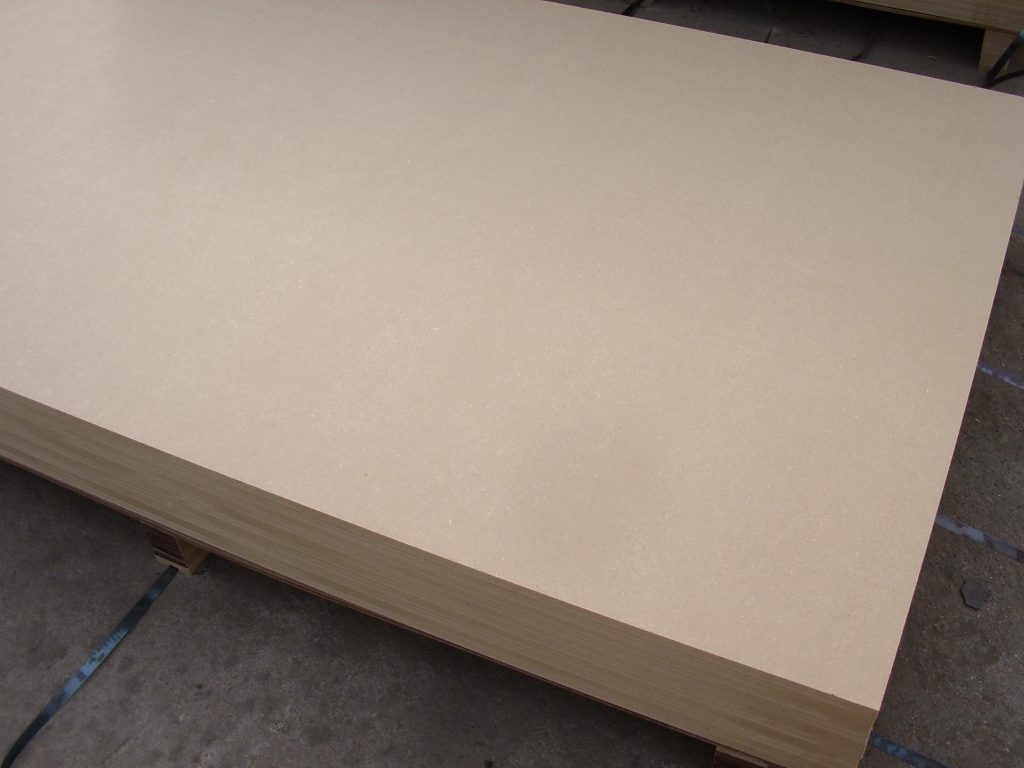
Lightweight MDF vs Standard MDF for Furniture Parts
Panel appearance alone does not identify a lightweight MDF grade. Lightweight MDF can make a…
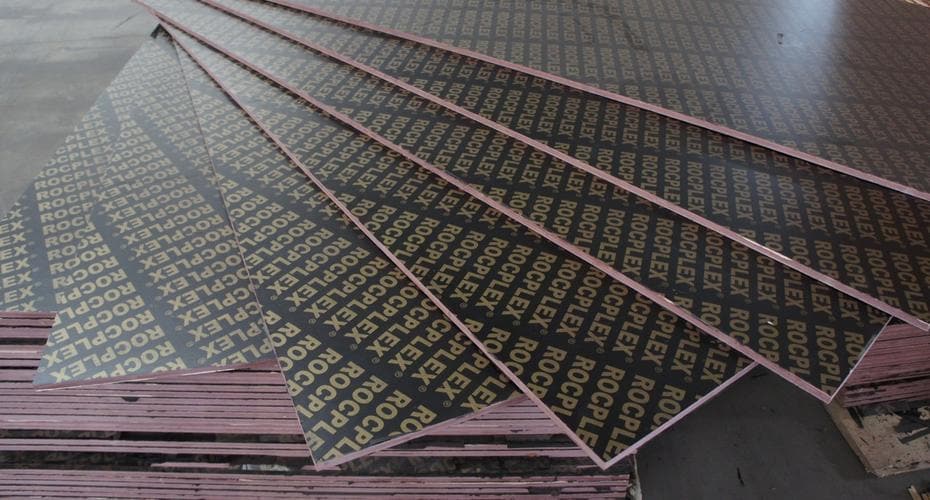
Film Faced Plywood Edge Sealing After Cutting
Film faced plywood edge sealing needs to follow the cutting and drilling plan. Factory edge…
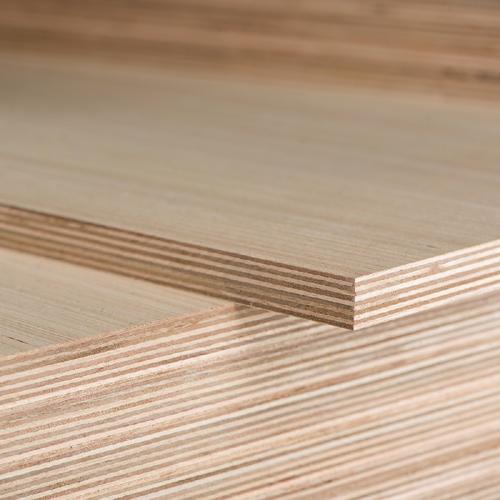
Plywood for Melamine Facing Needs More Than Sanding
Plywood for melamine facing needs more than a smooth touch. Sanding can prepare a face,…
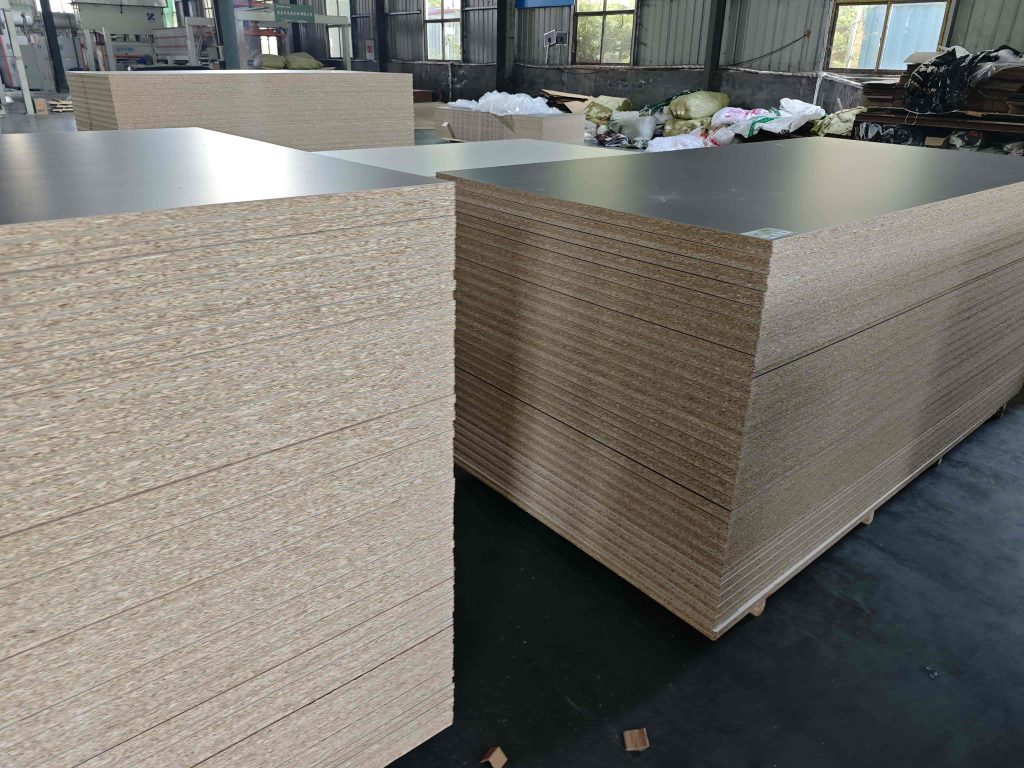
Cleaning Melamine Board Without Damaging the Finish
Cleaning melamine board should start with the supplied care instructions and a gentle method, not…
Blockboard Core Direction: Cutting Plans and Door Stability
Check internal strip direction separately from the weight on the scale.
Melamine Blockboard vs MFC for Wardrobes
Compare component requirements before choosing a substrate by weight alone.
What Is Blockboard? Structure and Market Use
Review the strip core and supporting layers behind a finished density figure.
Send the finished size, raw or melamine-faced requirement, intended furniture part and target sheet-weight information. We can help compare blockboard offers on a consistent specification.