

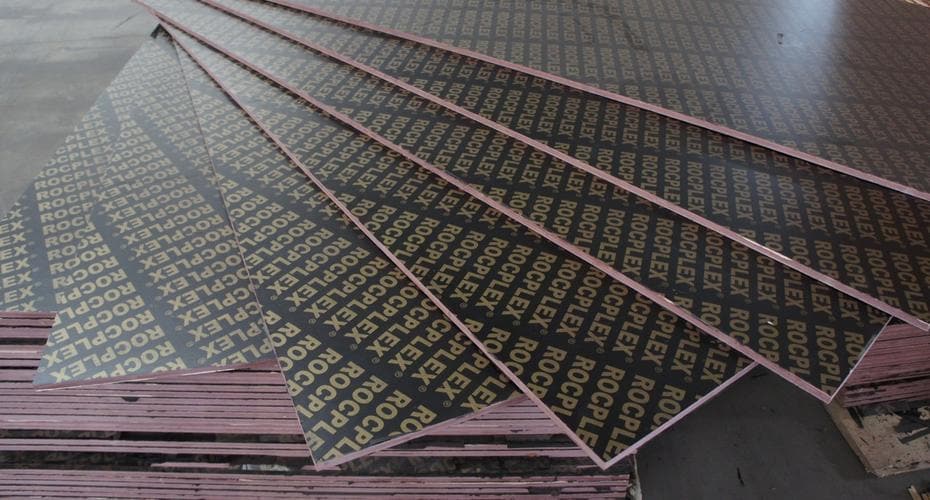
Film faced plywood edge sealing needs to follow the cutting and drilling plan. Factory edge coating does not cover a new saw cut or tie hole. Before the converted panel meets wet concrete, include those exposed areas in the approved treatment process. Keep that task separate from choosing the plywood grade and designing the formwork.
An importer may receive neatly painted full sheets, then hear that the smaller site pieces swell at their edges. The starting question is not whether black film is waterproof. It is which surfaces became exposed during conversion and who was responsible for treating them.
The Face Film and the Cut Edge Are Different Surfaces
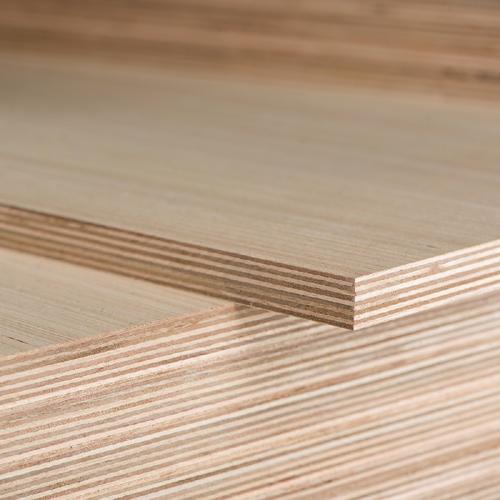
A film-faced plywood panel combines a veneer-based substrate with a working surface film. Its plywood layers remain visible at an uncoated cross-section. Edge coating addresses that exposed material; it is not the same layer as the face film.
A saw cut removes the original edge and creates a fresh one. Drilling exposes material inside an opening. Even a small converted piece can have several new moisture-entry locations while retaining an undamaged film on its broad faces. Looking only at the top surface can therefore miss the relevant change.
Edge treatment aims to limit moisture entry at those locations. It does not eliminate every route through damaged faces, poorly detailed joints or unprotected openings. Treat the panel as a complete component rather than assuming one coat around the perimeter resolves every exposure.
The existing guide to film-faced plywood grades and reuse covers the wider material decision. This article concentrates on what happens between receipt of the original sheets and use of the converted pieces. It does not promise a number of pours.
Where Film Faced Plywood Edge Sealing Belongs
| Panel condition | What changed | Action to agree before use |
|---|---|---|
| Original full sheet | Factory edge treatment remains | Check its condition and follow the supplied care instructions |
| New saw cut | Fresh veneer cross-section exposed | Include the cut in the approved resealing process |
| New drilled opening | Material exposed inside the hole | Review treatment together with the fitting or sleeve detail |
| Damaged edge or corner | Section or bond may be affected | Assess suitability before deciding whether coating is appropriate |
A useful conversion sequence is to complete the intended cuts and holes, clear loose dust, assess the resulting edges and apply the approved treatment. The edge condition must suit that product. Do not trap dirt or coat an edge whose damage has not yet been assessed.
Follow the actual coating instructions for preparation, coverage and the time needed before service. Weather and site conditions can affect application. This is why a universal number of coats or a generic drying time is a poor purchasing instruction. The selected product and panel combination need their own requirements.
If more drilling takes place after treatment, reopen the checklist. A signed record for the original conversion does not cover holes added later on site. Keep the check simple enough for the workshop to repeat, especially when pieces pass through several teams.
Edge Sealer and Release Agent Do Different Jobs
An edge sealer limits absorption through exposed wood-based material. A form release agent helps separate concrete from the form face. Some chemical products combine functions, but the names are not interchangeable. A product described only as release oil does not automatically establish edge-sealing performance.
For example, Nox-Crete describes a combined edge sealer and release-agent product with field-cut edges and tie holes among its applications. That illustrates why the product instructions matter. It is not approval to use that product, or any substitute, with every imported panel and formwork system.
The APA concrete-forming guidance also treats cleaning, release treatment and careful handling as parts of panel care. Its guidance for specified panel types should not be turned into a reuse guarantee for an unrelated film-faced sheet.
Select chemicals through the responsible project team and supplier instructions. Keep safety information available to the workers applying them. Avoid improvised chemical mixtures or a coating selected only because its colour resembles the original factory paint.
Resealing Is Not Repairing a Structural Defect
The plywood bond system holds the veneers together. Surface or edge coating does not change that internal bond specification. Nor does it replace material lost at a broken corner or restore an opened glue line.
Separate a clean fresh cut from a damaged edge. A fresh cut in an otherwise accepted panel needs an agreed finishing operation. An edge with softened wood, separation or missing section first needs assessment under the project criteria. Covering it with paint can conceal the symptom without resolving the reason to reject or repair it.
Formwork remains an engineered system. Panel suitability, support layout, fixings and concrete pressure require the responsible designer assessment. Edge maintenance cannot establish a safe span. Keep those approvals outside an informal site judgement based on the appearance of the film.
Make the Supplied Condition Clear in the Order
When purchasing converted pieces, keep panel dimensions and tolerances tied to the delivered state. A cut-list price may cover sawing only, not drilling, treatment or later site alterations. Write those operations separately so offers remain comparable.
Consider a hypothetical workshop cutting a full sheet into narrow closure pieces. The full-sheet price includes factory edge treatment, but most edges of the small pieces are now new. The resealing work belongs in the conversion cost. Comparing only the original square-metre price hides that operation.
Importers should agree whether the supplier delivers full sheets or fully treated converted panels. Distributors should pass the maintenance information with the boards rather than relying on a reuse claim. Contractors and workshops should identify who checks new openings after final adaptation.
A short handover record is enough for many small businesses: panel reference, converted format, new cuts or holes, treatment reference and completion status. Keep it with the cutting order. This does not replace required project records, but it helps prevent an unfinished operation from disappearing between suppliers and site teams.
Frequently Asked Questions
Related Reading
Sanded OSB for Furniture Still Needs a Finish Plan
OSB material reference only; sanding quality and the final finish need separate approval. Sanded OSB…
Plywood vs OSB for Crates Is More Than a Price Choice
Protected panel bundles are a supply-stage reference, not an approved design for a shipping crate….
Blockboard vs Finger Joint Board for Furniture Buyers
A visible timber-strip core does not make the finished panel the same as an exposed…

Synchronized Melamine Board Goes Beyond the Print
Woodgrain design reference only. A flat image cannot demonstrate EIR texture or alignment. Synchronized melamine…
Lightweight MDF vs Standard MDF for Furniture Parts
Panel appearance alone does not identify a lightweight MDF grade. Lightweight MDF can make a…
Plywood for Melamine Facing Needs More Than Sanding
Plywood for melamine facing needs more than a smooth touch. Sanding can prepare a face,…
Cleaning Melamine Board Without Damaging the Finish
Cleaning melamine board should start with the supplied care instructions and a gentle method, not…
Particleboard Worktops vs Ordinary Cabinet Board
Particleboard worktops can have a chipboard core without being the same product as an ordinary…
Film Faced Plywood Grades and Reuse Cycles
Keep the panel specification and reuse assumptions separate from edge maintenance.
Plywood Glue Types
Understand the glue lines that an edge coating cannot upgrade.
Plywood Thickness Tolerance
Keep the actual delivered dimensions clear after conversion.
Planning film-faced plywood supply for a formwork program? Send the panel specification, intended format, cutting scope and required delivered edge condition. Momentimber can discuss material matching and export preparation; the project team must separately approve the formwork design and site chemical system.