

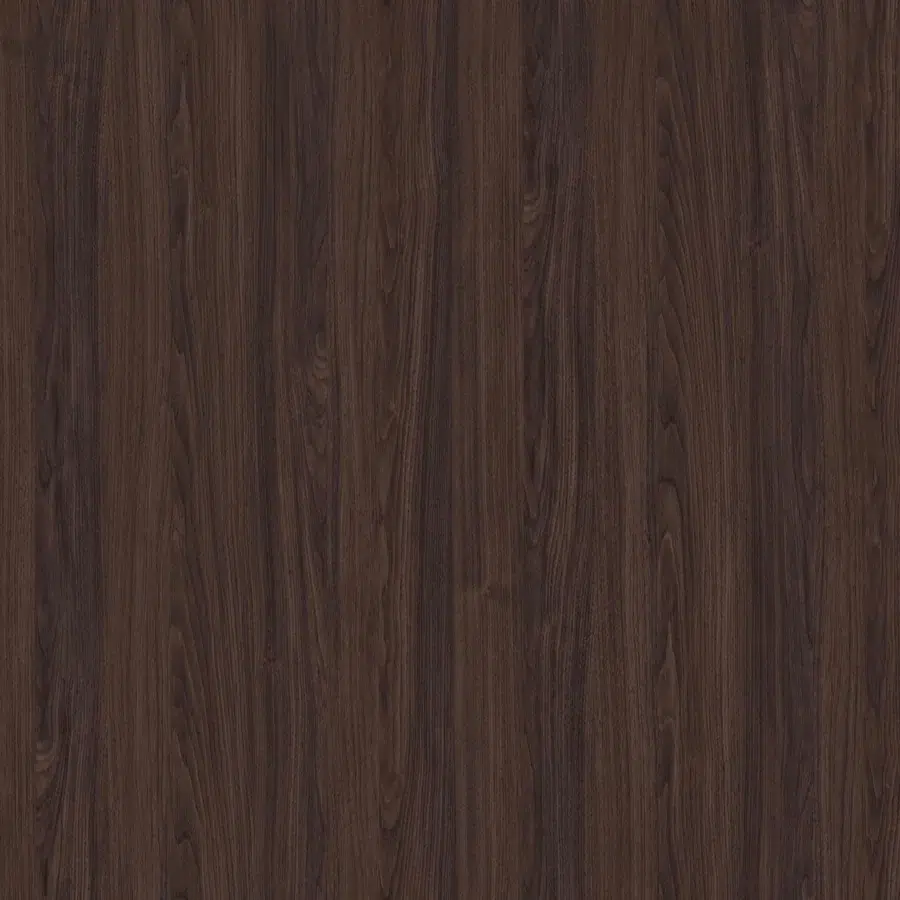
Synchronized melamine board aligns the surface texture with the printed design. The process is often called embossed in register, or EIR. On a woodgrain face, a visible grain feature and its relief are meant to sit together. A board can look woodgrained and feel textured without meeting that description.
For a furniture buyer, the difference matters most where people see and touch a broad visible face. A small colour chip may show the print but miss the relationship between the image and relief. Before paying for a more distinctive surface, understand what the effect adds and which requirements it leaves unchanged.
Key takeaways
Printed design, embossing and gloss are separate parts of the surface.
EIR is a registration effect, not proof of real wood or a stronger core.
Choose the effect for a visible component and confirm the actual supplied combination.
Start with the Surface and the Substrate
A melamine-faced panel has a decorative surface over a wood-based substrate. In this discussion the main substrate is particleboard, with MDF as another relevant option. The printed wood appearance belongs to the surface system. It is not the grain of the material inside the sheet.
The Composite Panel Association description of TFL explains resin-impregnated paper fused to a substrate using heat and pressure. It also describes steel press plates that create texture and control gloss. These are separate features that a simple decor name does not fully describe.
The print supplies the image: grain lines, knots, colour transitions or another pattern. Embossing supplies physical relief. Gloss affects the reflection of light. A buyer can therefore approve a colour and still receive a face that feels or reflects differently from the expected result.
The substrate remains responsible for a different part of the job. It contributes thickness, mass and the material that the workshop cuts and fixes. A textured surface does not replace the substrate specification. Keep both layers in the description from the start.
What Makes Synchronized Melamine Board Different
With ordinary embossing, a wood-like relief can extend across a design without following each printed feature. That may be the intended finish. For example, a general fine texture can suit a quiet cabinet range where the buyer wants a restrained appearance rather than a close imitation of open wood pores.
Registered embossing connects the relief to the design. Imagine a printed knot surrounded by curved grain. In the intended EIR result, the corresponding relief follows that feature rather than continuing as unrelated straight lines across it. The effect depends on the print and embossing working as a coordinated system.
A published EIR manufacturing description explains registration as correspondence between the decorative motif and the embossed structure. It provides a useful definition, not one compulsory production method for every current product. The practical buyer question is what the supplied surface actually shows and feels like.
Machinery producer Wemhoener describes synchronous-pore direct lamination for melamine-impregnated papers on wood-based panels, including furniture uses. That establishes the process context. It is not evidence that a particular supplier owns this equipment, offers every design or follows identical settings.
Compare the Effects on the Same Basis
| Surface description | What it means | Where the distinction matters |
|---|---|---|
| Woodgrain print | A decorative image that resembles wood | Colour and pattern selection |
| Ordinary embossed finish | Relief that need not register to the print | General tactile and reflected-light appearance |
| Synchronized or EIR finish | Relief coordinated with corresponding printed features | Visible faces where the wood-like effect matters |
| Matched finished component | An approved face with its actual edge and layout | How the furniture looks after cutting and assembly |
Do not rank these descriptions as a simple quality ladder. A well-chosen ordinary texture can be the right finish for a price-sensitive range. A pronounced registered wood effect can be unnecessary on a concealed interior. The useful comparison is whether the surface fits the component and the customer expectation.
EIR also does not promise a continuous picture across every adjoining door. Registration within a sheet and the layout of cut components are different matters. A realistic pore effect can still sit beside a badly planned print transition. Specify the intended layout rather than expecting the surface technology to solve it.
Where the Effect Is Worth Considering
Large wardrobe fronts, visible cabinet end panels and display furniture are reasonable places to compare the effect. They give the design enough area to read, and people may view them close up. This is a selection opportunity, not a guarantee that every registered finish suits every door construction.
For an internal partition or low-visibility cabinet lining, a simpler finish may achieve the required appearance without adding another stock variation. Consider the number of decors the distributor can support, the customers who value the effect and the matching edge options. A distinctive sample has little value if it creates stock that rarely moves.
The particleboard substrate should still suit the furniture part. If MDF is proposed instead, compare that board and its processing needs separately. Registration of the surface does not approve a substrate change, a longer shelf span or a different hinge connection.
Nor does the EIR label establish abrasion, stain, moisture or fire performance. Those need the applicable product requirements and evidence. It is clearer to sell a specified appearance than to let a word about texture stand in for every performance claim.
Use a Sample That Shows the Relationship
Choose a physical sample containing a recognizable feature, such as a knot or a change in grain. Move it under ordinary side lighting and compare what the eye sees with what the fingers feel. A plain, featureless corner may be too small to explain the reason for choosing registration.
This does not require optical instruments or a laboratory. A larger sample can help when the printed repeat is broad. Keep one accepted reference with the description of its approval purpose. A flat image remains useful for discussing the design, but it cannot establish the full tactile result.
The melamine texture repeat-order guide explains how to retain a surface reference. For an initial EIR selection, add the actual decor and registered-texture identity to that record. Do not approve a generic word such as oak and assume every oak-like finish will be equivalent.
Then review the woodgrain direction and cutting layout for the intended part. See the face beside its edge treatment and adjacent components. This connects a convincing sample to a sellable piece of furniture rather than an isolated showroom effect.
Keep the Offer Clear for Each Business
Importers need the actual substrate, decor, surface identity and front/back configuration. A request for a synchronized option should remain conditional until that combination is confirmed. Do not convert a supplier demonstration into a promise that every colour and thickness can be supplied in the same finish.
For distributors, the decision is where the effect belongs in the range and how to show it honestly. Keep ordinary and registered finishes distinguishable, even when their colour families are close. Explain the tactile difference without calling one natural veneer or suggesting that texture proves a stronger board.
Downstream workshops need the approved sheet format, component direction and edge detail. Their cutting plan determines which printed features remain on the visible parts. Choose the finish whose appearance survives that process and suits the project, not simply the sample with the deepest texture.
Frequently Asked Questions
Related Reading
Sanded OSB for Furniture Still Needs a Finish Plan
OSB material reference only; sanding quality and the final finish need separate approval. Sanded OSB…
Plywood vs OSB for Crates Is More Than a Price Choice
Protected panel bundles are a supply-stage reference, not an approved design for a shipping crate….
Blockboard vs Finger Joint Board for Furniture Buyers
A visible timber-strip core does not make the finished panel the same as an exposed…
Lightweight MDF vs Standard MDF for Furniture Parts
Panel appearance alone does not identify a lightweight MDF grade. Lightweight MDF can make a…
Film Faced Plywood Edge Sealing After Cutting
Film faced plywood edge sealing needs to follow the cutting and drilling plan. Factory edge…
Plywood for Melamine Facing Needs More Than Sanding
Plywood for melamine facing needs more than a smooth touch. Sanding can prepare a face,…
Cleaning Melamine Board Without Damaging the Finish
Cleaning melamine board should start with the supplied care instructions and a gentle method, not…
Particleboard Worktops vs Ordinary Cabinet Board
Particleboard worktops can have a chipboard core without being the same product as an ordinary…
Melamine Board Texture and Repeat Orders
Keep the approved print, texture and gloss connected when reordering.
Melamine Board Finish and Decor Range
Decide where a distinctive surface belongs in a manageable stock line.
Woodgrain Direction and Cutting Yield
Plan the appearance of the cut parts rather than judging the sheet in isolation.
Exploring a textured melamine-faced furniture range? Send the decor reference, substrate, visible component and expected surface effect. Momentimber can discuss available combinations and sample coordination; a synchronized option must be confirmed for the actual decor and supply route.