

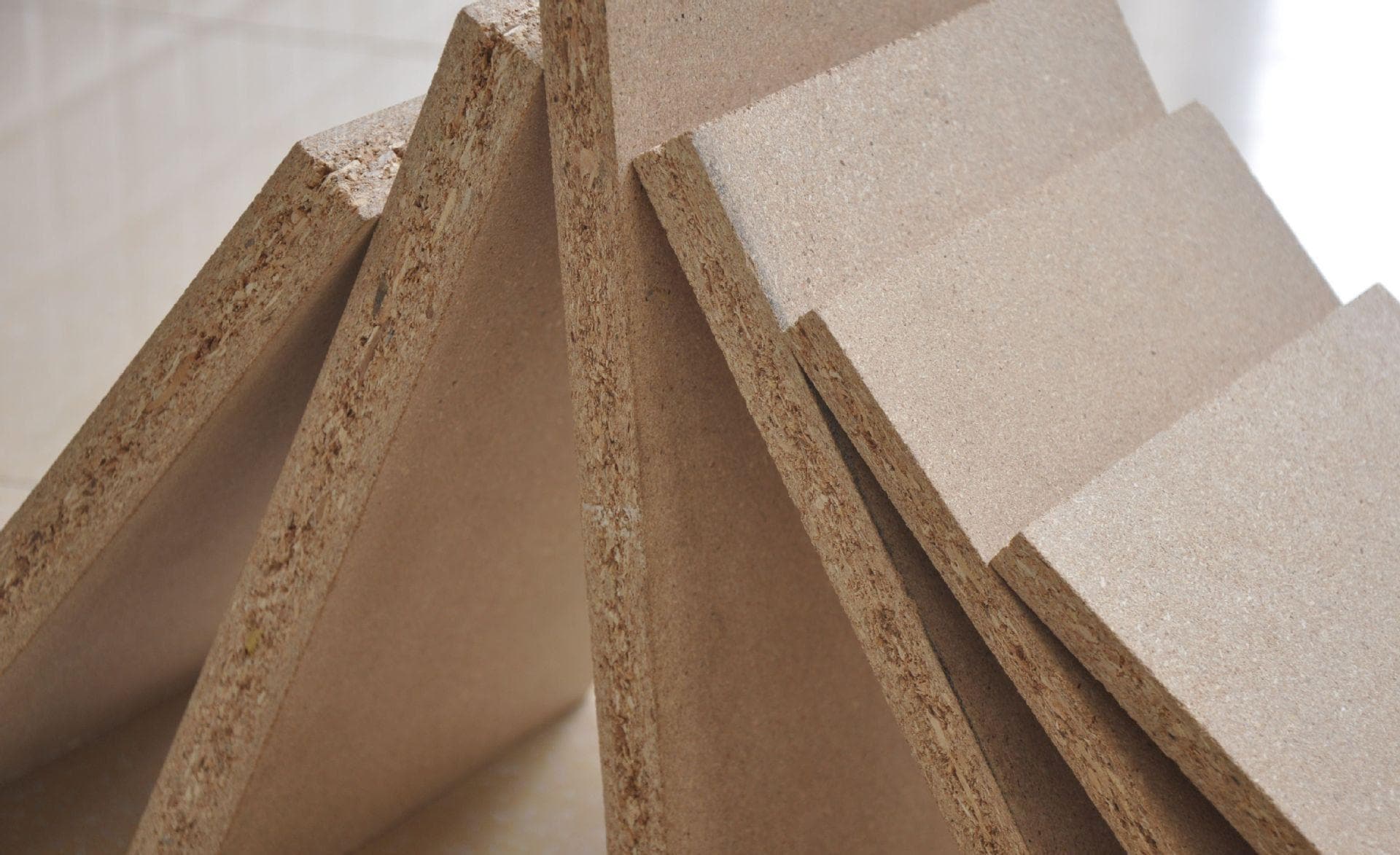
Two offers arrive for the same 18 mm cabinet board. One says P2. The other says P3 and costs more. Both show a white melamine face. Should the importer pay for the upgrade? In a P2 vs P3 particleboard comparison, start with where the cabinet part will work. The grade decision concerns the substrate and its intended use conditions. Colour, board weight and a familiar decor cannot settle it.
A dry office cabinet and a cabinet exposed to a humid interior may need different specifications. A leaking pipe creates another problem altogether. If all three situations are described simply as kitchen or furniture use, quotations become hard to compare and sales promises become too broad. Define the component and exposure before choosing the code.
P2 vs P3 Particleboard Starts With the Use Condition
The public scope of EN 312 from NEN covers specified types of unfaced particleboard. Its contents distinguish P2 for interior fitments, including furniture, in dry conditions and P3 for non-load-bearing use in humid conditions. These are application categories, not a simple good-better ranking for every cabinet.
For a particleboard purchase, record the intended component first: cabinet side, shelf, back, door or another part. Then describe the likely environment and finishing route. This makes the code meaningful and allows the supplier to identify a relevant product instead of offering whichever board happens to be called moisture resistant.
| Order question | P2 route | P3 route |
|---|---|---|
| Named use condition | Interior fitments and furniture in dry conditions. | Non-load-bearing use in humid conditions. |
| Buyer decision | Check whether the actual component stays within the dry-use plan. | Confirm the humid-use requirement and relevant evidence for that product. |
| Surface choice | Raw or an agreed melamine-faced system. | Raw or an agreed melamine-faced system; grade and decor remain separate. |
| Water exposure | Do not promise leak or immersion resistance. | Do not turn humid-use wording into a waterproof claim. |
| Quote comparison | Match dimensions, finish and evidence before comparing price. | Price the defined upgrade rather than an unspecified premium label. |
Describe Humidity in Terms the Supplier Can Use
A country name alone does not describe cabinet service conditions. A coastal market can contain dry air-conditioned offices, humid workshops, sheltered apartments and rooms with persistent condensation. The relevant question is what the part will experience during normal use and along its delivery route. Ask the furniture customer how and where the cabinet will be installed.
Separate sustained humidity from direct wetting. A cabinet side in a humid interior is different from the bottom panel below a leaking sink. A more suitable substrate grade can reduce a defined moisture risk, but a leak also involves design, exposed cuts, edge protection and maintenance. Avoid selling the grade as a replacement for those controls.
The particleboard swelling guide is useful after damage appears because it follows where water entered. Before buying, use that same question to define the intended environment. It is easier to choose a board and detail the cabinet now than to debate an undefined waterproof promise later.
Non-load-bearing does not mean a shelf carries no books
In this grade discussion, non-load-bearing distinguishes the panel from structural building uses. Furniture components can still carry service loads. A shelf therefore needs its span, support, thickness and intended load assessed for the actual design. Choosing P3 does not by itself prove that a long shelf will resist sagging or that a heavily loaded connector will perform adequately.
Keep Melamine Facing and Particleboard Grade Separate
In melamine faced chipboard, or MFC, the decorative paper is the surface system and particleboard is the substrate. The order can specify a particular substrate grade and then add the decor, texture, gloss, faced sides and finished thickness. Do not let a clean face sample replace the core specification.
The EN 14322 overview addresses decorative melamine-faced interior boards. That is a different scope from the unfaced particleboard specification. When a supplier quotes a finished MFC panel, ask how the stated substrate requirement and the faced-board requirements are identified together. Neither document title alone proves the whole product suits the project.
Green colour is also a weak basis for comparison. It may help a mill or distributor identify a product, but colour is not the purchase specification. A photo of a green cut edge cannot establish a grade, a moisture limit or the source of a particular shipment. Use the declared product information and traceable bundle identification instead.
Do Not Confuse EN 312 P2 With CARB Phase 2
The letters P2 can create an expensive communication problem. A buyer may mean the dry-use particleboard class, while a sales message may use P2 as shorthand for CARB Phase 2. Those are different subjects. Write the full scheme or standard name in an RFQ and repeat it on the order confirmation.
The EPA composite-wood formaldehyde page explains the emissions framework and its connection with CARB requirements. It is an authoritative starting point for that separate discussion. An emissions statement does not establish whether a particleboard substrate is EN 312 P2 or P3, and a P3 statement does not settle destination emissions requirements.
Ask for Evidence That Matches the Actual Board
A small importer does not need to begin with a new laboratory program for every container. First ask the supplier to identify the product route, board type, thickness range and the information used to support the declared grade. Check that the document describes the offered material rather than a different mill, an unrelated product or an old sample with no connection to the order.
Then connect the evidence to routine controls: an approved panel sample, a component trial, a written specification and clear bundle marks. A factory report and a third-party report have different roles, so state which is expected when agreeing the order. If a project contract calls for independent evidence, resolve that before the material is produced.
Also agree what happens when the original mill cannot supply on time. A substitute with the same colour and nominal thickness may use another product route. Ask the supplier to identify the change and explain whether the existing grade evidence still applies. Approve any material substitution before it is mixed into the shipment, while the buyer can still compare samples and revise the order.
| Evidence item | Useful buyer question | Practical order record |
|---|---|---|
| Product information | Which panel type and manufacturing route does this describe? | Supplier product reference and declared grade. |
| Report or declaration | Does the scope cover the offered product and relevant thickness? | Document reference, issue date and supplier explanation of scope. |
| Golden Sample | Does it represent the finished faced panel and intended component? | Sample ID, decor, substrate and approval date. |
| Bundle labels | Can receiving staff identify the ordered grade and batch? | Agreed marks and photos before loading. |
| Change control | What happens if the mill, core or face changes? | Written approval before a substitution is accepted. |
A bucket-soak comparison can show that two loose samples respond differently, but it cannot establish EN 312 compliance on its own. Sample preparation, conditioning, timing and measurement affect the result. Use informal checks to raise questions, and refer a disputed standards claim to the agreed method and evidence. Do not invent a pass mark from a social-media demonstration.
Price the Grade Together With the Finished Component
The particleboard quote comparison guide helps separate a real price saving from a changed specification. For this decision, keep sheet dimensions, finished thickness, decor, faced sides, packing, quantity and commercial terms aligned. Ask the supplier to show the additional cost for the defined grade requirement clearly.
A purchasing comparison can then include component waste, edge processing, freight allocation and the cost of an unsuitable application. Those values come from the buyer and factory; they should not be replaced by a universal percentage. A more expensive board may be worthwhile for one customer program and unnecessary for another that stays within the agreed dry-use conditions.
Turn the Discussion Into a Short RFQ
Write the component, normal service environment, required EN 312 type where applicable, finished dimensions and tolerance, surface system, emissions documentation, packing and quantity. Add a clear change-approval rule. This is enough to begin a focused quotation without asking a small business to write a full technical standard.
For example, a furniture importer can describe a non-structural cabinet program for a humid interior and request a supplier proposal against an explicitly named P3 requirement. The supplier still needs to confirm the actual product and supporting scope. The buyer then approves the faced sample and intended component. This is an illustrative workflow, not a blanket specification for every kitchen.
Momentimber can help coordinate particleboard and melamine-faced panel options against a stated component and destination requirement. Our About Momentimber page describes the sourcing and production follow-up role. Bring the application and required documents into the enquiry early so the final quotation describes the product you intend to sell.
Frequently Asked Questions
Related Reading
Sanded OSB for Furniture Still Needs a Finish Plan
OSB material reference only; sanding quality and the final finish need separate approval. Sanded OSB…
Plywood vs OSB for Crates Is More Than a Price Choice
Protected panel bundles are a supply-stage reference, not an approved design for a shipping crate….
Blockboard vs Finger Joint Board for Furniture Buyers
A visible timber-strip core does not make the finished panel the same as an exposed…

Synchronized Melamine Board Goes Beyond the Print
Woodgrain design reference only. A flat image cannot demonstrate EIR texture or alignment. Synchronized melamine…
Lightweight MDF vs Standard MDF for Furniture Parts
Panel appearance alone does not identify a lightweight MDF grade. Lightweight MDF can make a…
Film Faced Plywood Edge Sealing After Cutting
Film faced plywood edge sealing needs to follow the cutting and drilling plan. Factory edge…
Plywood for Melamine Facing Needs More Than Sanding
Plywood for melamine facing needs more than a smooth touch. Sanding can prepare a face,…
Cleaning Melamine Board Without Damaging the Finish
Cleaning melamine board should start with the supplied care instructions and a gentle method, not…
Particleboard Worktops vs Ordinary Cabinet Board
Particleboard worktops can have a chipboard core without being the same product as an ordinary…

Does MDF Have a Grain Direction
MDF grain direction is not the same as grain in a solid wood board. Raw…
Particleboard Swelling After Rain: Board Grade, Edges or Warehouse?
Trace the moisture path when damage appears after delivery.
Raw Particleboard vs Melamine Faced Chipboard
Separate the purchased substrate from the finished decorative product.
Particle Board Price: How to Compare Supplier Quotes
Make two offers comparable before deciding whether an upgrade is worth its cost.
Send the cabinet part, service environment, size, quantity and preferred decor. We can help compare a defined particleboard or MFC specification across suitable supply routes.